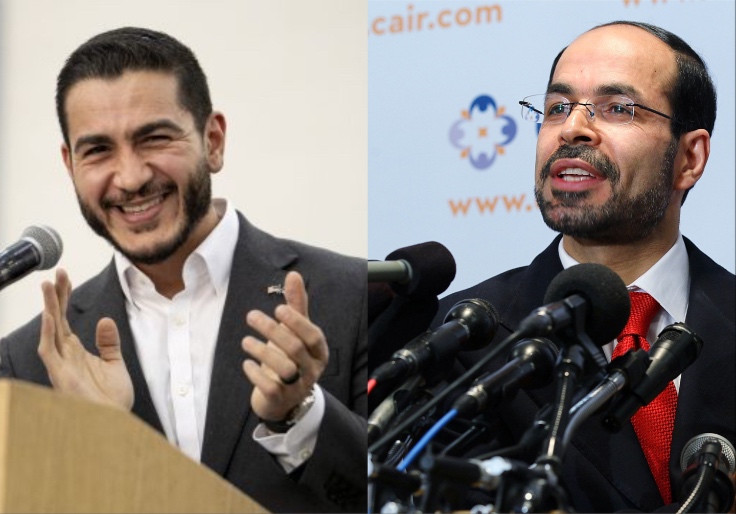
On July 21, the Unity & Justice Fund, a super‑PAC created by the Council on American‑Islamic Relations (CAIR), transferred $175,000 to Fighting for Michigan, the political committee backing Abdul El‑Sayed's campaign for the open U.S. Senate seat from Michigan. The filing, released by the Federal Election Commission on Thursday, marks the largest single contribution the fund has made to any candidate‑aligned organization.
El‑Sayed, a former health official and Detroit mayoral candidate, entered the Democratic primary against U.S. Rep. Haley Stevens after positioning the American Israel Public Affairs Committee (AIPAC) as a foreign‑backed influence in the race. In a June interview, he said AIPAC's support for Stevens amounted to "foreign interference" and warned that the group's funding could sway the outcome of a race that will decide who holds the Senate seat vacated by retiring Democrat Debbie Stabenow.
The Michigan Senate race has attracted national attention because it is one of the few open seats in the 2024 election cycle. Both parties see the contest as a bellwether for suburban and working‑class voters in the Midwest. Democrats hope to retain the seat, while Republicans view it as a potential pickup in a state that swung to the GOP in the 2022 midterms.
CAIR, founded in 1994, describes itself as the largest Muslim civil‑rights organization in the United States. Its political lobbying arm, CAIR Action, was incorporated in 2022 and shares board members and a mailing address with the parent nonprofit. The group's co‑founder and executive director, Nihad Awad, sparked controversy in late 2023 when he said he was "happy to see" the Hamas attack on October 7, a comment that drew condemnation from the White House and led to CAIR's removal from a federal anti‑antisemitism working group.
Federal law prohibits foreign nationals from making contributions to U.S. election campaigns, but super‑PACs can accept donations from domestic donors who are themselves U.S. citizens or permanent residents. Critics argue that CAIR's ties to foreign‑linked advocacy groups create a perception of indirect foreign influence. The Department of Justice labeled CAIR an "unindicted co‑conspirator" in a 2008 terrorism probe involving the Holy Land Foundation, a charity later found to be a front for Hamas. While the agency never charged CAIR, the designation has been used by Republican governors such as Ron DeSantis of Florida and Greg Abbott of Texas to label the organization as a "terrorist" entity and to bar state agencies from cooperating with it.
Fighting for Michigan, the PAC that received the Unity & Justice Fund's money, has spent nearly $3 million on digital advertising and polling since its formation earlier this year. The group describes itself as a coalition of progressive, labor, veterans and advocacy organizations. Its advertising strategy has largely avoided the Israel‑Hamas war, instead highlighting El‑Sayed's support for Medicare for All, lower prescription costs and his background as a high‑school football captain.
El‑Sayed's campaign has also drawn scrutiny for its associations with controversial figures. He has appeared alongside Hasan Piker, a Twitch streamer who once said "America deserved 9/11" and praised Hamas. In addition, El‑Sayed will speak at a Labor Day Islamic conference that includes clerics who have called the Holocaust a "hoax." One such cleric was removed from a panel after a report by the Washington Free Beacon alleged pedophilic rhetoric. El‑Sayed's father‑in‑law, Tayeb Jukaku, contributed $300,000 to Fighting for Michigan and $100,000 to the Unity & Justice Fund; Jukaku is a founding member of the Islamic Society of North America, an organization that analysts describe as the public face of the Muslim Brotherhood in the United States.
The campaign's financial disclosures also reveal payments to local religious leaders. Fighting for Michigan gave $19,825 to 5Plus1, a dark‑money group linked to Detroit pastor Horace Sheffield, who has endorsed El‑Sayed and hosts him on his radio show. The PAC also paid $82,500 to the Ecumenical Ministers Alliance, another Sheffield‑affiliated entity, for "political consulting." Critics argue that the lack of transparency around these payments raises concerns about pay‑for‑play arrangements.
Polling commissioned by the PAC has been a point of contention. In August, the group paid $24,000 to Tulchin Research for a poll that showed El‑Sayed leading Stevens by 19 points. The actual primary result was a razor‑thin margin, with El‑Sayed edging Stevens by just one point. The discrepancy has fueled debate over the reliability of candidate‑funded polling and its impact on voter perception.
Legal experts note that while the contributions themselves appear to comply with campaign‑finance rules, the broader narrative of "foreign meddling" may influence public opinion and voter trust. If the Democratic nominee is perceived as aligned with organizations that have been labeled extremist or terrorist by state officials, it could affect turnout among moderate voters in key swing counties such as Oakland and Macomb. Conversely, the infusion of Muslim‑community fundraising may energize a segment of the electorate that feels underrepresented in national politics.
As the primary moves toward the November general election, both parties will watch how the funding controversy shapes the race. Republicans have already pledged to use the CAIR connection as a campaign line, arguing that the Democratic nominee is beholden to foreign‑linked interests. Democrats, meanwhile, are likely to emphasize El‑Sayed's policy proposals and his record as a public‑health official, hoping to downplay the controversy.
The next filing deadline for campaign finance reports is October 15, when both the El‑Sayed and Stevens campaigns must disclose any additional super‑PAC contributions. Observers will be looking for further donations from groups with ties to foreign policy debates, as well as any legal challenges that could arise under the Federal Election Campaign Act.