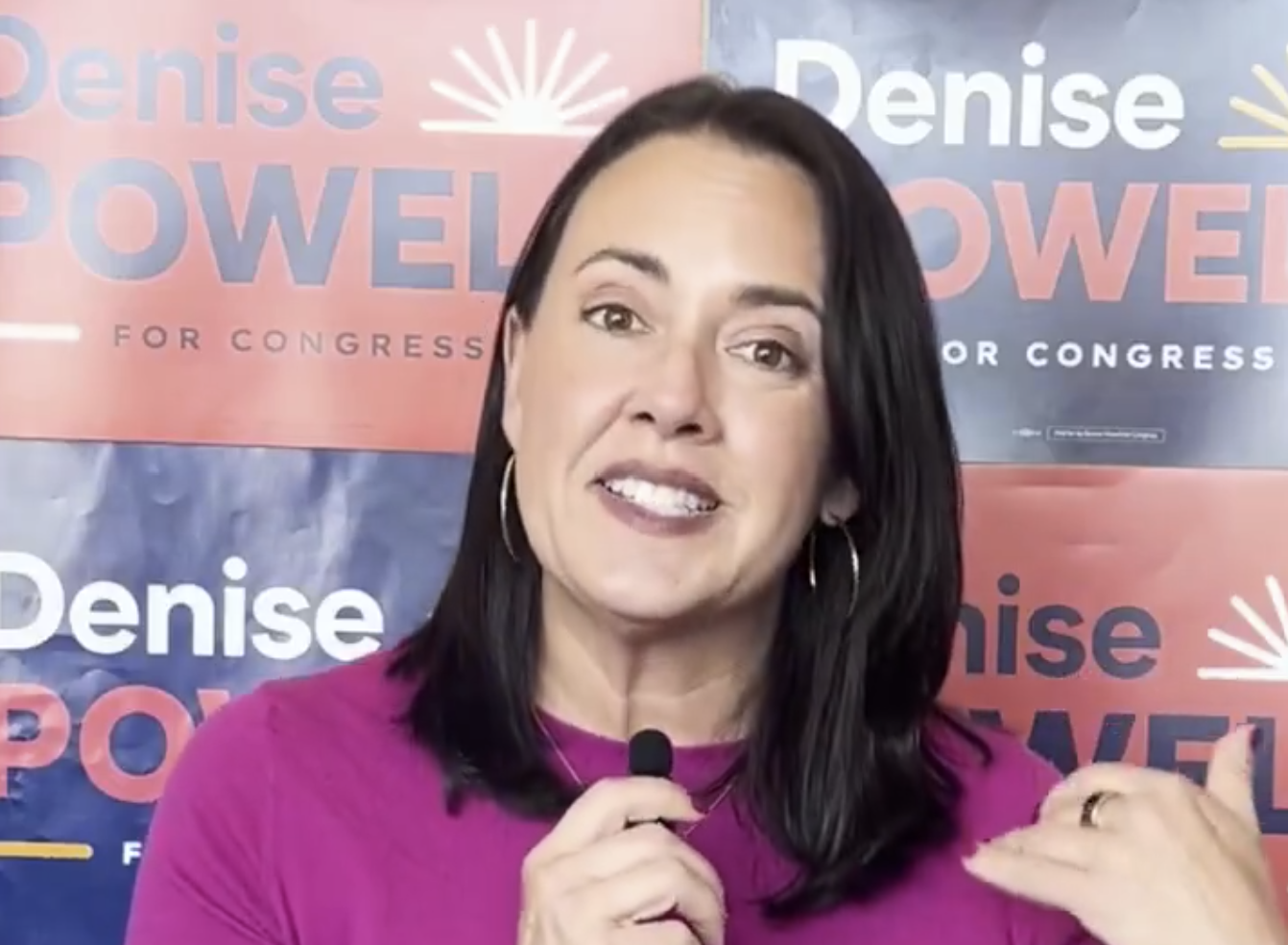
Denise Powell, the Democratic nominee for Nebraska's 2nd congressional district, has drawn criticism for publicly opposing a state law that bans minors from receiving puberty blockers, hormone therapy and sex‑change surgery. The controversy surfaced after a Washington Free Beacon review highlighted Powell's February 2023 Facebook post in which she pledged to "never ever stop fighting" against the legislation.
Powell's post described the bill, signed into law a few months later, as one that would "make it illegal for kids to access gender‑affirming care." In a follow‑up message she argued that preventing minors from undergoing sex‑change surgeries "hurts children" and urged her followers to contact their senators.
The law, officially known as the Children's Health Protection Act, reflects a broader national trend in which Republican‑led state legislatures have moved to restrict gender‑affirming medical treatment for youths. Proponents argue the measures protect children from irreversible decisions, while opponents contend they deny essential health care and exacerbate mental‑health risks. The debate has become a litmus test for candidates in swing districts across the country, including this Nebraska seat.
Powell secured the Democratic nomination to replace retiring Republican Rep. Don Bacon. She will face Omaha city councilman Brinker Harding, a Republican, in the November election. The district, which includes Omaha's suburbs and parts of the city, voted for former Vice President Kamala Harris by 4.66 percentage points in the 2024 presidential race. The Cook Political Report rates the contest as "Lean D," but Democrats have carried the seat only once since 1994, underscoring the uphill battle Powell faces.
Beyond the gender‑affirming care issue, Powell's campaign has been scrutinized for her ties to progressive "dark‑money" groups. In June, the Free Beacon reported that she worked as a consultant for the Sixteen Thirty Fund, a nonprofit that funneled $311 million to left‑leaning organizations in 2024, according to Politico. She also consulted for the New Venture Fund, which spent $429 million on progressive causes the same year. Both entities have been sued by Nebraska Attorney General Mike Hilgers for allegedly using foreign money to support state ballot measures, a case that survived a motion to dismiss in April.
Powell's involvement with Women Who Run Nebraska, a political action committee she co‑founded, adds another layer to the discussion. The PAC describes itself as the only Midwest organization dedicated to recruiting and supporting "forward‑thinking" women, with a focus on women of color, trans women and women with disabilities. In 2023 and 2024 the group contributed nearly $25 000 to the campaign of former state senator Jen Day, who has been vocal against the "Fairness for Girls" constitutional amendment slated for the November ballot.
The "Fairness for Girls" amendment would embed language in the state constitution that bars men and boys from participating on women's and girls' sports teams. Day called the proposal "gross" in an Instagram post, accusing its sponsors of "hating trans people." Powell's PAC donated $750 to Day's campaign committee, linking Powell indirectly to the amendment debate.
Women Who Run Nebraska also supported State Senator Machaela Cavanaugh, who filibustered the gender‑affirming care ban. Powell's organization gave $3 250 to Cavanaugh's campaign committee. In a floor speech Cavanaugh warned that "legislating hate against children" would have "painful" consequences, a sentiment echoed by Powell's allies.
Another beneficiary of Powell's network was State Senator Megan Hunt, who opposed a bill that would restrict bathroom use based on biological sex. Hunt's 2025 floor remarks described the legislation as "indignity and humiliation" for children, and her campaign received $3 500 from Powell's group. Hunt, who once posted "It's a beautiful day to defund the police" on X, aligns with Powell on broader progressive priorities.
The gender‑affirming care controversy has national resonance. In the United States, the Biden administration has urged states to protect access to such care, while several Republican governors have signed similar bans. Canadian provinces, though not facing identical legislation, are watching the U.S. debate closely as it influences public opinion on health policy for transgender youth across North America.
Powell's stance on the issue may help her in the district's more urban precincts, where voters tend to support LGBTQ rights. However, the district's rural counties have historically leaned Republican and have expressed strong support for the Children's Health Protection Act. Campaign analysts note that Powell's association with dark‑money groups could be a liability in a region where voters are wary of outside influence.
Harding, the Republican opponent, has framed the gender‑affirming care ban as a protective measure for families, echoing the language used by state legislators who championed the bill. He has not directly addressed Powell's consulting work, but his campaign has highlighted the alleged foreign funding of progressive groups as evidence of "outside interference" in Nebraska politics.
As the election approaches, both campaigns are likely to intensify messaging around the gender‑affirming care law and the "Fairness for Girls" amendment. Voters will receive mailers, digital ads and phone calls that frame the issues as either safeguarding children or restricting personal freedoms. The outcome could influence how other Midwestern districts approach similar legislation in the coming years.
Powell's campaign declined to comment on the Free Beacon report or on her financial ties to the Sixteen Thirty Fund and New Venture Fund. The lack of response leaves open questions about the extent of her involvement and whether donors will be disclosed under Nebraska's campaign finance rules.
The legal battle over the foreign‑money allegations continues. If the attorney general's suit succeeds, it could set a precedent for how nonprofit political groups operate across state lines, potentially affecting fundraising strategies for both parties in future elections.
In the final stretch, Nebraska's 2nd district will serve as a bellwether for how gender‑affirming care and dark‑money controversies shape voter preferences in a traditionally Republican stronghold that has shown occasional openness to Democratic candidates.