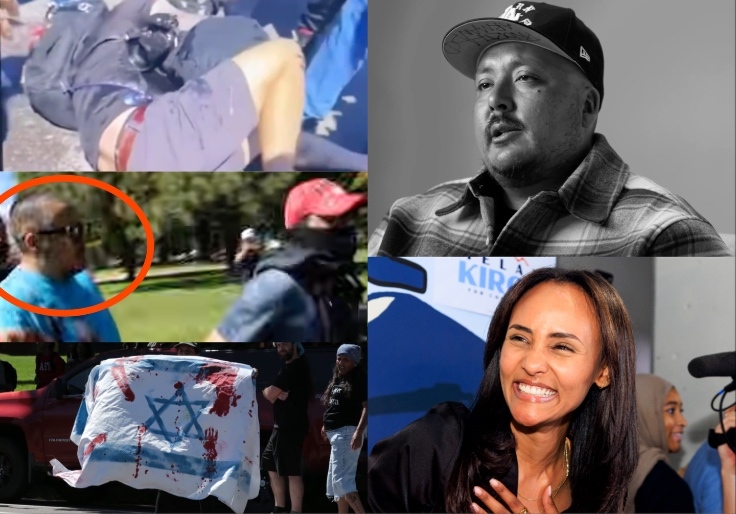
Denver police filed an assault report on September 4 that says Armando Geneyro, a photographer who has contributed to the Colorado Sun, the Denver Post and other local outlets, kicked a counterprotester in the right leg, causing the victim to fall.
The incident occurred amid a student‑led walkout that turned violent when participants surrounded a small group of counterprotesters and threw water bottles. Hospital records confirm that three students required medical attention after the clash.
According to the police report obtained by the Washington Free Beacon, Geneyro was handcuffed at the scene after the victim showed officers video footage of the kick. The report adds that he was later released after receiving a citation. Police said they could not release the video because it is part of an open court case.
Additional video posted by Peak News shows Geneyro near other confrontations. In one clip he appears to move toward a counterprotester who is being swarmed, and later he is seen among a group that pushes an independent journalist to the ground and takes the reporter's camera.
Geneyro's connection to Melat Kiros, the socialist candidate who won the June Democratic primary for Colorado's heavily Democratic First Congressional District, has drawn attention. Kiros defeated long‑time incumbent Diana DeGette and is expected to take the seat in the next Congress. At a rally on the same day, Kiros praised the student demonstrators as "brave" and accused the federal administration of "kidnapping our neighbors and throwing them into concentration camps."
After the protest, Kiros hosted an election‑night gathering that included Geneyro, veteran commentator Hasan Piker and other left‑leaning activists. Social‑media posts show Geneyro endorsing Kiros and lauding her stance on Israel, while Kiros responded that she "couldn't be more honored to have this endorsement." She also follows several of his Instagram accounts and posed for a photo at a wine‑tasting event that Geneyro organizes.
Geneyro's résumé includes work for Denver Public Schools' student‑equity office, a stint as a military veteran and a portfolio of photographs documenting Latino and hip‑hop culture in the city. His images have appeared in the Colorado Collective, a health‑equity publication, and have been used by the city government, Denver International Airport and History Colorado for promotional material. A Denver city councilmember commissioned him to create Zoom‑background images for remote meetings during the pandemic.
Despite the extensive use of his work, none of the outlets that regularly publish his photos credited him for coverage of the September 4 rally or the subsequent party, suggesting he attended in a personal capacity.
Geneyro told a local outlet that he photographs protests to "voice how I feel about certain issues and how I want to lend my support when it comes to advocating for those issues." The statement does not address the assault allegation.
Other adults present at the rally have been identified in video footage encouraging the students to confront the counterprotesters. One of them, Laura Gonzalez, has a prior harassment case for using a bullhorn to call a Jewish community leader a "genocidal cunt" and for allegedly pushing a Boulder councilman's wife. During the anti‑ICE walkout she shouted, "Don't complain when the kids come at you," and later called the counterprotesters "Nazis."
Gonzalez stood beside Jeanette Vizguerra‑Ramirez, an undocumented activist who gained national attention after hiding in a Denver church to avoid deportation during the Trump administration. Vizguerra‑Ramirez was detained by ICE in 2025 and released after nine months. The pair, along with activist Emma Landis, chanted "Fuck ICE" as the students continued to charge the counterprotesters.
Landis, who was shot in the foot by an off‑duty detention‑center employee earlier this year, said she wants "happiness and health and peace and calmness with everybody's lives." The employee claimed protesters threatened his children and called staff "Nazis" and "race traitors." None of the three activists responded to requests for comment.
Republican U.S. Representative Jeff Crank of Colorado has written to the Department of Justice asking for a federal investigation into the violence that erupted at the anti‑ICE rally. Crank's letter argues that the incident raises questions about public‑order policing and the role of outside agitators in protest settings.
Colorado law treats simple assault as a misdemeanor, punishable by up to a year in county jail and a fine. However, prosecutors can elevate charges if video evidence shows intent to cause bodily harm. An "open court case" designation typically means the evidence is part of an ongoing criminal proceeding, limiting public access until a verdict is reached.
The anti‑ICE movement has been a flashpoint in U.S. politics since the agency's formation in 2003. Critics argue that ICE's detention and deportation practices harm immigrant families, while supporters contend the agency is essential for enforcing immigration law. Student walkouts have become a common tactic for climate and social‑justice groups, and the September 4 event in Denver reflects a broader national pattern of youth activism intersecting with immigration debates.
For American and Canadian observers, the incident underscores how immigration enforcement can become a catalyst for street confrontations that involve both local activists and national political figures. In Canada, similar protests have targeted the Canada Border Services Agency, and the cross‑border dialogue on immigration policy often references U.S. enforcement actions.
The legal process for Geneyro will likely move through Denver municipal court, where a citation for simple assault can be contested or result in a trial. If convicted, the outcome could affect his ability to work for news outlets that require background clearances, and it may become a talking point in Kiros's upcoming congressional campaign.
As the First District prepares for a new representative, the episode adds a layer of controversy to Kiros's campaign narrative. Her opponents may highlight the association with an individual charged with assault, while her supporters could argue that the incident reflects broader tensions over immigration policy and protest policing.
The Denver Police Department has not released the video evidence, citing the ongoing case, but has indicated that additional arrests were made for graffiti and other offenses during the rally. The department's spokesperson said the agency is reviewing the incident to determine whether any policy changes are needed to protect both demonstrators and counterprotesters in future events.