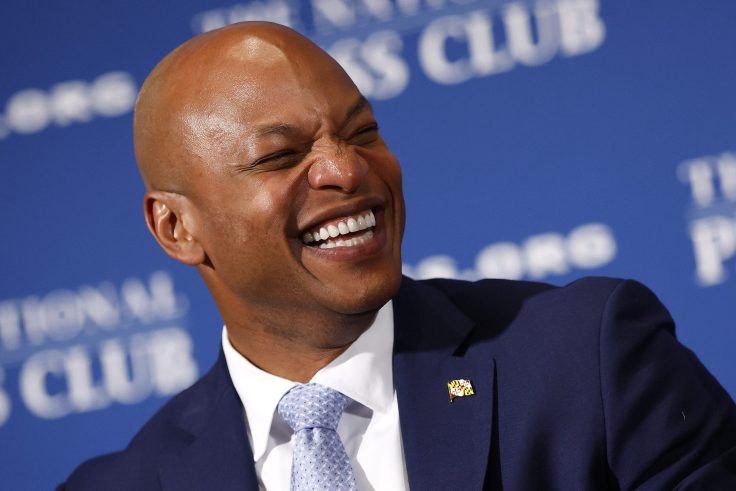
During a Wednesday interview on a podcast hosted by CNN analyst Bakari Sellers, Maryland Governor Wes Moore said he intends to be "part of a bigger conversation" in 2028, a remark that many observers read as a signal that he is weighing a presidential run.
Moore, who will turn 48 next month, framed the comment in the context of his current duties. "I think the state of Maryland and what we've done has justified that," he said, before adding that his immediate focus remains on the November gubernatorial election and the policies his administration plans to finish.
The governor's remarks come at a time when internal polling shows him holding a large lead over Republican challenger Dan Cox. The latest numbers released by a Maryland‑based research firm in August gave Moore a 27‑point advantage, echoing the 32‑point margin that secured his first term in 2022.
Moore's statement marks a sharp turn from his public denials of any presidential ambition. In September 2025, while appearing on Meet the Press, he told the host he would not run in 2028 and intended to serve a full second term. A February town hall with CBS also featured Moore stating, "I'm not running for president."
Political reporters have taken note. Leigh Ann Caldwell of Puck News said the governor's latest comment sounds like preparation for a 2028 campaign and that a reversal would be surprising. "If he doesn't run after saying something like that, I'd be shocked," she said on air.
Moore's rising profile is not without controversy. Over the past decade he has published two memoirs and cultivated a public image as a self‑made Democrat with a distinguished résumé. Critics, however, have pointed to a series of factual inconsistencies that have emerged from investigative reporting.
One of the most prominent disputes involves his claim of having earned a Bronze Star for combat service. Moore has long said he received the medal during his Afghanistan tour, yet a review of Department of Defense records shows the award was granted in the final weeks of the Biden administration, well after his seven‑month deployment ended.
Additional discrepancies include his assertion that he was born and raised in Baltimore, that he was inducted into a Maryland College Football Hall of Fame that does not exist, and that his Oxford graduate thesis made him a leading expert on radical Islam. The thesis, according to university officials, was never submitted to the library and cannot be located.
Moore also frequently tells a story about his great‑grandfather fleeing South Carolina in the 1920s to escape the Ku Klux Klan. A February investigation by the Washington Free Beacon found church records indicating the elder Moore moved publicly to Jamaica in December 1924 to succeed a pastor who had died. The same records contain no reference to Klan activity or a dramatic escape.
Charleston‑based strategist Kevin Walling told Mark Halperin's Morning Meeting podcast that the false family narrative could affect Moore's standing in the early primary states where black voters hold considerable sway. "If voters feel a candidate has misrepresented his own history, it can become a liability," Walling said.
Moore's relationship with the media has also been strained. The Baltimore Sun, owned by Sinclair Broadcast Group, has published a series of articles challenging his military claims. In a recent interview with former White House press secretary Jen Psaki on MS NOW, Moore described Sinclair's executive chairman David Smith as a "MAGA billionaire" and dismissed the reporting as "right‑wing drivel."
Understanding the significance of Moore's potential candidacy requires a brief look at Maryland's gubernatorial system. The state's constitution limits governors to two consecutive four‑year terms, meaning Moore would be completing his second term in 2026. A presidential bid in 2028 would therefore be his final opportunity to seek higher office while still holding statewide office.
Maryland has produced several national figures, most notably former Senator and 2020 Democratic nominee Senator Ben Carper, who never pursued the presidency. Historically, governors from the Mid‑Atlantic have been viewed as viable presidential contenders, given the region's electoral importance and the executive experience the office provides.
Should Moore decide to run, he would enter a Democratic field that is still shaping around the 2028 cycle. Potential rivals include the current Senate Majority Leader, a former mayor of a major Midwest city, and a progressive senator from the West Coast. Moore's appeal could rest on his status as the first Black governor of Maryland and his record on education, health care and infrastructure, issues that resonate with both urban and suburban voters.
From a campaign finance perspective, a presidential run would require filing a Statement of Candidacy with the Federal Election Commission by the first quarter of 2028. Early fundraising reports suggest Moore's campaign committee has already begun soliciting contributions from national donors, a move that is typical for candidates testing the waters.
The governor's comments also have implications for the upcoming midterm elections. By signaling national ambitions, Moore may attract additional attention and resources to his re‑election effort, potentially influencing down‑ballot races in Maryland's congressional districts. Conversely, opponents argue that the focus on a future presidential bid could distract from pressing state issues.
For voters in neighboring states and across the border, Moore's possible entry into the 2028 race could affect the broader Democratic strategy. In the United States, the party's ability to field a candidate who can unite diverse constituencies will be crucial in swing states such as Pennsylvania, Michigan and Wisconsin. In Canada, American election dynamics often shape cross‑border trade discussions, especially in the Great Lakes region where Maryland‑based industries have significant export ties.
As the November gubernatorial election approaches, Moore's campaign will need to balance delivering on state promises with laying the groundwork for a national campaign. Whether his résumé controversies will hinder his ambitions remains an open question, but the governor's latest remarks have undeniably placed him in the national conversation about the 2028 Democratic presidential field.