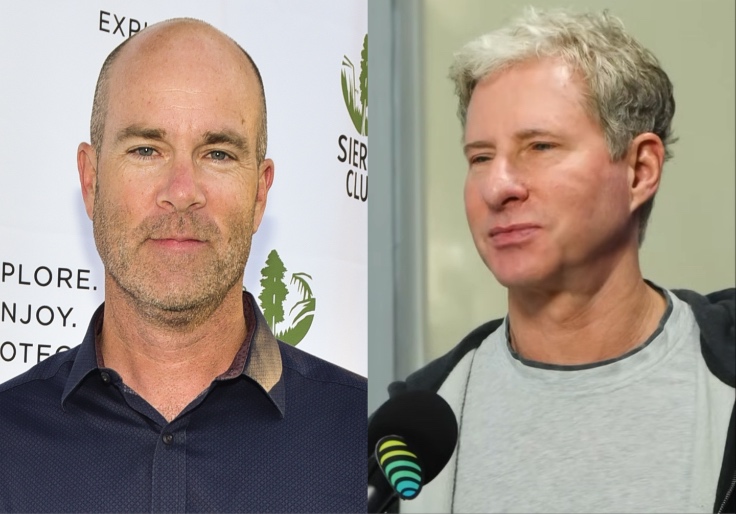
Chris Larsen, co‑founder of Ripple Labs and one of the nation's wealthiest crypto entrepreneurs, has become the chief financial backer of the Invest in Tomorrow Coalition, a political action committee that is spending heavily to unseat Republican primary candidates who oppose federal tax credits for solar and other renewable energy projects.
The coalition, which lists climate activism as its primary purpose, received a $6 million contribution from Larsen according to filings with the Federal Election Commission. The money is being used to purchase "meddle ads," a term for advertisements that aim to influence voters of the opposing party. In the 2024 primary season the group spent $2 million against Rep. Andy Ogles of Tennessee, $1 million against Rep. Ralph Norman of South Carolina, and roughly $640,000 in the Texas attorney‑general race targeting Rep. Chip Roy.
All three of those Republicans lost their primaries, a result that the coalition attributes to its advertising strategy. The ads do not mention climate policy; instead they portray the targets as insufficiently conservative. One spot called Ogles "Lyin' Andy Ogles" while promoting his challenger as an "America First Conservative." Another labeled Norman a "MAGA traitor." The messaging is designed to appeal to the base of the Republican electorate.
Michael Brune, the former executive director of the Sierra Club, runs the coalition's day‑to‑day operations. Brune left the Sierra Club in 2021 after an internal investigation found that he had tolerated a workplace culture described as "anger and aggression." The investigation led to a "Restorative Accountability Process" but did not result in criminal charges. Since his departure, Brune has been a vocal critic of the cryptocurrency industry, calling it a "climate catastrophe" that facilitates money laundering and fraud.
Brune's partnership with Larsen is striking because the two have publicly clashed over crypto's environmental impact. In 2022 Brune warned that the lack of regulation for digital currencies could exacerbate climate change, while Larsen has repeatedly defended the energy efficiency of Ripple's XRP ledger compared with proof‑of‑work systems such as Bitcoin. The two now work together through a series of financial arrangements. Larsen's climate‑focused charity, the Larsen‑Iam Climate Change Foundation, paid Brune $1.4 million for "environmental advisory" services in 2023 and 2024, according to publicly available tax filings.
The coalition's funding roster extends beyond Larsen and Brune. Several solar‑industry firms and climate‑oriented hedge funds have contributed, and former Biden administration energy‑loan official Jigar Shah donated $50,000. Shah, who oversaw the Department of Energy's loan programs for clean‑energy projects, has been accused of "pay‑to‑play" behavior, though no formal charges have been filed.
Invest in Tomorrow's approach relies on microtargeting, a data‑driven technique that delivers ads to specific social‑media users based on their interests. The group's own disclosures show that it purchased ad placements aimed at users who listed "light beer," "motorboat," "football," and "hunting" among their hobbies. This granular targeting is intended to reach likely Republican voters with messages that resonate with their cultural preferences rather than policy concerns.
Political action committees such as Invest in Tomorrow operate under a set of federal rules that allow them to raise unlimited sums from individuals, corporations, and unions, provided they do not coordinate directly with candidates. The "meddle" model sidesteps coordination rules by targeting the opponent's electorate instead of the candidate's own supporters. Critics argue that this practice blurs the line between issue advocacy and direct electioneering, a point that has drawn scrutiny from the Federal Election Commission in recent years.
Ripple Labs itself has a contentious history with regulators. In 2015 the Obama administration sued the company, marking the first lawsuit against a cryptocurrency exchange for allegedly failing to implement anti‑money‑laundering safeguards. The case was settled, but it underscored the regulatory uncertainty that surrounds the industry. More recently, Senator Elizabeth Warren has called for stricter oversight of crypto platforms, a stance that Larsen has publicly dismissed as "violently anti‑crypto."
Larsen's political involvement is not limited to climate‑focused spending. He has contributed $555,700 to the Democratic Congressional Campaign Committee, the primary fundraising arm for House Democrats, and nearly $12 million to support Vice President Kamala Harris's 2024 re‑election bid. He also gave $500,000 to Lone Star Rising, a Texas‑based super PAC backing state‑level candidates, and $555,700 to the DCCC, according to campaign finance disclosures.
The coalition's financial health appears robust. As of July 31, the Federal Election Commission reported that Invest in Tomorrow held $3.2 million in cash on hand. Its chairman, Tom Matzzie, has signaled that the group intends to continue its advertising push through the November general election, suggesting that the strategy may expand beyond primary contests to influence the broader congressional map.
For voters in the United States, the campaign raises questions about the influence of wealthy donors on intra‑party contests. By targeting Republican primaries, Larsen and his allies are attempting to shape the ideological composition of the GOP, pushing it toward candidates who are more amenable to renewable‑energy subsidies. The tactic could have downstream effects on legislation related to climate policy, tax incentives, and the broader energy transition.
Canadian observers note that similar tactics have been employed in Canada's own federal and provincial elections, where third‑party groups spend heavily on digital advertising to sway party nominations. While the regulatory frameworks differ, the cross‑border nature of digital platforms means that American political ads can be viewed by Canadian users, potentially influencing public discourse on climate and energy policy north of the border.
Both Larsen and Brune acknowledge the confrontational nature of the effort. In a recent interview, Larsen described the campaign as "political warfare," emphasizing that he views Rep. Chip Roy as "the biggest enemy for solar in Congress." Brune echoed the sentiment, saying the ads are deliberately crafted from a "MAGA perspective" to win the battle against anti‑solar Republicans.
Invest in Tomorrow has not responded to requests for comment, nor have representatives for Ripple Labs or the Sierra Club. As the 2024 election cycle progresses, the coalition's activities will likely be monitored by both campaign‑finance watchdogs and advocacy groups concerned about the growing role of big‑money donors in shaping primary outcomes.