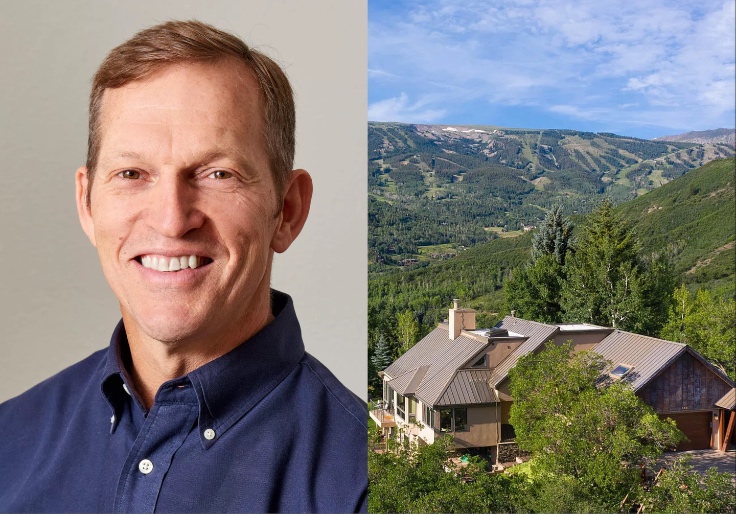
In the race for Colorado's 3rd Congressional District, Democratic nominee Dwayne Romero has placed housing affordability at the forefront of his campaign, accusing large investment firms of driving up rents and pushing residents out of the area.
Romero's campaign statements echo a broader national debate about the role of institutional investors in the housing market. He told a Grand Junction outlet that "prices and housing costs" are the most pressing issue for "all of the people in our district." His website adds, "We need to make sure the people who live in and love our district, from young people to families, can stay here."
What sets Romero apart from many of his peers is the contrast between his public message and the recent activity of the Romero Group, the real‑estate firm he co‑founded and leads. According to the firm's own disclosures, it has closed more than $50 million in sales since 2023, including two Aspen properties priced at $24.5 million and $23.8 million. Aspen, which lies within the district, is consistently ranked as the nation's most expensive ski‑town real‑estate market. A Wall Street Journal analysis showed the median single‑family home price in Aspen reached nearly $14 million in the third quarter of 2020, a rise of roughly 37 percent from the same period in 2019.
The surge in high‑end sales has deepened a housing crunch for Aspen's permanent workforce. Outside magazine reported that fewer than 30 percent of the town's employees live locally, and many professionals such as doctors and lawyers now commute up to 90 miles to reach their jobs. An Aspen Daily News story from 2024 noted that even a discounted studio listed on Airbnb commanded $550 per night in late August, underscoring how short‑term rentals have squeezed the already limited long‑term housing supply.
Romero's own property holdings reflect his ties to the market he says must be reined in. His financial disclosure lists a four‑bedroom, three‑and‑a‑half‑bath home in Aspen assessed at $5.7 million, though off‑market cash deals in the area often exceed assessed values by a wide margin. The disclosure also shows modest stakes, between $1,001 and $15,000 each, in Blackstone, Airbnb and mutual funds managed by BlackRock. All three firms have faced criticism for purchasing residential units and converting them to short‑term rentals, a practice that housing advocates argue reduces the stock of affordable homes.
Romero's campaign has attracted the attention of the Democratic Congressional Campaign Committee (DCCC). The DCCC recently added Colorado's 3rd District to its "target list," a designation that signals the party will allocate resources such as advertising dollars and field staff to help the candidate. The district, which stretches across the western slope of the Rockies and includes the state's southern border, has been under Republican control for the past 15 years. Former Rep. Lauren Boebert won the seat by a razor‑thin margin in 2022 before moving to a different part of the state, and the current incumbent, Rep. Jeff Hurd, secured a nearly five‑point victory in the 2024 election cycle.
The political dynamics of the 3rd District are shaped by its geography and economy. While the district encompasses affluent resort towns like Aspen and Vail, it also contains large swaths of rural communities that depend on agriculture, mining and tourism. Voters in the more remote counties often prioritize issues such as water rights, federal land management and broadband access, whereas residents of the ski resorts are increasingly vocal about the lack of affordable housing for workers who keep the tourism industry running. This split creates a delicate balancing act for any candidate seeking to unite the district under a single platform.
Housing affordability has become a litmus test for candidates across the United States, especially in high‑cost markets where investors have been accused of buying homes en masse and converting them to short‑term rentals. In Colorado, the state legislature has considered measures to increase transparency around corporate ownership of residential properties and to expand the supply of affordable units through zoning reforms. Romero's pledge to "repeal outdated red tape that hinders construction" aligns with these statewide efforts, but his personal financial interests raise questions about potential conflicts of interest.
Romero's firm does operate an "affordable housing community" that serves Aspen and surrounding towns, but the development sits 21 miles from the ski resort, limiting its impact on the most acute shortages near the city center. Critics argue that such projects, while well‑intentioned, do not address the scale of the problem in a market where even modest single‑family homes command prices in the multi‑million‑dollar range.
As the campaign heads into the final stretch, both parties are likely to sharpen their focus on the housing narrative. Republicans in the district have traditionally framed the issue as a matter of over‑regulation and fiscal responsibility, while Democrats are emphasizing the need for increased supply and stricter oversight of corporate investors. For voters in the 3rd District, the outcome will hinge on whether Romero can convince constituents that his personal business experience equips him to tackle the affordability crisis, or whether the contrast between his rhetoric and his firm's recent sales will prove a political liability.
Romero has not responded to a request for comment on the apparent discrepancy between his campaign message and his firm's recent luxury sales.