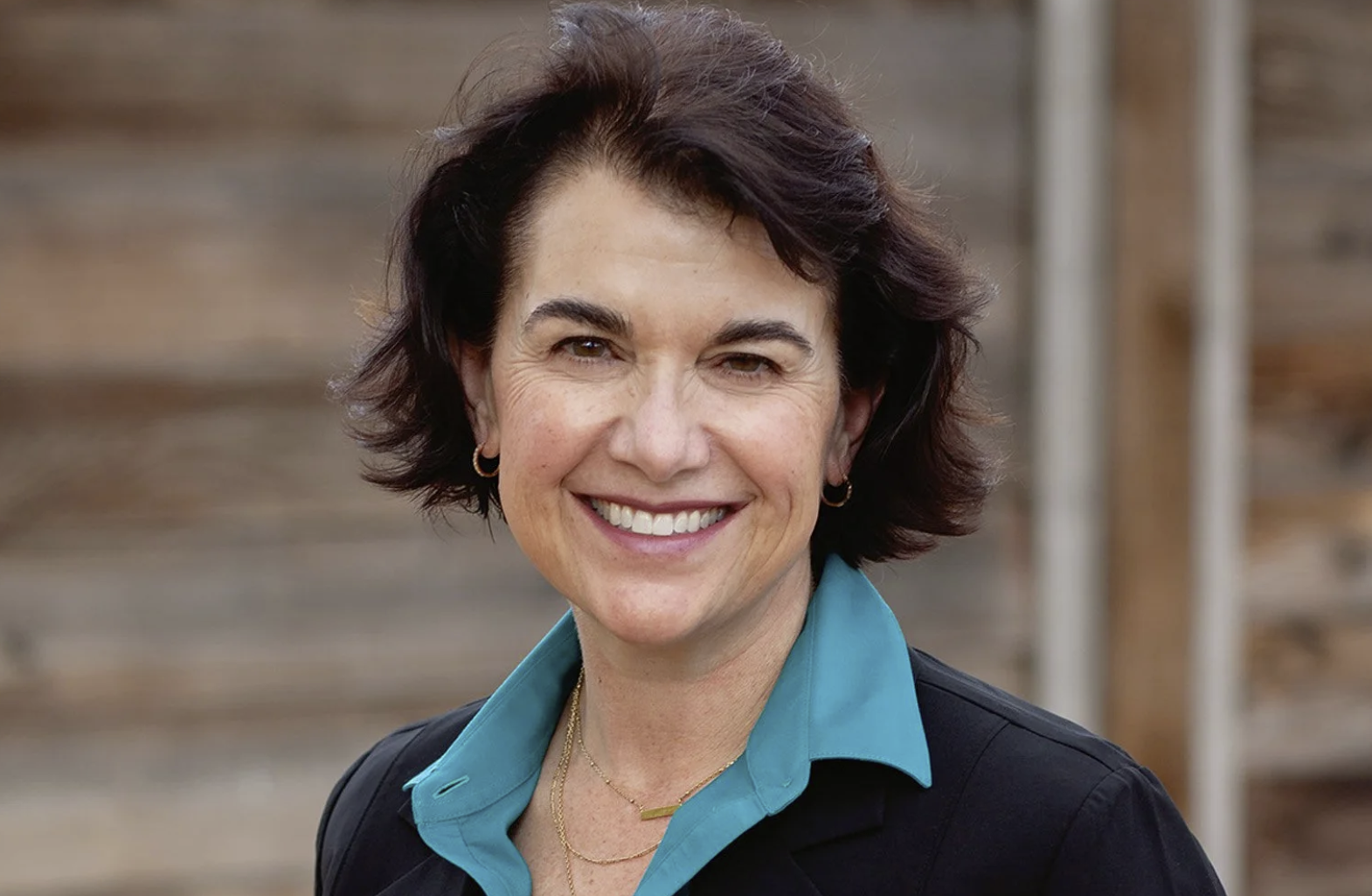
Democratic nominee Eileen Laubacher entered the 2026 race for Colorado's 4th Congressional District with a cash advantage that dwarfs incumbent Rep. Lauren Bo Boebert's fundraising, yet a Washington Free Beacon analysis of campaign‑finance filings shows that the bulk of Laubacher's war chest originates outside Colorado.
According to the review, Laubacher's campaign reported roughly $10.3 million in contributions through June. Of the $2.8 million that were itemized, about three‑quarters were from donors whose addresses fell in other states. Only $272,000, just under ten percent, can be traced to zip codes that lie within the 4th district, and even that figure may be inflated because several of those zip codes spill over into neighboring districts.
The out‑of‑state support comes largely from liberal strongholds on the West Coast. Contributions from California accounted for fifteen percent of Laubacher's total, making Californians the second‑largest source of donors after Coloradans. Within Colorado, the campaign drew money from traditionally Democratic cities such as Denver, Boulder and Fort Collins, as well as from the affluent ski resort community of Steamboat Springs.
Laubacher has repeatedly framed herself as the candidate who better understands the district's needs than Boebert. In a recent interview with The Coloradan she said, "People are tired of representatives like Lauren Boebert who have been in DC for too long and have forgotten the needs of their district." She added that her own service record, "the job is in the name, Representative. Service is core to who I am", sets her apart from the incumbent.
Her campaign manager, Taylor Gillespie, responded to the Free Beacon findings by noting that Laubacher's "34 years of service to our country are in stark contrast to Lauren Boebert who is in this for herself." Gillespie also highlighted that Laubacher has "more than six times the number of Colorado donors than Lauren Boebert," a statement that is technically accurate in terms of donor count but does not address the proportion of out‑of‑state money.
For comparison, Boebert's fundraising profile is more locally rooted. Roughly half of her donors and about half of her total contributions come from within Colorado, according to the same filings. The incumbent's advantage in name recognition and incumbency, however, remains a potent factor in a district that has voted Republican in every election since 2011.
The 4th district stretches across Colorado's eastern plains and borders four red‑leaning states. It is the most conservative district in the state and has been a Republican stronghold for more than a decade. Boebert won the seat in 2024 after moving from the 3rd district, but her margin of victory, just under twelve points, was viewed as an underperformance relative to her predecessor, Ken Buck, who won by roughly twice that margin in the prior cycle. In 2022 Boebert barely eked out a win by half a point when she ran in the 3rd district, a seat that had been considered safe for Republicans.
National Democratic strategists have taken note. The Democratic Congressional Campaign Committee (DCCC) added Colorado's 4th district to its "target list" of districts in play, promising strategic assistance to Laubacher's campaign. The party's establishment has already begun funneling money, including a $5,000 contribution from VoteVets, a super‑PAC aligned with Senate Minority Leader Chuck Schumer.
Despite the fundraising disparity, the race is still rated "solidly Republican" by the nonpartisan Cook Political Report. Incumbents typically enjoy advantages that go beyond cash, such as established constituent services and higher name recognition, especially in districts where party affiliation strongly predicts voting behavior.
Laubacher's own political résumé may also raise eyebrows among progressive voters. She was a registered Republican for decades and only switched her party affiliation on March 27 2025, a month before filing paperwork to run for Congress as a Democrat. This timing prompted a lawsuit from her primary opponent, Trish Calvarese, who argued that the Colorado Democratic Party's bylaws require a candidate to be affiliated with the party for at least twelve consecutive months before the assembly begins. Calvarese accused party chair Shad Murib of moving the district assembly date forward by one day to accommodate Laubacher's eligibility.
Another potential flash point involves Laubacher's personal financial disclosures, which reveal that her husband holds stakes in defense contractor Lockheed Martin and has earned income from the company. Critics on the left have long accused defense firms of profiting from overseas conflicts, and any perceived ties to such a contractor could be a liability in a primary that may attract anti‑war sentiment.
Gillespie declined to comment on Laubacher's recent party registration or her husband's business interests, focusing instead on the candidate's record of public service. The silence leaves open speculation about how much these issues will affect Laubacher's ability to mobilize the district's liberal base, especially given the district's overall conservative tilt.
Colorado's 4th district is slated to hold its primary in August, with the general election scheduled for November 2026. If Laubacher can translate her out‑of‑state fundraising into a robust ground operation, she could narrow Boebert's lead, but she will also need to convince local voters that a candidate whose financial support largely comes from elsewhere truly represents their interests.
In the broader context, Laubacher's fundraising pattern reflects a growing trend in national politics where candidates in competitive districts rely heavily on national donor networks and political action committees. While such money can fund television ads, staff and data operations, it also fuels criticism that candidates are out of touch with the constituents they seek to represent. For voters in Colorado's 4th district, the question may ultimately be whether a candidate's fundraising source matters more than their policy positions and ability to deliver results in Washington.