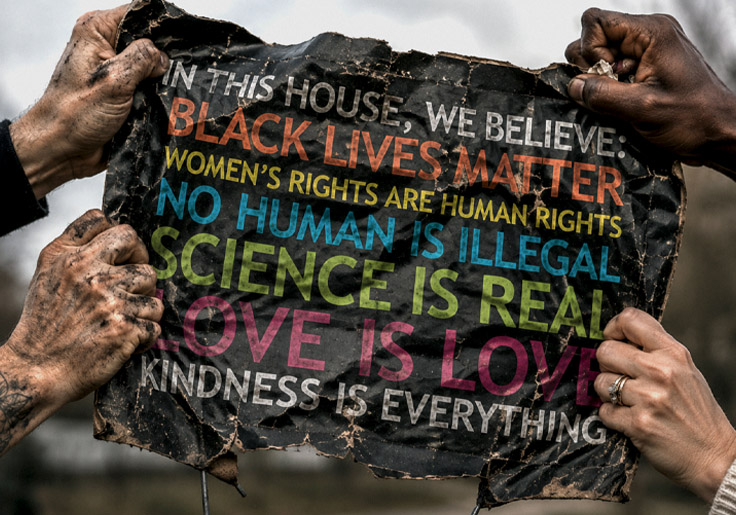
Democratic voters are far from united on the party's cultural agenda, a new poll by Echelon Insights shows, and the split is already shaping primary contests and leadership battles.
The survey, conducted in June 2025, asked registered Democrats whether the party should continue to champion what critics label "woke" policies or move toward a more moderate stance. Forty‑two percent answered that the party should stay the course, thirty‑five percent said it should distance itself, and the remainder were undecided.
Age and ideological self‑identification proved decisive. Among voters under fifty, half supported maintaining the current approach, while only thirty‑two percent favored a shift. Among respondents who described themselves as "very liberal," the gap widened dramatically: sixty‑two percent backed the status quo compared with twenty‑percent who wanted change.
These numbers arrive at a moment when the Democratic Party is wrestling with how to balance primary‑electorate enthusiasm against general‑election viability. The term "woke" has become a flashpoint in that debate, used by opponents to criticize progressive cultural positions and by some activists to signal commitment to social‑justice causes.
Recent primary races illustrate the stakes. In New York's 12th congressional district, a candidate identified as Darializa Avila Chevalier secured the Democratic nomination after defeating an establishment‑backed opponent. Chevalier's campaign emphasized a platform that includes criminal‑justice reform, defunding the police and a broader critique of systemic racism. Her rhetoric, which some media outlets described as provocative, sparked both fervent support among progressive activists and sharp criticism from moderate Democrats.
In Wisconsin, Francesca Hong, a former state assembly member, came within a few percentage points of winning the Democratic gubernatorial nomination. Hong's platform featured proposals such as re‑examining Thanksgiving as a holiday and advocating for policies that address historical injustices toward Indigenous peoples. While her stance resonated with a segment of the party's base, it also raised concerns among voters who feared such positions could alienate swing voters in the general election.
These contests underscore a broader pattern: candidates who adopt bold cultural positions are often successful in primaries, where the electorate leans more progressive. However, the same positions can become liabilities in statewide or national races, where the electorate is more heterogeneous.
Party leaders are feeling the pressure. In February 2025, the Democratic National Committee held a vote to select a new chair and vice chairs. Two of the newly elected vice chairs were later removed after the DNC's internal gender‑diversity rules were deemed violated. The episode highlighted the party's ongoing effort to enforce diversity standards while managing internal dissent.
Policy debates are not limited to cultural symbolism. A Marquette Law School poll released in July 2025 found that more than seventy percent of Americans support a ban on gender‑transition surgery for minors. The issue has become a flashpoint in the party's platform discussions. Representative Seth Moulton of Massachusetts, who announced a Senate bid, initially voiced concerns about allowing transgender athletes to compete in women's sports, citing his role as a father of two girls. After facing backlash from LGBTQ advocates, Moulton issued an apology in a primary debate, acknowledging the hurt his comments caused and pledging to support trans rights.
Abdul El‑Sayed, a former public‑health official who won Michigan's Democratic Senate primary, sparked controversy when he appeared on Fox News in June 2025. During the interview, he compared child gender‑affirming care to circumcision, arguing that medical decisions for minors should involve parents, doctors and patients. Critics accused him of minimizing the experiences of transgender youth, while supporters said his remarks highlighted a need for nuanced discussion.
The internal debate over "woke" policies also has implications beyond the United States. In Canada, the Liberal Party faces similar questions about how far to push progressive cultural reforms without alienating centrist voters. Analysts note that cross‑border trade and security cooperation can be affected when political parties in both countries adopt markedly different stances on issues such as immigration, Indigenous reconciliation and gender‑identity legislation.
Historically, the Democratic Party has navigated tensions between its progressive wing and more moderate factions. The 2008 and 2012 presidential campaigns, for example, saw the party adopt a platform that blended economic populism with socially progressive language, a formula that helped secure victories in swing states. By contrast, the 2016 primary season highlighted a deepening rift, with Bernie Sanders' insurgent campaign pulling the party's agenda further left on economic issues while cultural debates remained less central.
Political scientists warn that the current split could influence the 2026 midterm elections. If the party's base continues to prioritize cultural issues, candidates may double down on progressive platforms to win primaries, potentially narrowing the pool of electable candidates in competitive districts. Conversely, a shift toward moderation could alienate activists who view cultural reforms as essential to the party's identity.
Democratic strategists are already weighing options. Some suggest the party could adopt a "dual‑track" approach, allowing progressive candidates to champion cultural issues in safe districts while fielding more centrist contenders in swing regions. Others argue that a unified message is necessary to counter Republican narratives that portray the party as out of touch with mainstream America.
The Echelon Insights poll provides a snapshot of where the party's base stands today, but the political calculus will evolve as primary contests conclude and the DNC finalizes its platform for the next election cycle. How the Democratic leadership reconciles these internal divisions will shape not only the party's electoral prospects but also the policy direction on issues ranging from criminal‑justice reform to transgender rights.
For voters, the takeaway is clear: the Democratic Party's internal debate is far from settled, and the outcome will affect the choices on ballots across the country in the years ahead.