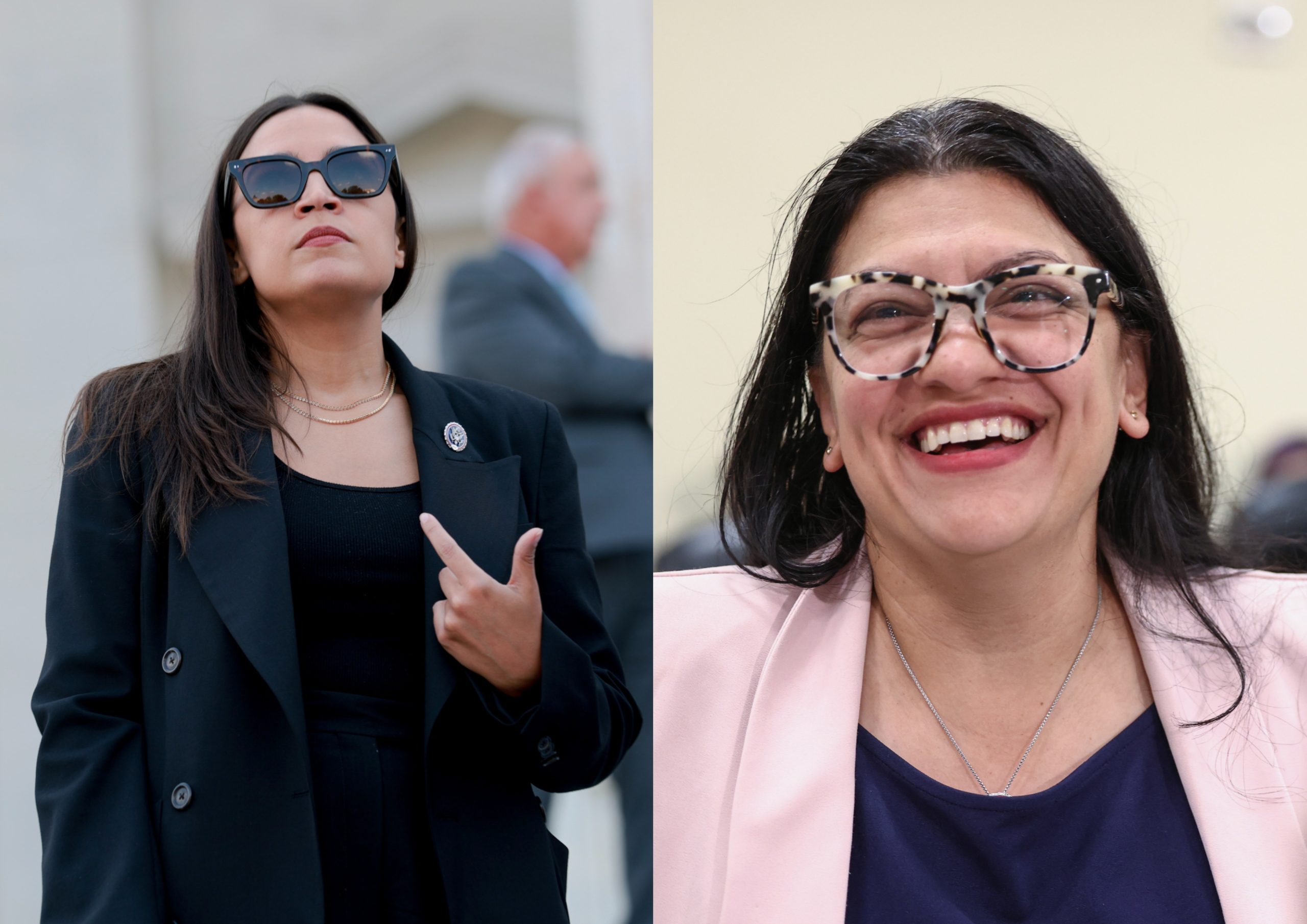
Federal Election Commission records released to the Washington Free Beacon show that the two members of the so‑called "Squad" spent more than $12,000 of campaign contributions at Albi, a Washington, D.C., restaurant that describes itself as Palestinian‑focused and lists wines sourced from Lebanon's Hezbollah‑controlled regions.
Albi's menu includes a poem by Mahmoud Darwish, a poet who left the Palestine Liberation Organization in 1993 in protest of the Oslo Accords. The establishment also highlights a bottle it calls "Grapes of Wrath," which the owner says comes from the West Bank. In a New York Times review, the restaurant's owner appeared in a keffiyeh, a traditional Arab headscarf, and the paper's chief restaurant critic awarded the venue a four‑star rating, a distinction normally reserved for a handful of New York City eateries.
According to the filings, Representative Ocasio‑Cortez's campaign recorded a $3,326.57 charge at Albi, while Representative Tlaib's committee logged $2,700 in meals and catering there. Both entries are listed under "catering" in the campaign finance reports, a category that allows the use of donor money for food and beverage expenses incurred during official business.
Campaign finance law permits members of Congress to spend donor contributions on meals that are directly related to their official duties, provided the costs are reasonable and properly documented. Critics argue that the high price tags at Albi and other upscale venues stretch the definition of "reasonable," especially when the same lawmakers publicly champion policies aimed at reducing wealth inequality.
Albi's reputation for political controversy extends beyond its menu. The restaurant's wine list deliberately excludes Israeli producers and instead features bottles from Lebanese vineyards that operate under the oversight of Hezbollah‑aligned authorities. This choice has drawn criticism from pro‑Israel groups, which contend that the establishment tacitly supports a designated terrorist organization.
The spending pattern at Albi is part of a larger trend identified by the Free Beacon analysis. House Democrats have collectively spent at least $328,000 on meals at Michelin‑starred restaurants between 2016 and 2026. The data includes expenditures at three‑star venues such as Chicago's Alinea, where Ocasio‑Cortez's campaign recorded a $2,338.34 charge for a tasting menu that can exceed $1,000 per person when wine pairing is added.
Representative Ocasio‑Cortez, who has repeatedly warned of "the new Gilded Age," justified the Alinea expense as a strategic meeting with donors and staff. The same filing shows a $4,000 spend on catering from Sushi Nakazawa, a Michelin‑starred sushi bar near the White House, during the same election cycle.
Other members of the Democratic caucus have also been noted for fine‑dining purchases. Representative Ro Khanna of California, whose district includes some of the nation's wealthiest suburbs, spent $1,400 at The Village Pub in Woodside, a venue known for serving caviar at $200 per plate. He also logged $400 at Semma, a Michelin‑starred Indian restaurant in New York City.
Representative Stacey Plaskett, the non‑voting delegate from the U.S. Virgin Islands, recorded $4,200 in catering costs at Rose's Luxury, a three‑star restaurant in Washington, D.C., and an additional $1,625 at its sister venue Pineapple and Pearls. Former Speaker Nancy Pelosi's 2005 filing shows a $1,660 dinner at Per Se, a three‑star establishment in Manhattan, shared with an unnamed contributor.
Leadership positions within the House appear to correlate with higher fine‑dining expenditures. Representative Hakeem Jeffries, the current Democratic leader, has spent more than $9,000 at Brooklyn's River Café over several years, and his committee reports frequent meetings at Fiola in Washington, D.C., a venue that has hosted 26 current House Democrats according to the same data set.
Representative Mark Takano of California stands out as the single largest spender on high‑end cuisine among House Democrats. His campaign has allocated over $74,000 to n/naka, a three‑star Japanese restaurant in Los Angeles, for event space and catering between 2016 and 2026. Takano's record also includes a state dinner for the Japanese prime minister in 2024, where he dined at the same venue.
The pattern of spending raises questions about how campaign finance rules intersect with public messaging on economic inequality. Critics argue that the optics of using donor money to fund meals at venues that charge several hundred dollars per person undermine the credibility of lawmakers who position themselves as champions of the working class.
Supporters of the expenditures point out that high‑end restaurants often provide private rooms and a level of service conducive to fundraising and policy discussions. They note that the Federal Election Commission allows such expenses when they are directly tied to official duties, and that the cost of securing a quiet space for a meeting can be higher than renting a conventional conference room.
For voters in key swing districts, the revelations may influence perceptions of authenticity. In the 2024 midterm cycle, several of the lawmakers highlighted in the report are facing competitive races, and opponents have already begun to cite the fine‑dining spends in campaign ads and social media posts.
Legal experts caution that while the expenditures appear to comply with current reporting requirements, any future changes to FEC regulations could tighten the definition of "reasonable" meal costs. Proposals under consideration in Congress include caps on per‑person catering expenses and stricter disclosure of donor‑funded meals.
In the meantime, the House Ethics Committee has not opened an investigation into the specific transactions, stating that the filings are publicly available and that no complaints have been lodged.
The broader debate touches on the role of elite dining in American politics. Michelin stars, awarded by the French‑based guide, signal culinary excellence and often attract high‑net‑worth patrons. Restaurants that earn such distinctions can command prices that exceed $500 per person for tasting menus, a reality that makes them attractive venues for political fundraising but also a potential flashpoint for criticism.
As the 2025 election calendar fills out, the disclosed spending will likely become a talking point for both progressive activists and conservative commentators. Whether the public will view the meals as a legitimate use of campaign resources or as a sign of hypocrisy remains to be seen, but the data provides a concrete record of how donor money is being allocated within the Democratic caucus.