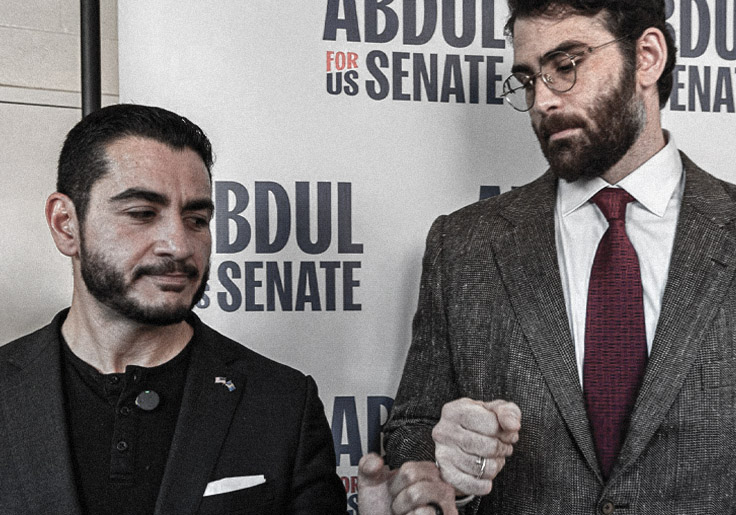
The outcome of Michigan’s Senate primary has laid bare a serious fracture inside the state Democratic coalition. Abdul El‑Sayed defeated Haley Stevens, but his victory is now being measured against a growing distrust among black voters and the powerful Congressional Black Caucus.
Black voter backlash and the “uncommitted” controversy
El‑Sayed’s campaign has been linked to the “uncommitted” campaign of 2024, which urged Democrats to cast a protest vote in the presidential primary to signal opposition to President Joe Biden’s stance on Israel. The move angered many members of the Congressional Black Caucus, which had thrown its support behind Stevens. The caucus, a bloc of African‑American members of Congress that traditionally shapes the party’s civil‑rights, education and economic agenda, now finds itself at odds with the Democratic nominee.
Keith Williams, chair of the Michigan Democratic Party’s Black Caucus, warned that “Black people have a right to be pissed off about the uncommitted stuff. There's going to need to be some healing, big time.” He called for dialogue and reconciliation before the general election.
Controversial allies and inflammatory remarks
El‑Sayed’s association with media personality Hasan Piker has drawn particular scrutiny. Piker, who has a history of making disparaging statements about black people, posted a vulgar response to a critic in 2025: “Any other black folk want to engage in radical activist language in this fucking chat? Suck my fucking cock.” Such language is unlikely to win over the demographic that makes up roughly 12 % of Michigan’s electorate.
Another campaign surrogate, Will Lawrence, previously described senior black political leaders as “a pillar, frankly, for establishment, capitalist, imperialist American power … it's a big problem.” Although Lawrence later expressed regret, his comments have been cited as evidence of a broader antagonistic tone within the campaign.
Republican strategy to exploit the split
Republican nominee Mike Rogers is already positioning himself to benefit from the Democratic disunity. His campaign plans to court disaffected black, working‑class and Jewish voters ahead of the November contest, hoping to turn El‑Sayed’s internal challenges into electoral gains.
Rogers’ outreach is expected to be bolstered by El‑Sayed’s own attempts to mend fences, including the enlistment of a third‑party group to contact Maryland Governor Wes Moore, the nation’s only black governor. Whether this outreach can offset the damage caused by the “uncommitted” campaign and the controversial remarks of El‑Sayed’s surrogates remains uncertain.
Implications for the Senate balance of power
The Michigan Senate race is now a litmus test for the Democratic Party’s ability to rebuild a cohesive coalition. With black voters representing a decisive bloc, El‑Sayed must secure a substantial share of their support to have any realistic chance of winning the general election. Failure to do so could hand the seat to Rogers, potentially shifting the Senate’s partisan balance.
Both parties are pouring resources into the state, and the outcome will likely serve as an early indicator of how the Democratic Party navigates internal divisions while the Republicans seek to capitalize on them.
First reported by the original source.