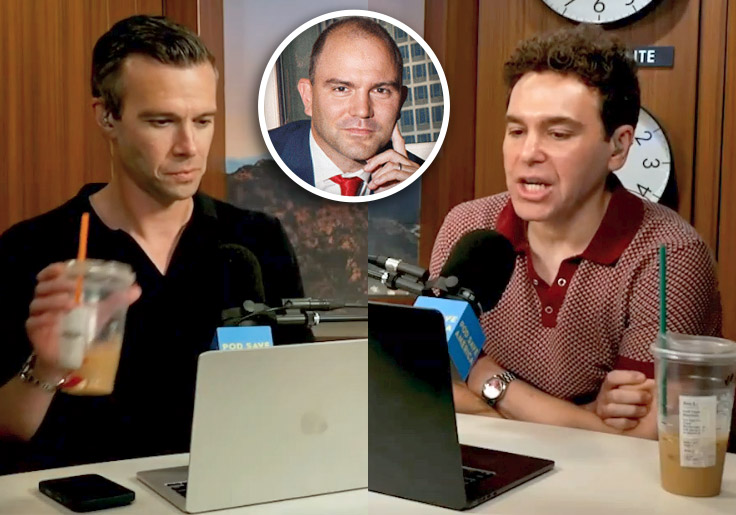
On Tuesday's episode of the liberal‑leaning "Pod Save America" podcast, hosts Jon Favreau and Jon Lovett found themselves reaching for a web search after a listener pointed out that they could not define the phrase "blood libel." The moment came while the duo were critiquing a recent speech by Republican Senator J D Vance, who had used the term in a discussion of anti‑Semitic rhetoric.
Vance, a former Ohio congressman turned senator, had referred to "blood libel" during a gathering of Republican officials that included several Jewish members. Critics on social media argued that his definition was inaccurate, prompting Favreau and Lovett to interject on the podcast. "We want to set the record straight," Favreau said, before admitting, "I'm not sure what the exact meaning is." The hosts then consulted an online encyclopedia to provide a proper explanation.
"Blood libel" historically refers to a medieval accusation that Jews used the blood of Christian children in religious rituals. The myth fueled pogroms and contributed to centuries of anti‑Jewish violence. By invoking the term, Vance was attempting to highlight the persistence of hateful myths, but his description omitted the historical context that scholars emphasize.
The episode quickly attracted attention from both liberal and conservative commentators. Some praised the hosts for correcting a public figure's mistake, while others mocked the need to look up a basic historical term on air. "It's ironic that former Obama staffers who were once praised for their intellect now need a quick Google search to define a well‑known anti‑Semitic trope," wrote a columnist for a right‑leaning outlet.
Favreau and Lovett are part of a broader cohort of former Obama administration officials who have transitioned into media roles. After serving as senior advisers and speechwriters in the White House, they co‑founded the Crooked Media network in 2017, which now produces the "Pod Save America" podcast, a daily political show that reaches millions of listeners across the United States. Their rise mirrors that of other Obama alumni such as former press secretary Dan Pfeiffer and former chief of staff Rahm Emanuel, who have also built media platforms.
The notion that the Obama White House assembled a "team of geniuses" has been a recurring theme in Democratic circles. Former White House communications director George Stephanopoulos, now a chief anchor at ABC News, once described the administration's senior staff as "the most impressive combination of star power and brain power" he had ever seen. That praise has been echoed by many who view the 2009‑2017 period as a high point of policy expertise.
However, the recent podcast incident illustrates the challenges that former officials face when shifting from policy formulation to public commentary. The need to verify a historical definition in real time underscores the different skill sets required for governance versus media analysis. "Being a good policymaker does not automatically make you a good pundit," said political analyst Maya Jones of the Brookings Institution. "The ability to recall obscure historical facts on the spot is a separate competency."
Ben "Hamas" Rhodes, who served as a senior foreign‑policy adviser to President Obama, weighed in on the broader issue of expertise in media. In an interview with a political blog, Rhodes remarked that "proximity to power does not guarantee knowledge," adding that journalists and commentators alike sometimes "literally know nothing" about the subjects they discuss. His comment, though blunt, reflects a growing frustration among some former officials about the perceived erosion of expertise in public discourse.
The episode also revived longstanding debates about the influence of former White House staffers on the Democratic Party's messaging strategy. Critics argue that the "Obama alumni" network, which includes Pod Save America hosts, has become a powerful lobbying force within the party, shaping narratives on issues ranging from health care to foreign policy. Supporters counter that the network provides a valuable platform for progressive ideas and helps mobilize younger voters.
For voters in swing states such as Pennsylvania and Michigan, the incident may have limited immediate impact, but it does feed into broader narratives about credibility and competence. In the 2024 presidential cycle, both parties are emphasizing the importance of "knowledgeable leadership" as a campaign theme. Missteps on a high‑profile podcast could be seized upon by opponents as evidence of a lack of depth among Democratic commentators.
In Canada, the episode offers a cautionary tale for former political staffers who have entered the media sphere. Former Liberal advisors now host a number of political talk shows in Toronto and Vancouver, and they too face scrutiny when they appear uninformed on historical or policy matters. The cross‑border media environment means that American political podcasts are regularly consumed by Canadian listeners, influencing perceptions of U.S. politics north of the border.
Looking ahead, the hosts have promised to be more diligent in their fact‑checking. "We'll double‑check our sources before we go live," Lovett said in a follow‑up tweet. The episode has also prompted Crooked Media to consider adding a research editor to its production team, a move that could reduce future on‑air errors.
While the "blood libel" slip may be a footnote in the larger political conversation, it highlights the tension between rapid, opinion‑driven commentary and the need for historical accuracy. As former Obama staffers continue to shape the Democratic narrative from the airwaves, their ability to navigate that balance will likely remain a point of contention for both supporters and detractors.