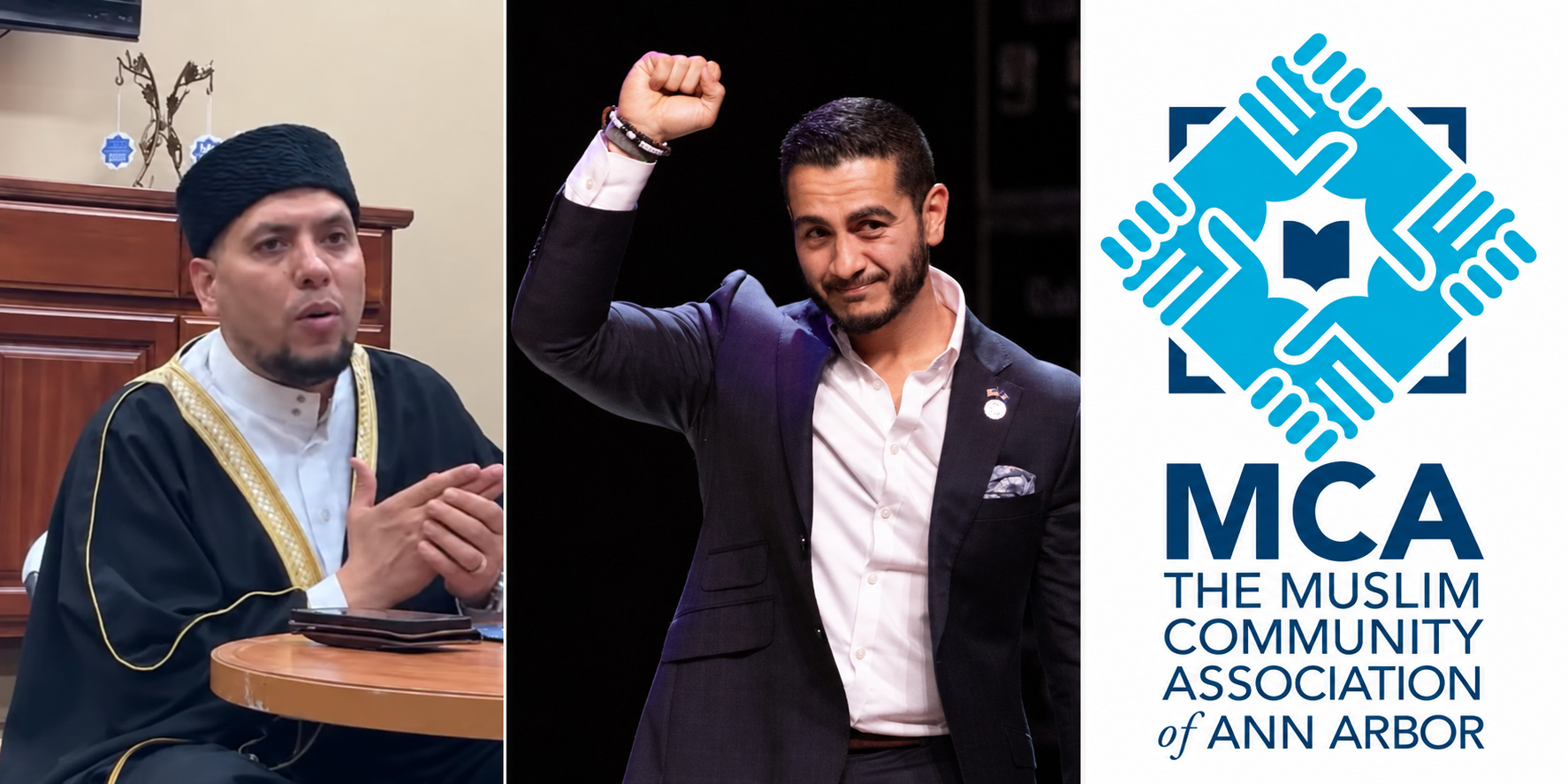
Three days after Abdul El‑Sayed edged out state Rep. Haley Stevens by a single point in the Democratic primary for Michigan's open Senate seat, Imam Abdelhamid Algizawi of the Muslim Community Association (MCA) in Ann Arbor released a video urging Muslims to treat the election as a religious obligation. In the clip, captured by the Middle East Media Research Institute, Algizawi praised the primary win as "a very big victory for the Muslims, Hamdillah, and for the Ummah," then insisted that "when we have a Muslim Senator … this can work for goodness, this can change the society."
Algizawi's remarks went beyond a simple endorsement. He warned that "the community has to change their minds, this is an obligation," and recounted a recent conversation with his daughter, who said she would not support a Muslim candidate because "he's working against women." The imam framed the vote as a test of faith, urging every Muslim voter to cast a ballot for El‑Sayed in November.
The MCA, where El‑Sayed frequently prays, is one of several mosques that serve Michigan's sizable Muslim population. According to the Pew Research Center, about 2.5 percent of Michigan's residents identify as Muslim, a share that translates into roughly 250,000 voters. While many Muslims attend multiple prayer sites, El‑Sayed's regular presence at the Ann Arbor mosque has drawn attention from community leaders and political observers alike.
Algizawi's sermon also featured a series of statements on homosexuality that echo long‑standing conservative religious rhetoric. He described same‑sex relationships as "against human nature," arguing that they "cannot bring stability to life" and that "people cannot give children from this relationship." The imam repeated a 2022 comment made at a Sacramento‑area Islamic center, saying that "Islam as a religion refuse" to accept LGBTQ lifestyles because "there are purposes for marriage … we are looking for children when we get married."
These views stand in stark contrast to El‑Sayed's public record. The former Detroit health commissioner has positioned himself as a staunch advocate for LGBTQ rights, celebrating Pride Month in a June 2025 statement that linked the movement to the historic Stonewall uprising. He has also defended gender‑affirming care for minors, likening it to routine pediatric procedures in a primetime interview on Fox News. El‑Sayed's positions have drawn praise from national LGBTQ organizations, though the Michigan chapter of the Human Rights Campaign declined to comment on his relationship with Algizawi.
Algizawi also raised concerns about "Jewish scholars" teaching Islam in American universities, claiming they create "confusion" and "suspicion" among students. He offered no specific names or institutions, and the assertion runs counter to the fact that most leading scholars of Islamic studies in the United States are not Jewish. The comment reflects a broader pattern of religious leaders framing academic discourse as a cultural battleground, a tactic that has been noted in other faith‑based political mobilizations.
The Michigan Senate race itself carries national significance. Incumbent Democrat Debbie Stabenow announced her retirement, opening a seat that Republicans see as a potential pickup in a state that voted for President Joe Biden in 2020 but swung narrowly for Donald Trump in 2016. El‑Sayed's narrow primary win has placed him in a general‑election contest against Republican former Rep. Mike Rogers, a former Air Force colonel with strong ties to the state's manufacturing base. Analysts note that voter turnout among minority groups, including Muslims, could be decisive in a race that is expected to be decided by a few percentage points.
Legal scholars point out that religious leaders have a protected right to express political opinions, but the line between persuasion and coercion can become blurred when clergy invoke religious duty to influence voting behavior. The First Amendment bars the government from restricting speech, yet the Supreme Court has warned that overt pressure from religious authorities may run afoul of the principle of a free and independent electorate. In practice, most campaigns rely on community endorsements without crossing into illegal voter intimidation.
El‑Sayed's campaign has not publicly responded to Algizawi's video, and a spokesperson for the candidate declined to comment when approached. The imam's statements have also drawn criticism from younger Muslims who, according to Algizawi, "go crazy" when asked whether they could be gay in paradise, a reference to a theological debate that has gained traction on social media. The tension between traditionalist religious teachings and the more progressive values embraced by many American Muslims mirrors a broader generational divide within the faith community.
Beyond the Michigan contest, the episode highlights how religious rhetoric can intersect with electoral politics in the United States. As the 2024 presidential election approaches, both parties are courting faith‑based constituencies, from evangelical Christians to Muslim voters in swing states. The outcome of the Michigan Senate race may offer a preview of how effectively religious endorsements can shape voter behavior in a tightly contested political environment.