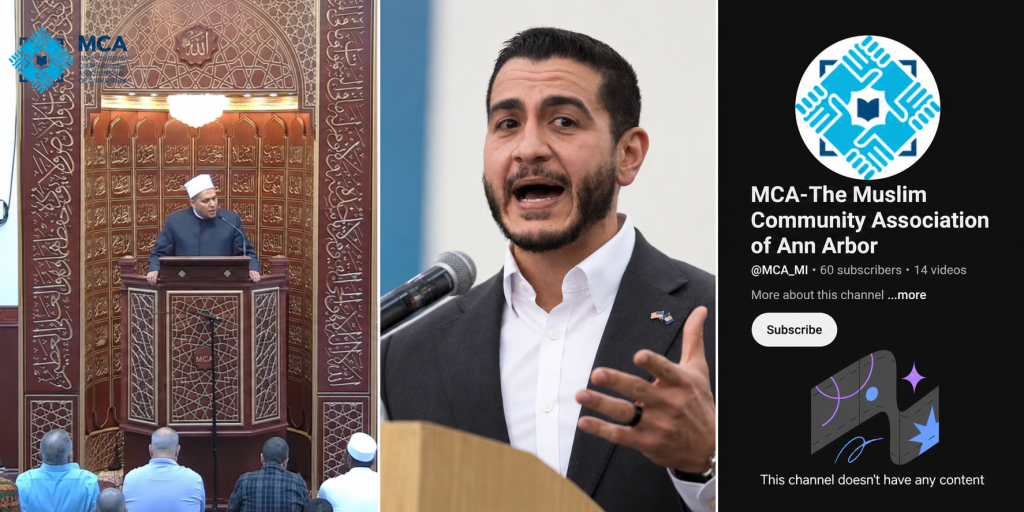
Two weeks after Michigan's Democratic primary, the Muslim Community Association (MCA) of Ann Arbor removed from its YouTube channel a series of sermons delivered by Imam Abdelhamid Algizawi, including a eulogy for the late Hamas chief Ismail Haniyeh and a rallying call for congregants to support Senate hopeful Abdul El‑Sayed. The channel now displays only a notice that it "doesn't have any content."
Algizawi's August 2, 2024 address, recorded the day after Haniyeh was killed by an explosive device in Tehran, described the Hamas leader as "a symbol of jihad, a symbol of struggle, a symbol of patriotism, and a symbol of devotion." The imam asked God to grant Haniyeh a place among the martyrs. A second sermon, delivered after El‑Sayed's primary victory, framed the win as "a very big victory for Muslims" and urged the "Islamic nation" to back the candidate in the November general election.
The removals follow a series of reports by the Washington Free Beacon that highlighted Algizawi's statements and the MCA's ties to El‑Sayed's campaign events. According to those reports, the imam has repeatedly told his audience that the Muslim community has an "obligation" to vote for El‑Sayed to "change the society." The same coverage also noted Algizawi's 2022 remarks at a Sacramento‑area Islamic center in which he condemned homosexuality as a "fashion" and warned that it "cannot bring stability to life." Those videos remain online on third‑party sites, including the Middle East Media Research Institute, which archived the sermon praising Haniyeh, and the Free Beacon, which saved the post‑primary address.
El‑Sayed, a former health official and Detroit‑born public‑health professor, has positioned himself as a progressive challenger to incumbent Senator Debbie Stabenow. He has emphasized policies on health equity, climate action and criminal‑justice reform. On LGBTQ issues, El‑Sayed has publicly contradicted Algizawi's statements, declaring during Pride Month 2025 that he "stands with the LGBTQ+ community in their struggle for equal rights and dignity." Yet his remarks on terrorism have drawn scrutiny. After a Lebanese‑American man attacked the Temple Israel synagogue in Michigan, El‑Sayed said "hurt people do hurt people," later framing the comment as an attempt to explain the attacker's motivation.
During a July 2025 campaign event, El‑Sayed went further, suggesting that U.S. foreign policy contributes to the conditions that foster extremist violence. He said, "There is a level of pain and frustration … that moves somebody into something insane and absurd." He added that America's "rules‑based international order" is often broken by the United States itself, creating a perception of hypocrisy that fuels resentment. The footage of those remarks was first reported by the Free Beacon.
The controversy raises questions about the role of religious leaders in American electoral politics. Under the First Amendment, clergy are free to express political views, but campaign finance law requires that any coordination between a candidate and a religious organization be disclosed if monetary contributions are involved. The MCA is a nonprofit that receives tax‑exempt status under Section 501(c)(3), which prohibits direct political campaigning. If Algizawi's sermons were coordinated with El‑Sayed's campaign, the organization could face penalties for violating the prohibition on partisan activity.
Michigan's Democratic primary was the first contested race for the Senate seat since 2022, and the state's electorate is closely watched by national parties. The race is expected to be competitive in the general election, with Republicans targeting the open seat as a potential pickup. Any perception that a Democratic candidate is aligned with a group designated as a terrorist organization by the United States could become a focal point for Republican attack ads, especially in swing counties such as Kent and Macomb.
Legal experts note that the removal of the videos from the MCA's YouTube channel does not erase the content from the public record. Under the Digital Millennium Copyright Act, the organization can request takedown notices for copyrighted material, but it cannot compel third‑party platforms to delete content that is lawfully posted elsewhere. The continued availability of the sermons on archival sites means that opponents and media watchdogs can still cite the material throughout the campaign.
Both the MCA and Algizawi declined to comment when approached for a statement, and El‑Sayed's campaign also did not respond to requests for clarification. As the November ballot approaches, the issue is likely to surface in debates, campaign ads and voter‑information guides. Voters in Michigan, many of whom belong to diverse religious communities, will have to weigh the candidate's policy positions against the messages delivered by a religious figure who has publicly praised a Hamas leader.
For American observers, the episode underscores the delicate balance between free‑speech protections for religious leaders and the legal boundaries that separate nonprofit religious institutions from partisan politics. It also illustrates how statements made in overseas conflicts can reverberate in domestic elections, influencing both voter perception and the strategic calculations of national parties.