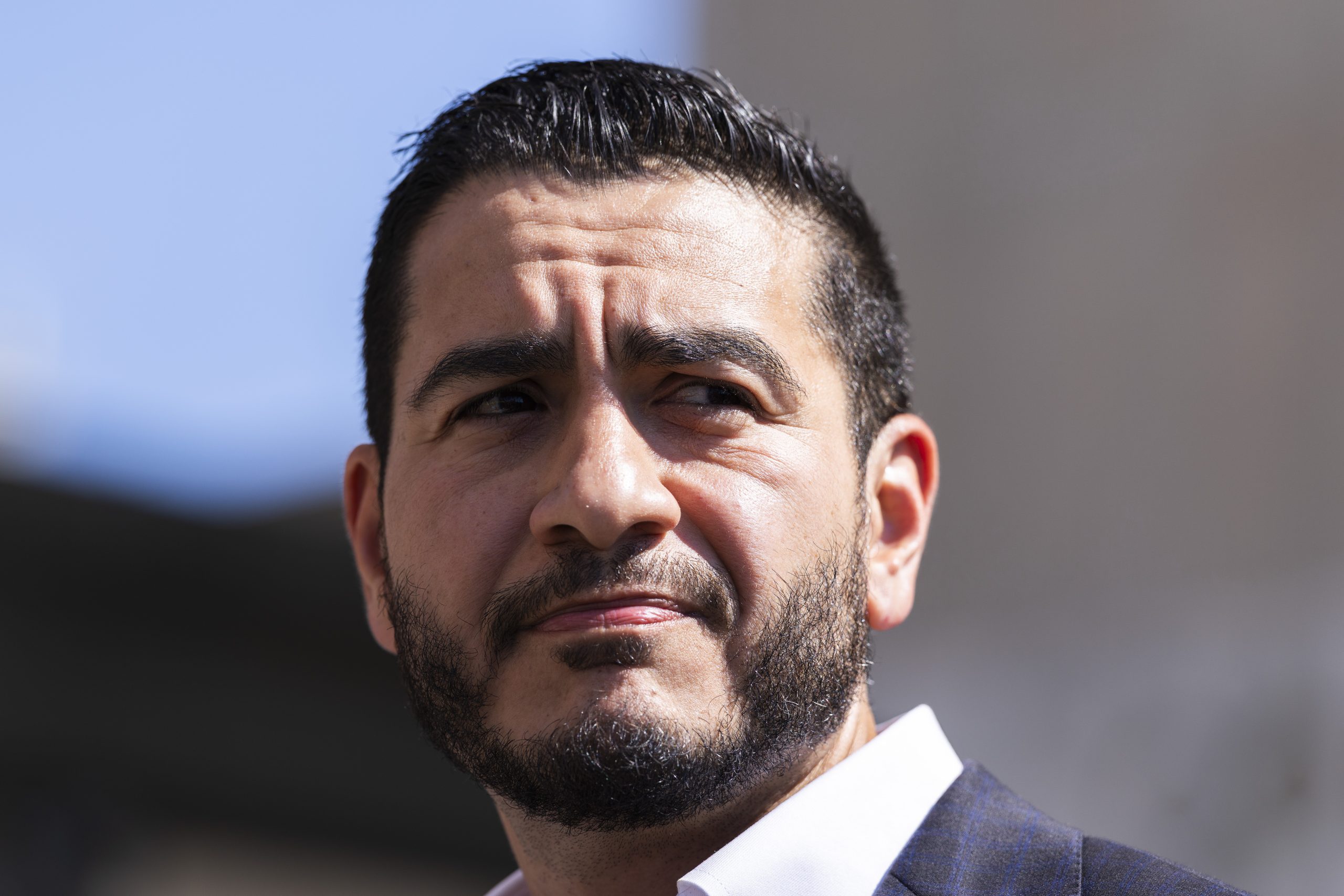
Abdul El‑Sayed, the Democratic nominee for the U.S. Senate seat from Michigan, will address the Islamic Society of North America's annual convention in Detroit on Saturday, six days before the 25th anniversary of the September 11 attacks. He will share a stage with left‑leaning commentator Cenk Uygur and New Jersey‑based cleric Zaid Shakir as part of a discussion billed as an examination of a "turmoiled America."
The ISNA convention, the largest gathering of American Muslims, draws thousands of attendees each year and serves as a platform for religious, social and political issues affecting the community. Critics have long noted the organization's historical connections to the Muslim Brotherhood and its inclusion as an unindicted co‑conspirator in a 2008 federal case involving alleged Hamas fundraising. Those ties have resurfaced as the event's lineup includes several figures whose public statements challenge the official narrative of the 2001 attacks.
Cenk Uygur, host of the progressive YouTube show The Young Turks, posted in February that he no longer believes the official 9/11 story. In that post he revived the "dancing Israelis" claim, a debunked theory that five Israeli agents filmed the towers' collapse and celebrated the event. The claim has been widely dismissed as antisemitic, yet Uygur continues to circulate it, prompting mockery from mainstream media outlets that described his remarks as a full‑blown 9/11 truther stance.
Zaid Shakir, a Muslim scholar who has served as an imam in New Jersey, has similarly called for an "examination" of what he calls "glaring weaknesses and inconsistencies" in the government's account of the attacks. He frequently cites the work of David Ray Griffin, a prominent 9/11 conspiracy author who argues that the United States orchestrated the attacks to justify a war on Islam. Shakir's own writings have linked Israel to other terrorist incidents and have urged Muslims to consider "guerrilla warfare" as a political tool.
El‑Sayed's participation in the panel has drawn scrutiny because of his own record on the subject. In the weeks leading up to the 20th anniversary of 9/11, the candidate posted on social media comparing the death toll from the attacks to the number of COVID‑19 deaths, suggesting both deserved an equally outraged response. CBS News reported that El‑Sayed later deleted those posts after criticism. Earlier, in a 2012 essay for CNN, he described Muslims as "another victim of 9/11" and cited a California study that linked the attacks to a rise in premature births among Muslim women, attributing the spike to post‑attack discrimination.
Subsequent research conducted by El‑Sayed's own team in Michigan contradicted the California findings. The Michigan study found no increase in premature births among Muslim women after September 11 and reported that Arab and Muslim mothers actually had a lower risk of premature delivery compared with white, Black and Asian mothers. The Free Beacon highlighted that omission, noting that El‑Sayed's essay left out the contradictory data from his own research.
Adding another layer to the controversy is El‑Sayed's relationship with Hasan Piker, a popular left‑wing streamer who has campaigned for the Senate candidate. Piker has made inflammatory remarks about the attacks, including a claim that "America deserved 9/11." When asked to distance himself from those comments, El‑Sayed said the remarks were taken out of context and that Piker was a victim of "cancel culture." He has not issued a full repudiation of the statements.
The convergence of these figures at a high‑profile Muslim gathering raises questions about how the Senate race may be affected. Michigan's Democratic primary is already competitive, with candidates ranging from progressive activists to more centrist officeholders. Republican opponents are likely to seize on El‑Sayed's association with known 9/11 conspiracy promoters, framing it as evidence of extremist sympathies. Such attacks could influence moderate voters who remain sensitive to any perceived alignment with fringe theories.
Beyond the Senate contest, the ISNA convention's broader speaker roster has attracted additional criticism. Texas‑based cleric Yasir Qadhi, who is scheduled to appear, has previously called the Holocaust a "hoax," a statement that has drawn condemnation from civil‑rights groups. Pakistani cleric Tariq Masood was removed from the program after reports surfaced that he had forced his 13‑year‑old niece into marriage, a practice that many view as child marriage under the guise of religious law.
Legal scholars note that the presence of individuals with documented extremist or conspiratorial views at a major religious convention can have ramifications for the organization's tax‑exempt status and public perception. While ISNA remains a 501(c)(3) nonprofit, its past designation as an unindicted co‑conspirator in a federal Hamas case underscores the delicate balance the group must maintain between advocacy and compliance with U.S. law.
El‑Sayed's campaign has not responded to requests for comment on the upcoming panel or the broader controversy surrounding the convention's lineup. The candidate's silence leaves open the possibility that the issue will become a focal point in the final weeks before Michigan's primary election, scheduled for August 6. Political analysts suggest that any negative press could shift fundraising dynamics, especially if national Republican committees decide to allocate resources to highlight the perceived association with conspiracy theorists.
For voters in Michigan and across the United States, the episode illustrates how a candidate's choice of speaking engagements can become a flashpoint in a tightly contested race. As the 25th anniversary of September 11 approaches, the intersection of faith‑based community events, historical memory and electoral politics is likely to remain a point of contention for both parties.