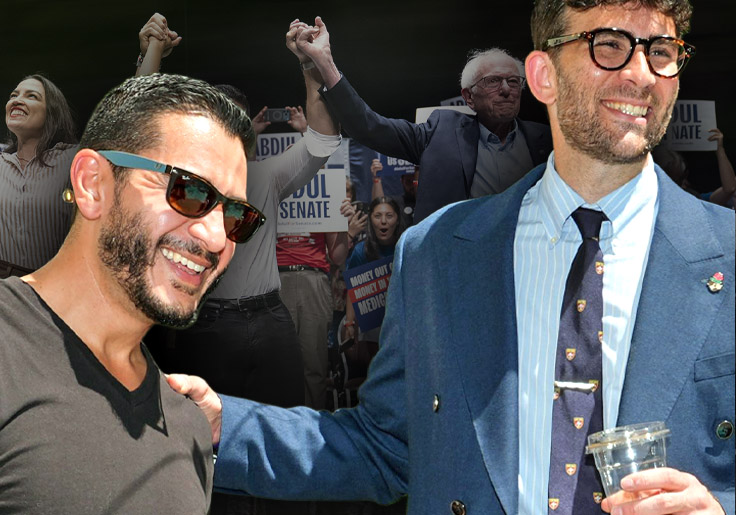
Abdul El‑Sayed, a self‑described left‑wing candidate, secured a slim victory over establishment‑backed Haley Stevens in the Michigan Democratic Senate primary on Tuesday. The Associated Press called the race on Wednesday morning, reporting that El‑Sayed led by less than one point, a result that ran counter to polls that had shown him with double‑digit advantages.
Significance of the result
The win makes El‑Sayed the first left‑wing Senate candidate to defeat an establishment‑backed opponent in the 2026 election cycle. It also highlights a broader realignment within the Democratic Party, where voters appear increasingly drawn to candidates who challenge U.S. foreign policy and capitalist structures.
Controversial associations
El‑Sayed’s campaign has drawn scrutiny for his links to a number of polarising figures. He has appeared alongside Hasan Piker, a Turkish‑American influencer noted for praising Hamas and Mao Zedong, and he received endorsements from Senators Bernie Sanders of Vermont and Elizabeth Warren of Massachusetts.
Critics have pointed to his connections with Dearborn Heights imam Hassan Qazwini, an opponent of LGBT rights who was previously denounced by Senator Sanders, and with Husham al‑Husainy, a pro‑Hezbollah imam who endorsed Donald Trump in 2024. He has also been linked to Melat Kiros, a Colorado congressional candidate who has questioned the United States’ narrative of the September 11 attacks.
Voter motivations
At an election‑night gathering in Detroit, supporters such as Zainab Bibi Ahmed, a local university employee, said opposition to U.S. aid for Israel was a decisive factor. She told the Washington Free Beacon, "I couldn't vote for someone who supports sending weapons and funds to Israel using our tax dollars," highlighting the role of foreign‑policy concerns in the outcome.
Party dynamics
Despite internal friction, both Stevens and former candidate Mallory McMorrow have pledged to back El‑Sayed in the general election. El‑Sayed summed up his approach, stating, "The goal now is to come together," on Tuesday. Nevertheless, his relationship with party leadership remains uneasy; he has labelled Senator Chuck Schumer as "dangerous," while Stevens accused him of blaming "Jewish Americans" for global problems.
Demographic patterns
Polling data indicate that El‑Sayed performed strongly among white, college‑educated voters, particularly in Ann Arbor, whereas Stevens fared better in Black and working‑class communities such as Wayne County. These patterns echo trends observed in other states, including Maine, where left‑wing candidate Graham Platner challenged establishment picks.
Implications for the general election
Republicans, who had hoped to face an establishment Democrat, now confront a more unpredictable contest. Early polls had suggested a toss‑up against GOP nominee Mike Rogers, but El‑Sayed’s capacity to unite the Democratic base remains uncertain.
National ripple effects
Hasan Piker, whose association with El‑Sayed has attracted attention, has turned his focus to Wisconsin, backing Francesca Hong in the gubernatorial primary. Hong has advocated for cancelling Thanksgiving as a national holiday, adding another layer of controversy to the emerging political landscape.