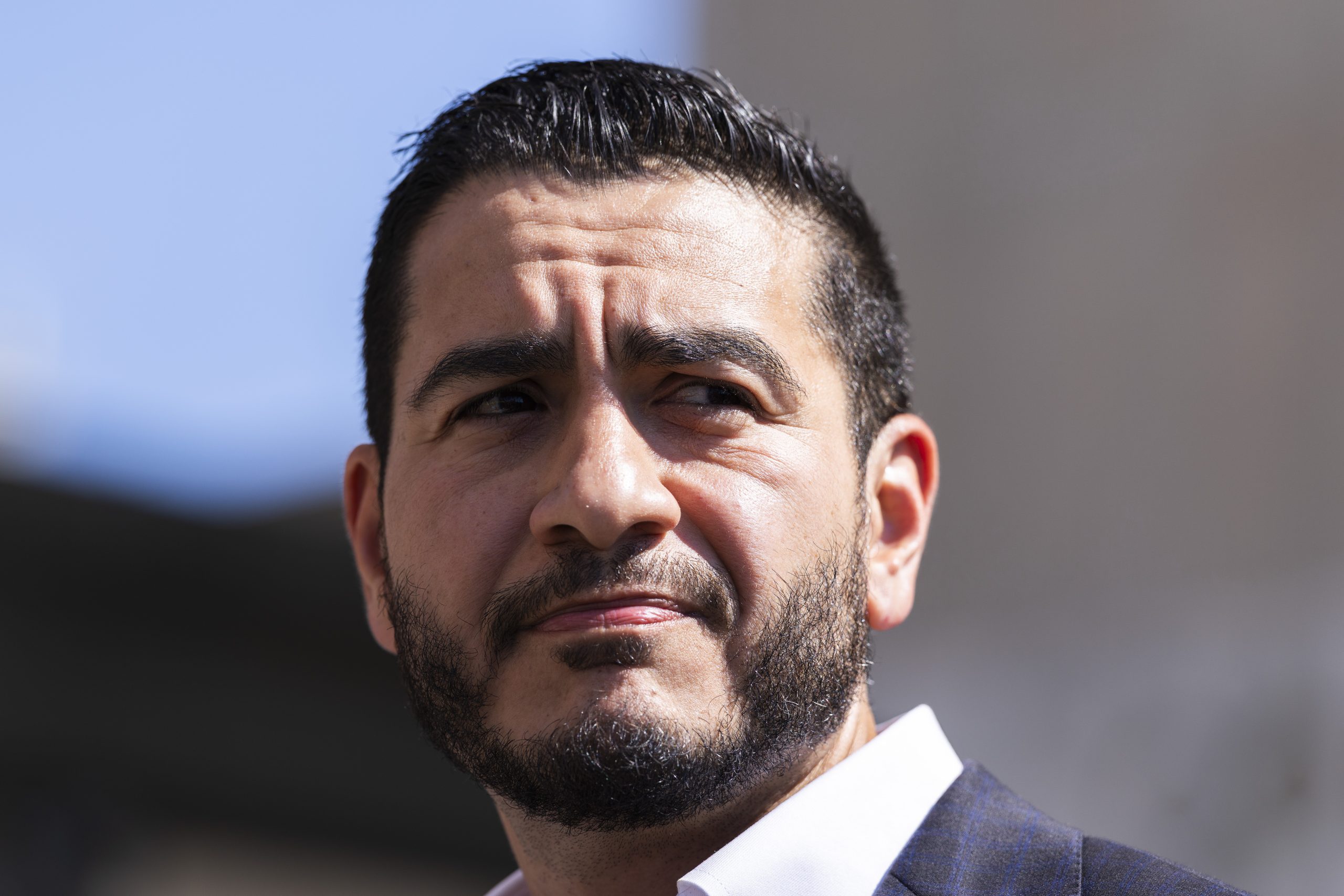
In an essay first published in 2012, Michigan Democratic Senate candidate Abdul El‑Sayed argued that the "pink ribbon lobby" has steered a large share of federal research money toward breast cancer at the expense of other serious illnesses. The piece, titled "The Pink Ribbon Lobby and Everyone Else," appeared in the 2x2 Project, a journal run by Columbia University's Mailman School of Public Health where El‑Sayed worked as an epidemiologist.
El‑Sayed described the lobby's influence as "disturbing," noting that pink lights on the George Washington Bridge and pink cleats worn by the Michigan Wolverines have turned breast cancer into a cultural touchstone. He warned that without his epidemiology training he might believe women are "in imminent danger." The essay contended that the concentration of funding creates inequity in health research, privileging diseases that affect people with "social power and privilege."
The author cited a study from the American Sociological Review that examined how single disease interest groups shape public spending. While the study compared breast cancer and HIV/AIDS groups, El‑Sayed focused solely on breast cancer, despite the fact that in 2012 breast cancer claimed more than three times as many American lives as HIV/AIDS.
According to the Centers for Disease Control and Prevention, about one in eight women will develop breast cancer in their lifetime, making it the second leading cause of death among women after heart disease. Recent estimates project roughly 322,000 new cases and 42,000 deaths this year. Advances in early detection and treatment have driven a steady decline in mortality, even as the number of diagnoses has risen.
El‑Sayed's criticism resurfaces as he seeks a seat in the U.S. Senate, challenging incumbent Republican Rep. Mike Rogers in a race that has drawn national attention. Rogers, a former House Ways and Means Committee member, has positioned himself as a defender of the current federal research budget, while El‑Sayed has pledged to bring a public‑health perspective to the Senate Health, Education, Labor and Pensions (HELP) Committee.
The HELP Committee holds the purse strings for the National Institutes of Health, the nation's primary source of biomedical research funding. As a member of the committee, a senator can influence the annual appropriations bill that determines how much money the NIH receives and how it is allocated across disease areas. Bernie Sanders, the ranking member of HELP and a longtime ally of El‑Sayed, has previously sparked controversy with remarks linking breast cancer risk to sexual attitudes, a stance that resurfaced during his 2020 presidential campaign.
El‑Sayed's essay also referenced the broader debate over disease‑specific lobbying. Critics of the pink ribbon movement argue that the campaign's focus on a single disease can crowd out funding for conditions that lack a high‑profile advocacy base, such as pancreatic or ovarian cancers. Supporters counter that the visibility of breast cancer has saved lives by raising public awareness and encouraging early screening.
In Canada, federal health research is coordinated through the Canadian Institutes of Health Research, which also receives input from disease advocacy groups. While Canada's overall research budget is smaller than the United States, the country's approach to allocating funds across disease categories is guided by a peer‑review system that aims to balance scientific merit with public health need. The American debate over breast cancer funding therefore offers a point of comparison for Canadian policymakers watching the U.S. budget process.
El‑Sayed's health‑policy credentials include a stint as director of the Michigan Department of Health and Human Services under Governor Gretchen Whitmer, where he oversaw the state's response to the COVID‑19 pandemic. He has also been a vocal critic of what he calls "government waste" in medical research, once accusing entrepreneur Elon Musk of "gutting" cancer research through a proposed Department of Government Efficiency.
His campaign has not escaped controversy. In 2019 a group of former colleagues at the Icahn School of Medicine at Mount Sinai filed a gender and age discrimination lawsuit that named El‑Sayed. The complaint alleged that he told a 41‑year‑old female researcher he would not work with anyone over 40 and that he used leftover grant money to furnish his office with high‑end furniture. The Washington Free Beacon reported on the lawsuit, though the case has not been resolved publicly.
During the Democratic primary, El‑Sayed also targeted Rep. Haley Stevens, calling her "the least capable candidate in America" and claiming she could not "string two coherent sentences together." The remarks drew criticism from progressive groups that accused him of sexist rhetoric.
Despite the backlash, El‑Sayed maintained in his 2012 essay that breast cancer is "an incredibly important disease" and that the public focus on it is justified. He argued, however, that the "reallocation of public funds disproportionately to breast cancer is certainly not," suggesting a need to diversify research investment.
The Michigan Senate race is shaping up as a test of how health policy will factor into broader electoral dynamics. Michigan's electorate includes a sizable number of older voters who are likely to be affected by chronic disease research, as well as younger voters who prioritize equitable funding across health issues. A win for El‑Sayed could place a public‑health professional on a key Senate committee, potentially reshaping the conversation around NIH appropriations.
For now, El‑Sayed's campaign has declined to comment on the essay or the allegations raised by his opponents. As the primary season progresses, the debate over disease‑specific lobbying and federal research spending is likely to remain a point of contention, especially in a state where health‑care costs and access continue to dominate voter concerns.