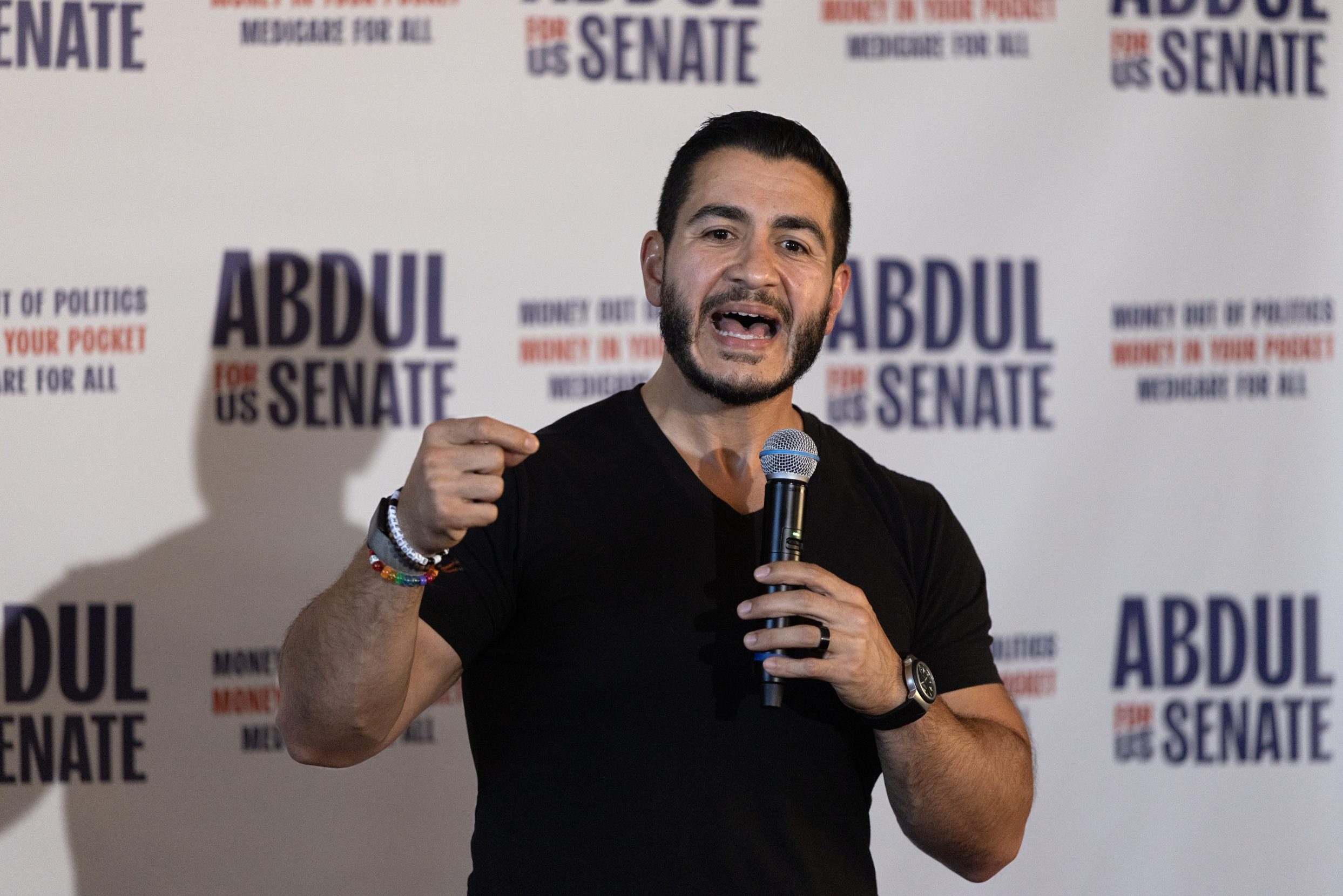
During a campaign event in Detroit last week, Democratic Senate hopeful Abdul El‑Sayed invoked the 2012 killing of Shaima Alawadi as proof that anti‑Muslim bias still fuels violent attacks in the United States. The reference sparked criticism after investigators in California concluded that Alawadi's death was a domestic homicide staged by her husband, not a hate crime.
Alawadi, a 32‑year‑old mother of five, was found dead in her El Cajon home on March 21, 2012. Police discovered a tire‑iron used to bludgeon her and a handwritten note that read "Go back to your country, you terrorist." Although the note suggested a hate motive, detectives cautioned that they had not yet classified the case as a bias‑related offense. Subsequent investigation uncovered text messages indicating that Alawadi planned to leave her husband, Kassim Alhimidi, and move to Texas. Those messages, along with forensic evidence, led to Alhimidi's arrest.
Alhimidi, an Iraqi refugee who had previously trained U.S. soldiers, was convicted of second‑degree murder in April 2014 and sentenced to 26 years in prison. The court's findings made clear that the crime was driven by personal conflict, not religious hatred. No official hate‑crime designation was ever applied.
El‑Sayed's 2012 essay, published in the digital outlet Mic, linked Alawadi's death to the 2012 shooting of Trayvon Martin, describing both as products of "racism, xenophobia, and hate" in America. He wrote that Alawadi was killed because she "had the courage to wear a hijab in a society where Muslims are openly vilified." The piece also claimed that the two murders illustrated a broader pattern of violence against minorities.
Police statements at the time warned against jumping to conclusions about motive, a warning that was largely ignored by El‑Sayed and other left‑leaning commentators. The essay never acknowledged the later conviction of Alhimidi or the lack of a hate‑crime label. Since then, no public correction from El‑Sayed has been recorded.
El‑Sayed, a former CNN analyst and public‑health researcher, has a history of making unverified claims about anti‑Muslim discrimination. In a September 2012 CNN essay, he cited a California study that allegedly showed a 34 percent rise in premature births among Muslim women after the September 11 attacks. The Washington Free Beacon later reported that El‑Sayed omitted his own research, which found no such increase and actually showed lower premature‑birth rates for Muslim and Arab women compared with other groups.
These episodes matter for the Michigan Senate race because El‑Sayed is seeking to unseat incumbent Republican Senator Debbie Stabenow, who announced her retirement. The open seat has attracted a crowded Democratic field, including former U.S. Rep. Elissa Slotkin and former Detroit mayor Mike Duggan. Campaign analysts note that credibility on factual issues can be a decisive factor in a race that will likely be decided by swing voters in the state's suburban counties.
Republican opponents have already seized on the Alawadi episode, accusing El‑Sayed of exploiting a tragedy for political gain. A spokesperson for the Michigan Republican Party released a statement calling the claim "a reckless distortion of facts" and warning that "voters deserve a candidate who respects the truth." The party's messaging aligns with a broader national trend of using misinformation allegations as a campaign weapon.
For Democratic voters, the controversy raises questions about how candidates frame issues of religious discrimination. While many progressives argue that Islamophobia remains a serious problem, critics say that exaggerating isolated incidents can undermine legitimate advocacy. Political scientists note that accurate data on hate crimes is already limited, and false narratives may make it harder to secure funding for community‑based prevention programs.
The Alawadi case also highlights the challenges faced by law‑enforcement agencies when a crime appears to have a hate motive. In California, the San Diego Police Department's early caution reflected a standard investigative practice: investigators wait for forensic and testimonial evidence before assigning a hate‑crime label, a process that can take weeks or months. Mischaracterizing a case before the facts are settled can erode public trust in both the police and the media.
El‑Sayed's continued reference to the incident on the campaign trail suggests that he believes the narrative still resonates with his base. In a recent interview, he said, "They want to use my whole name against me," referring to Republican attacks on his Muslim identity. The comment underscores how identity politics remains a flashpoint in the upcoming election, especially as the Democratic Party debates how to balance cultural sensitivity with factual accuracy.
Looking ahead, the Michigan Senate primary is scheduled for August 2024, with a general election in November. If El‑Sayed secures the Democratic nomination, he will need to address the Alawadi controversy head‑on, either by issuing a correction or by framing the issue in a way that acknowledges the court's findings. Failure to do so could provide ammunition to opponents and risk alienating moderate voters who are wary of misinformation.
For voters in Michigan and across the United States, the episode serves as a reminder that political rhetoric often outpaces the investigative record. As campaigns become increasingly data‑driven, candidates who rely on unverified stories may find their credibility tested in a media environment that is more skeptical than ever.