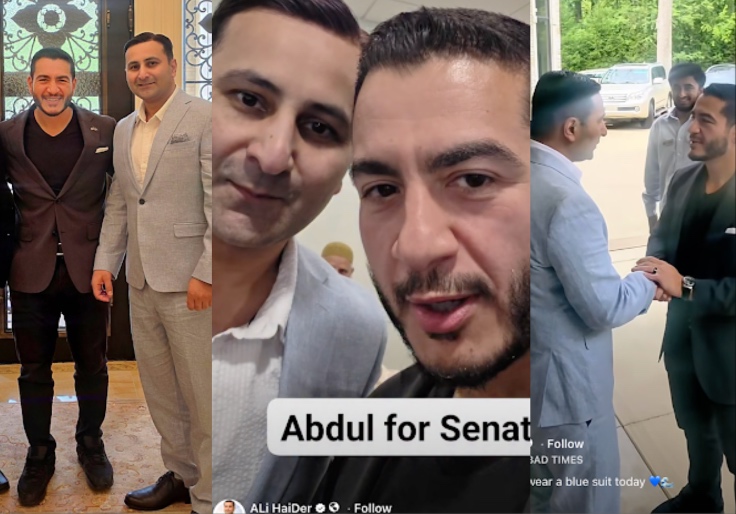
Democratic nominee Abdul El‑Sayed, the former health commissioner who is running for the U.S. Senate seat from Michigan, attended a high‑profile fundraiser on a Detroit‑area mansion this month. The event was hosted by Ali Haider, the president of the Michigan Franchise Owners Association of 7‑Eleven, who last year was sued by the Biden administration for denying overtime pay to more than a dozen workers.
Video posted by Haider on social media shows him greeting El‑Sayed with a hug outside the property before ushering the candidate into the interior, which features marble floors, chandeliers and a spiral staircase. Inside, Haider introduced El‑Sayed to other guests, many of whom are members of the Pakistani‑American community that has become an increasingly active political bloc in the state.
The fundraiser took place at the $3 million estate of Asad Malik, a hotel developer and senior official of PAKPAC, the nation's largest Pakistani‑American political action committee. Malik's name has appeared in other controversies; a former hotel employee sued him last year for alleged sexual assault after a concert, but a judge dismissed the case, and Malik has denied any wrongdoing.
El‑Sayed's campaign has built its messaging around "money out of politics, money in your pocket, and Medicare for all." He has repeatedly promised to bring "dignified, well‑paying jobs to Michigan" and to hold corporations accountable for labor practices. The presence of a franchise owner who was recently found to have violated federal wage rules creates a stark contrast with that narrative.
According to a Department of Labor filing, the Labor Secretary Julie Su sued Haider and his company in September 2023, alleging that the franchisee paid employees in cash off the books to avoid taxes and instructed them not to clock in for hours they actually worked. The lawsuit claimed that 13 workers were denied overtime wages they were legally owed.
Haider's company settled the case in early 2024, agreeing to pay $36,528 in back wages and to improve its record‑keeping procedures. A Department of Labor spokesperson said, "This case's quick resolution puts hard‑earned wages and damages into the pockets of 13 workers and sends a strong message to business owners that the Department of Labor will not tolerate wage theft and attempts to mask violations of federal wage laws."
Local media reported on the lawsuit at the time, and a simple Google search for Haider's name brings up the Department of Labor case among the top results. Nevertheless, the franchisee's contribution of $1,900 to El‑Sayed's campaign, as listed in the candidate's filings through July 31, suggests a financial link that opponents may seek to highlight.
PAKPAC and Malik have been active supporters of El‑Sayed. Social‑media posts from the group show that a separate "Muslims for Abdul" event raised $252,000 for the Senate campaign, according to an attendee who posted the figure online. The fundraising network that includes Pakistani‑American business owners and political operatives is seen as a valuable source of grassroots donations in a state where minority voters are becoming a decisive factor.
The Michigan Senate race is already drawing national attention. Incumbent Republican Senator Debbie Stabenow announced her retirement, opening a rare open‑seat contest in a swing state. El‑Sayed faces a crowded Democratic primary that includes former U.S. Representative John Dingell's son, a progressive activist, and a moderate former state legislator. Fundraising prowess, especially among ethnic constituencies, could be a differentiator as the primary moves toward the summer filing deadline.
Labor unions have long been a cornerstone of Democratic support in Michigan, a state whose economy is still tied to manufacturing and auto‑industry jobs. The United Auto Workers, Service Employees International Union and other groups have pledged endorsements to El‑Sayed, emphasizing his record as a health commissioner who expanded Medicaid under the former administration. However, the appearance of a candidate at a fundraiser hosted by a franchisee with a recent wage‑theft settlement may give union leaders ammunition to question the candidate's commitment to workers' rights.
Political analysts note that the optics of the hug could be used by Republican opponents to paint El‑Sayed as soft on labor violations. In a recent interview, a senior Republican strategist for the Michigan campaign said, "Voters want to see a candidate who stands up to business owners who cheat workers, not one who embraces them at lavish events." The strategist did not name El‑Sayed directly but referenced the recent Department of Labor case.
El‑Sayed's campaign has not responded to requests for comment on the fundraiser or on Haider's past legal issues. Haider likewise declined to speak to reporters about his involvement in the event or his settlement with the Labor Department.
The Department of Labor's enforcement actions against small business owners have increased under the current administration, reflecting a broader push to address wage theft, which the agency estimates costs American workers billions of dollars each year. The agency's approach includes both civil penalties and criminal referrals, and it often works in partnership with state labor departments to audit payroll records.
Michigan's labor laws mirror many federal standards but also include state‑level overtime thresholds and penalties. The Michigan Department of Labor and Economic Opportunity can impose additional fines for violations of state law, and the state's courts have a history of siding with employees in wage‑theft cases. The settlement with Haider avoided a protracted court battle that could have resulted in higher penalties and greater public scrutiny.
For voters, the episode underscores the importance of transparency in campaign finance. Michigan law requires candidates to disclose contributions above $100, and the state's Election Commission monitors large donations for potential conflicts of interest. While Haider's $1,900 contribution falls well below the threshold for public reporting beyond the basic filing, the broader fundraising event likely generated a substantial amount of cash for the campaign, though the exact figure has not been disclosed.
As the primary season accelerates, El‑Sayed will need to balance his outreach to ethnic communities, labor unions and progressive activists while navigating the political fallout from events like the Detroit‑area fundraiser. How he addresses questions about his association with a franchisee who faced a wage‑theft lawsuit could influence his standing among core Democratic voters who prioritize workers' rights.
The next steps for the campaign include filing a detailed campaign finance report with the Michigan Secretary of State, which will list all contributions received at the Malik estate event. The Department of Labor's settlement with Haider is now final, but the case remains a reference point for future enforcement actions against businesses that attempt to circumvent wage‑law requirements.
In a state where the Senate seat will be decided by a narrow margin, every fundraising decision and every association with a business owner can become a campaign issue. El‑Sayed's ability to maintain his message of "money out of politics, money in your pocket" while navigating the realities of political fundraising will be a test of his political acumen as the race heads toward the November ballot.