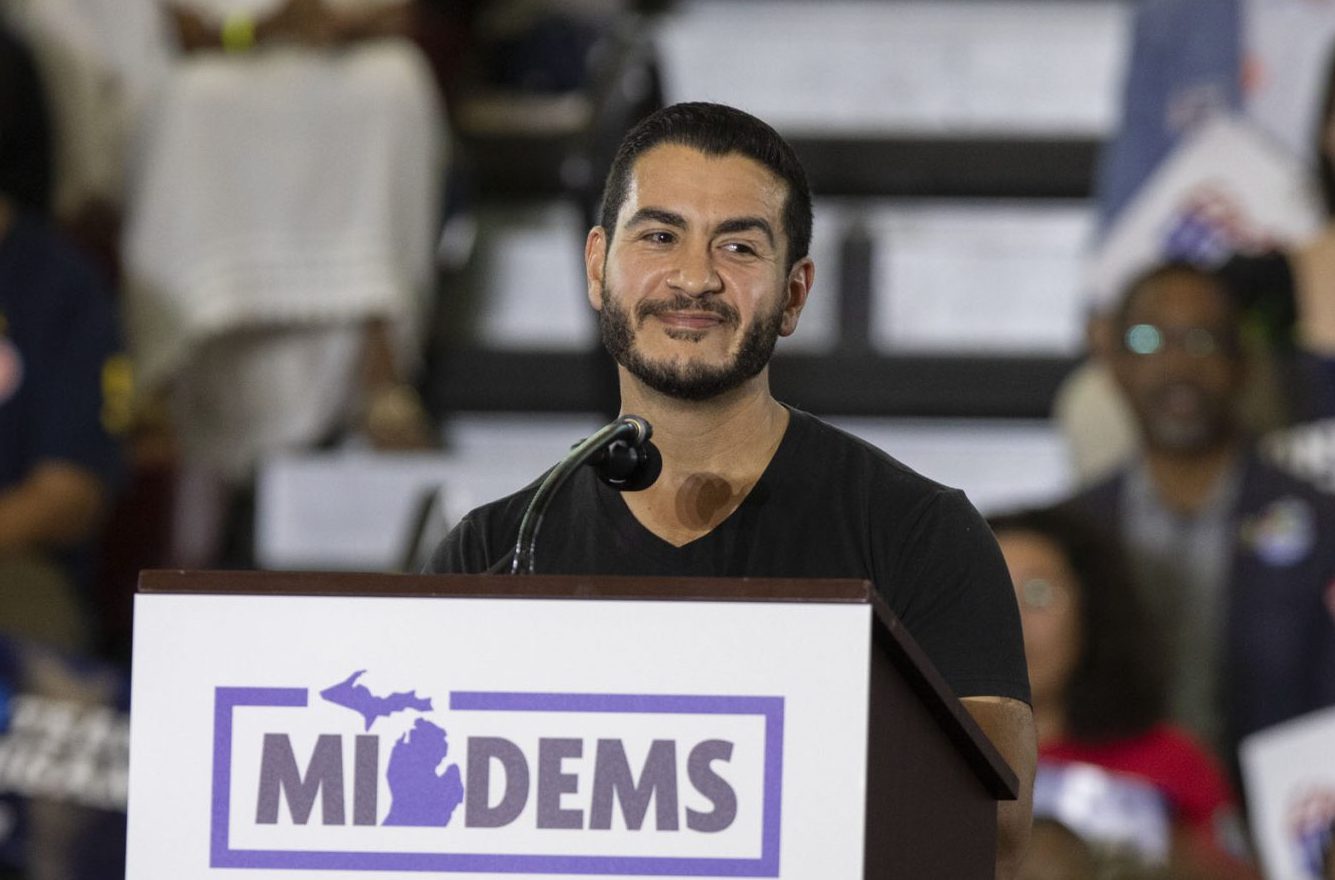
Democratic candidate Abdul El‑Sayed, a former health official and frequent critic of health‑care consolidation, earned $82,000 in consulting fees from One Health Partners, a Chicago‑area nonprofit that purchases medical practices and has been described by former employees as a "scam" that exploits Medicare reimbursements.
Federal campaign‑finance filings show that One Health's owner, Illinois businessman Ali Karim, also contributed the maximum allowable $7,000 to El‑Sayed's Senate campaign. The consulting work, listed in El‑Sayed's personal financial disclosure as "supporting nonprofit healthcare strategy, operations and quality improvement for patients with limited healthcare access," was performed while the candidate was actively seeking the seat held by Republican Sen. Mike Rogers.
One Health Partners obtained tax‑exempt status in January and promotes a model in which it buys small physician practices, allowing doctors to "focus on practicing medicine while we handle the business side of health care." The organization claims to have completed more than $1 billion in debt‑free, all‑cash acquisitions. However, court filings, state regulator reports and interviews with former executives paint a different picture.
Karim's earlier ventures, including Atlantis Health Group, have faced lawsuits and investigations in Wisconsin, Arizona and Florida. Wisconsin securities regulators sanctioned him for using investor money to pay personal expenses, while the Arizona attorney general opened a probe into alleged false documents used to secure a loan. Doctors who sold practices to Karim's firms allege they were left with unpaid buyouts and loss of control over their clinics.
Former vice president of operations Tom Temter described the business model as targeting "a captive base of patients that had Medicare cards" in niche markets with high reimbursement rates. He said the companies would focus on services where the ratio of reimbursement to expense was favorable, then shut down those lines when rates changed. Shadrach Miller, who helped run Arizona operations for a predecessor company, called Karim a "scam artist" who "exploited Medicare."
El‑Sayed's own record includes repeated attacks on health‑care management firms that buy doctors' offices and incentivize higher billing. In a 2022 Detroit Metro Times column he warned that some entities "exaggerate patient diagnoses" to bill Medicare for more money, and on his 2023 podcast America Dissected he called the practice "corrosive" and "all about jacking up the revenue." The contrast between his public statements and his paid work for One Health has become a focal point for critics.
One Health argues it differs from private‑equity buyers because, as a nonprofit, any surplus is reinvested in care delivery rather than paid to shareholders. Yet nonprofit health entities can still pay executives market‑rate salaries and can access programs unavailable to for‑profit firms. For example, the federal 340B Drug Pricing Program lets qualifying nonprofits purchase drugs at discounted prices and then bill insurers, including Medicare, the full price. One Health lists a vice president of pharmacy affairs with "two decades of experience in 340B program leadership," suggesting the firm may benefit from that arrangement.
Michigan's Senate race has drawn national attention because the seat could tip the balance of power in the Senate. Incumbent Sen. Mike Rogers, a three‑term Republican, has raised more than $30 million, much of it from pharmaceutical and health‑insurance interests. El‑Sayed, a former county health director and former state health secretary, has positioned himself as a progressive alternative focused on expanding health‑care access and curbing corporate influence.
Under federal ethics rules, candidates must disclose consulting income and any contributions from entities that could benefit from their legislative actions. El‑Sayed's initial disclosure covering January 2024 to June 2025 omitted the One Health fees, but a later filing for the period January 2025 to July 2026 lists the consulting relationship, noting it began no earlier than July 2025, three months after his campaign launch. The timing raises questions about whether the income was properly reported during the early phase of the campaign.
Campaign finance experts note that while a $7,000 contribution is within legal limits, the combination of a sizable consulting contract and a donation from the same individual can create the appearance of a conflict of interest, especially when the consultant's business model aligns with the candidate's policy critiques.
State and federal regulators have not yet opened an investigation into the consulting arrangement, but the Michigan Attorney General's office has previously examined health‑care fraud cases involving Medicare overbilling. If evidence emerged that One Health's acquisitions involved improper billing practices, the firm could face civil penalties under the False Claims Act, a tool frequently used by the Department of Justice to recover funds from health‑care fraud.
El‑Sayed's campaign spokesperson Roxie Richner defended the work, stating that El‑Sayed "provided consulting services supporting nonprofit healthcare strategy, operations and quality improvement for patients with limited healthcare access as disclosed in accordance with Senate ethics rules." She added that El‑Sayed remains "committed to expanding access to health care for patients who need it, which is why he'll beat Mike Rogers, who raked in campaign cash from big pharma and insurance companies and supported spiking health‑care costs for Michiganders."
One Health declined to comment beyond confirming that it engages outside consultants and that El‑Sayed was among several professionals providing support. Karim did not respond to requests for comment.
The controversy highlights a broader debate over the role of nonprofit versus for‑profit entities in health‑care delivery. Proponents argue that nonprofit models can prioritize patient care and reinvest earnings, while critics point to cases where nonprofits operate like private equity firms, leveraging tax‑exempt status to secure favorable financing and reimbursement while paying high executive salaries.
For voters in Michigan and across the United States, the issue touches on Medicare sustainability, the cost of health‑care services and the influence of money in political campaigns. If El‑Sayed wins the Senate seat, he will join a chamber where health‑care legislation, including reforms to Medicare Advantage and the 340B program, is a top priority.
As the primary season progresses, both campaigns are likely to use the consulting relationship as a talking point. Rogers' team may argue that El‑Sayed's ties to a firm under investigation undermine his credibility on health‑care reform, while El‑Sayed's supporters could contend that his expertise in nonprofit health strategy equips him to fight corporate consolidation.
Regardless of the political spin, the case underscores the importance of transparency in campaign finance and the need for robust oversight of nonprofit health entities that operate at the intersection of public funding and private profit.