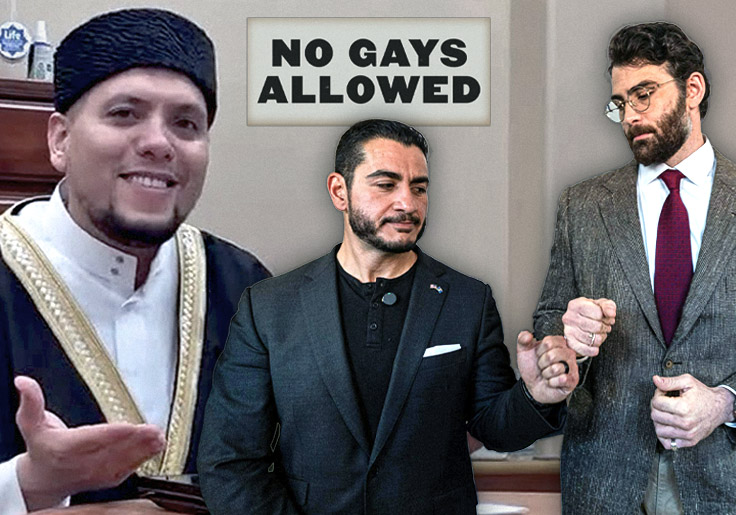
Michigan's Democratic Senate primary has taken an unexpected turn after the Washington Free Beacon published a piece that highlighted the imam of the Ann Arbor mosque Abdul El‑Sayed attends. The imam, Abdelhamid Algizawi, has a public record of condemning homosexuality and calling for the eradication of the Israeli state, statements that clash with El‑Sayed's outspoken support for LGBTQ rights.
Algizawi's remarks have been documented in sermons and social media posts. He has urged Muslims to reject non‑traditional sexuality as contrary to "human nature" and has described Israel as a "disgusting Zionist regime." In 2022 he complained that most university professors teaching Islam were Jewish, a claim that fact‑checkers have debunked. The Free Beacon's report notes that Algizawi celebrated El‑Sayed's narrow primary win as "a very big victory … for the Islamic nation."
El‑Sayed, a former Detroit health director and 2022 gubernatorial candidate, has positioned himself as a champion of LGBTQ equality. He has compared gender‑affirming surgery for minors to circumcision, arguing that both involve a child's body and should be approached with care and consent. His campaign has repeatedly highlighted his support for the community, a stance that appears at odds with the imam's rhetoric.
Brian Rosenwald, a political historian at the University of Pennsylvania, questioned the relevance of the Free Beacon's findings. "I'd find this kind of thing far more compelling if there was evidence that El Sayed was present when [Algizawi] said these things & continued to go to the mosque," he wrote, adding that the situation mirrors the Jeremiah Wright controversy that surrounded Barack Obama years ago. Rosenwald's comment underscores a broader debate about whether a candidate should be held accountable for the statements of religious leaders they attend.
The controversy arrives at a critical moment for the Michigan Senate race. El‑Sayed is competing against progressive challenger Hill Harper and moderate Rep. Elissa Slotkin, each seeking to secure the Democratic nomination ahead of the November general election. Voters in the Great Lakes state have shown strong support for LGBTQ protections, with recent polls indicating a majority favoring gender‑affirming care for minors. Any perception that a candidate tolerates anti‑LGBTQ sentiment could shift the dynamics of a race that is already tightly contested.
Legal experts note that the First Amendment protects the free speech of religious figures, but it does not shield political candidates from scrutiny over the company they keep. Campaign finance rules do not extend to ideological alignment, yet political opponents often use association as a tactic to raise doubts among voters. In past elections, similar strategies have been employed, such as the 2008 focus on Obama's former pastor Jeremiah Wright, which ultimately did not prevent his election.
Critics of the Free Beacon's reporting argue that the outlet, known for its right‑wing perspective, may be attempting to weaponize the imam's statements against a Democratic contender. Liberal activists have called the piece "unfair," saying it conflates El‑Sayed's personal beliefs with the views of a single religious leader he does not control. They point out that El‑Sayed has not publicly endorsed Algizawi's positions and that there is no record of him attending the imam's sermons where the controversial remarks were made.
Supporters of the story contend that a candidate's choice of worship space can signal broader cultural affiliations. They ask whether El‑Sayed's attendance at the mosque implies tacit approval of its leadership. The debate raises questions about the standards applied to candidates of different faiths and whether similar scrutiny would be applied to a Republican candidate who frequented a church led by a pastor with anti‑LGBTQ views.
Michigan's electorate is diverse, with a sizable Muslim population that has become increasingly engaged in local politics. According to the Pew Research Center, Muslims make up about 2.5 percent of the state's adult population, a share that has grown steadily over the past decade. The state's Muslim community has historically faced marginalization, and many leaders emphasize interfaith dialogue and civil rights. El‑Sayed's outreach to Muslim voters reflects a strategic effort to build a coalition that includes progressive, minority, and religious constituencies.
The primary process in Michigan follows a closed‑door system for Democrats, meaning only registered party members can vote in the Democratic primary. This structure tends to amplify the influence of activist groups and organized constituencies, such as LGBTQ advocacy organizations and faith‑based voter blocs. Candidates must therefore balance appeals to the party base with broader electability concerns for the general election, where the state leans moderately Democratic but remains competitive for Republicans.
Historically, Michigan Senate races have been bellwethers for national trends. In 2020, the seat was won by a Democrat who secured a narrow margin, underscoring the importance of turnout in suburban districts like Oakland and Washtenaw counties. Those same counties have become focal points for cultural issues, including transgender rights and Israel‑Palestine policy, making the current controversy especially salient.
As the primary approaches, both El‑Sayed's campaign and his opponents will likely address the issue directly. El‑Sayed may need to clarify his relationship with Algizawi, perhaps by denouncing the imam's statements and reaffirming his own commitment to LGBTQ equality. How voters interpret the association could influence turnout in key Democratic precincts, especially in suburban areas where cultural issues are increasingly decisive.
The episode also highlights the broader challenge of navigating "guilt by association" in modern politics. While opponents may seek to draw connections between a candidate and controversial figures, the burden of proof rests on demonstrating that the candidate shares or supports those views. Until clear evidence emerges that El‑Sayed endorsed Algizawi's anti‑LGBTQ or anti‑Israel rhetoric, the controversy remains a question of perception rather than proven misconduct.
For Canadian observers, the situation offers a comparative lens on how North American democracies handle religious affiliation in political campaigns. Canada's federal elections impose stricter limits on negative campaigning and have a tradition of less overt religious litmus testing, though recent provincial races have shown similar debates. The Michigan case may therefore serve as a reference point for discussions about the balance between religious freedom, candidate accountability, and voter expectations across the border.