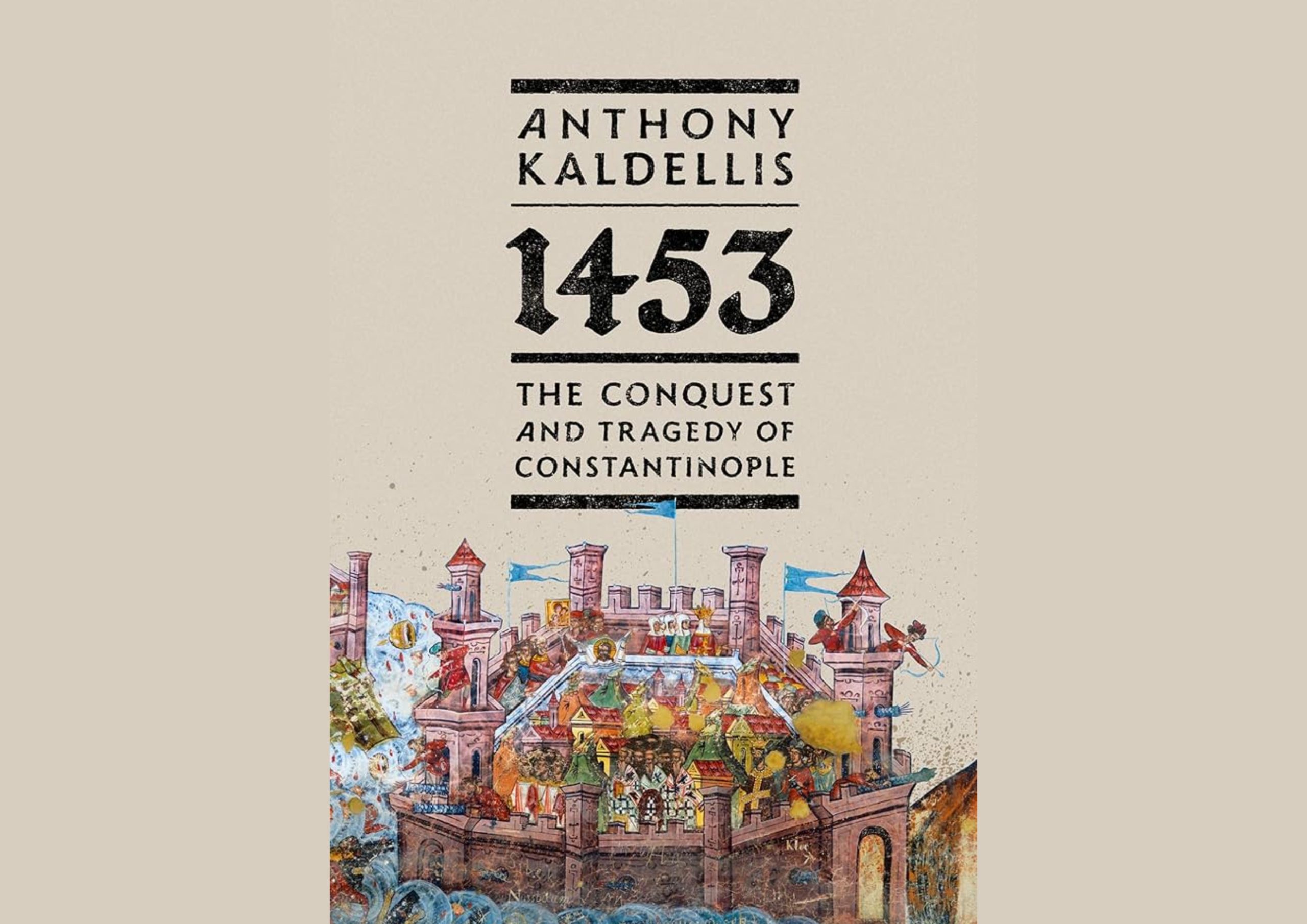
In a scholarly work that has already sparked conversation on both sides of the Atlantic, Anthony Kaldellis, a classics professor at the University of Chicago, argues that the 1453 siege of Constantinople was far from inevitable and that its defenders fought with far more effectiveness than most modern accounts suggest.
Kaldellis's title, 1453: The Conquest and Tragedy of Constantinople, arrives as the first major narrative of the event since Steven Runciman's 1965 classic, The Fall of Constantinople 1453. While Runciman's book has long been cited as the standard reference, Kaldellis contends that it is now "outdated in many respects" and that his own research, based on eyewitness reports in Latin, Italian, Greek, Russian and Turkish, provides a more nuanced picture of the battle.
The new volume emphasizes that the city's inhabitants identified themselves as Romans, a detail that Kaldellis insists is essential for understanding their self‑perception. He notes that Western Europeans of the period referred to them as Greeks, a distinction he draws to separate the Eastern Orthodox "Romans" from the Latin‑rite Christians of the West. By foregrounding this terminology, Kaldellis seeks to dispel the lingering stereotype of a "defunct" Byzantine civilization at the moment of its demise.
According to Kaldellis, Constantinople in the early fifteenth century was still a hub for trade, pilgrimage, diplomacy, espionage, exploration and classical study, even though repeated plagues and the Fourth Crusade had reduced its population to a fraction of its medieval peak. He describes Emperor Constantine XI Palaiologos as a ruler who, despite holding little territory, presided over a populace that "proudly clung to their heritage and foundations." The author argues that the defenders "managed to counter all the sultan's assaults and stratagems until the very last day," a claim that reframes the emperor's legacy from one of fatalistic heroism to one of strategic resistance.
Beyond the academic debate, Kaldellis connects the historical narrative to present‑day politics in Turkey. He points out that the Turkish government has celebrated May 29 as Fetih Day, or Conquest Day, since 1953, marking the five‑century anniversary of the siege. Under President Recep Tayyip Erdoğan, the holiday has become a platform for nationalist rhetoric that underscores Turkey's "world‑critical mission." In a 2025 speech, Erdoğan declared that Constantinople and Hagia Sophia "will forever be ours," a statement Kaldellis likens to a claim that a foreign prime minister might make about a region outside his jurisdiction.
The book's discussion of modern Turkish commemorations is especially relevant for U.S. and Canadian policymakers who monitor Ankara's domestic narrative for clues about its foreign policy posture. Turkey's claim over Hagia Sophia, a former Byzantine cathedral turned mosque, has already strained relations with the European Union and prompted criticism from human‑rights groups. The United States, a NATO ally, has expressed concern that overtly revisionist history can fuel nationalist sentiment that complicates cooperation on issues ranging from defense procurement to migration management.
For Canadian officials, the Turkish diaspora in major cities such as Toronto and Montreal often participates in Fetih Day events, bringing the historical memory of 1453 into local community politics. Municipal leaders have occasionally faced pressure to balance freedom of expression with the sensitivities of other religious and ethnic groups when public celebrations include reenactments that feature "janissary cosplay." Such displays, while intended as cultural heritage, can be perceived as glorifying a period of conquest that involved mass violence, including the documented rapes and enslavement of women after the city fell.
Kaldellis's account does not shy away from the brutality of the Ottoman victory. He cites contemporary lamentations that describe the captured population being sold as slaves, stripped of clothing, and subjected to systematic looting. The author also details the conversion of Hagia Sophia into a mosque, noting that icons were removed and the building was prepared for Islamic worship. These facts underscore the human cost of the siege and challenge any romanticized view of the conquest.
Historically, the fall of Constantinople marked a turning point for the Ottoman state. Kaldellis argues that the acquisition of the city "de‑nomadized" the empire, shifting it from a frontier cavalry power to a centralized imperial bureaucracy focused on law, piety and administration. This transformation had long‑term implications for the empire's interactions with Europe, including its role as a bulwark against Habsburg expansion and its later involvement in World War I.
Understanding this shift is valuable for contemporary analysts of Turkish foreign policy. The Ottoman legacy of a strong, centrally administered state continues to inform Ankara's self‑image as a regional power. When Turkish officials invoke the 1453 conquest in diplomatic discourse, they are drawing on a historical narrative that emphasizes resilience, strategic acumen and a claim to a civilizational mantle that extends beyond modern borders.
In the United States, scholars of Ottoman and Byzantine history have noted that the 1453 narrative often resurfaces in debates over immigration and cultural identity, especially when policymakers reference "civilizational clashes." Kaldellis's insistence that the defenders fought effectively and that the fall was not predestined offers a counterpoint to deterministic interpretations that can be co‑opted by extremist rhetoric.
The book also revisits the historiographical debate surrounding Runciman's work. While Runciman's narrative remains a staple in university curricula, Kaldellis's fresh use of primary sources invites a re‑examination of long‑standing assumptions. He suggests that earlier historians may have underplayed the strategic competence of the Byzantine forces and overemphasized the inevitability of Ottoman victory.
For readers in Canada, the relevance extends to discussions about multiculturalism and the ways in which historical memory shapes contemporary policy. The Canadian government's approach to heritage preservation, particularly in cities with significant Turkish or Greek communities, can be informed by a more balanced understanding of the 1453 events.
"1453: The Conquest and Tragedy of Constantinople" is published by Oxford University Press, runs 352 pages and retails for $29.99. Its release comes at a moment when both Washington and Ottawa are reassessing their strategic relationships with Turkey, a nation that straddles Europe and Asia and whose historical narratives continue to influence its modern ambitions.
As the debate over the book unfolds, it is likely to prompt renewed scholarly dialogue, influence public commemorations, and perhaps even shape how policymakers frame Turkey's role on the world stage. By linking a medieval siege to present‑day nationalism, Kaldellis provides a reminder that the way societies remember the past can have tangible effects on current political calculations.