To encounter Ruth Wisse is to learn from her, and I was blessed to be her student for the first time a decade ago. She, an eminent scholar of literature at Harvard, spent a weekend with us, a group of Jewish students in the Tikvah Fund's then-nascent Collegiate Summer Honors program, doing what comes most naturally to her: teaching. Her unique blend of academic rigor and plain-spoken truth has made her a beloved and respected figure among her students, many of whom have gone on to become accomplished professionals in their own right.
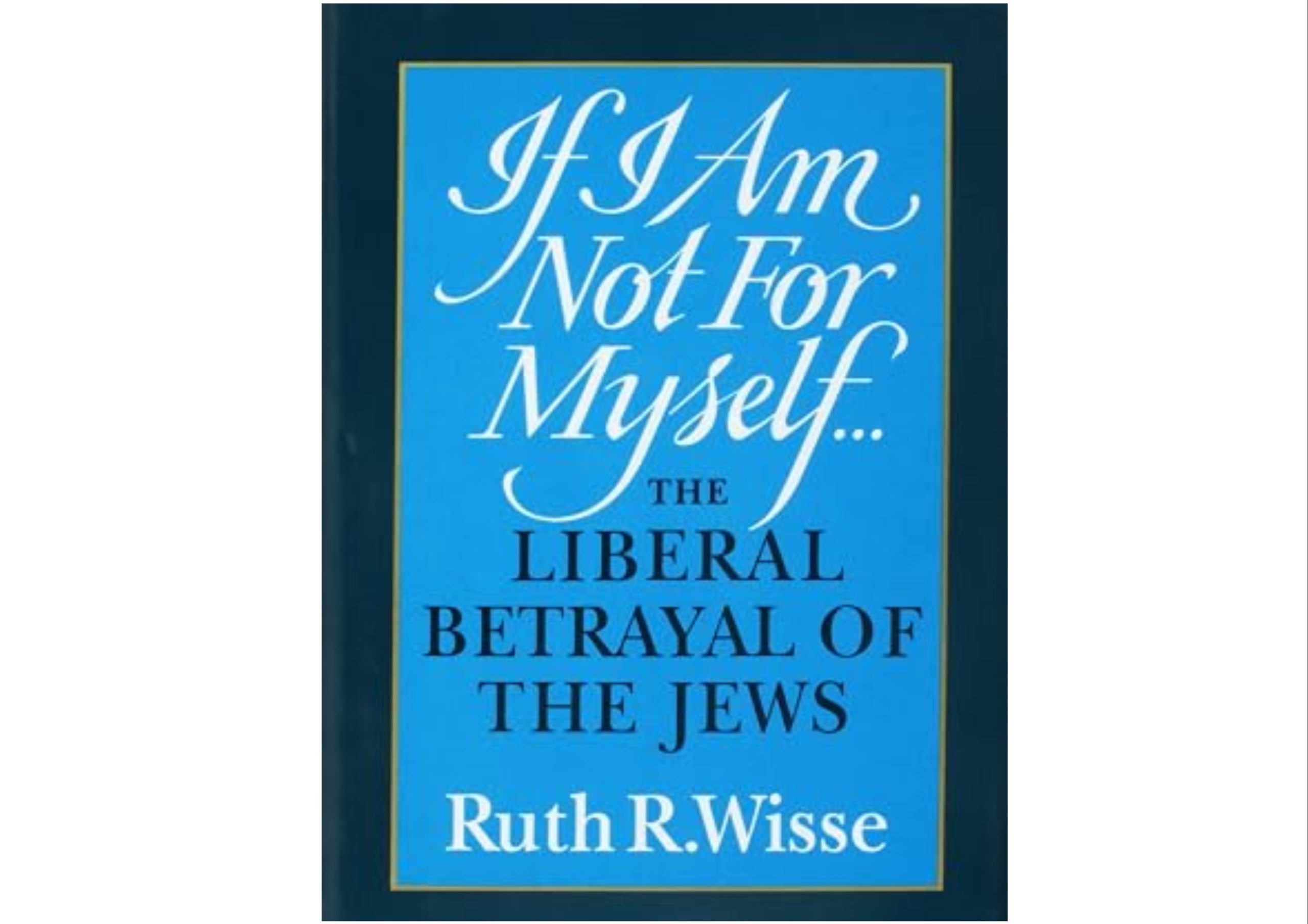
Wisse's willingness to declare what is plainly, if painfully, true about the world is today rarely conceived of as the role of the professor. Her courage in speaking truth to power, particularly in her critique of liberal universalism, has earned her a reputation as a prophetess. In her 1992 book, "If I Am Not for Myself," Wisse delivered a scathing critique of liberalism's failure to defend Jews against anti-semitism, arguing that the ideology's emphasis on reason and universalism had blinded it to the reality of anti-Jewish hatred.
Wisse's thesis is simple yet penetrating: liberalism's inability to defend Jews stems from its failure to recognize the nature of anti-semitism as a "politics against the Jews." This failure has allowed anti-semitism to masquerade as a legitimate critique of Israel, rather than the bigotry it truly is. Wisse's critique of liberal universalism is not a rejection of liberalism's core values, such as individual liberty and the rule of law, but rather a recognition of the ideology's limitations in the face of illiberal enemies.
The publisher of the book, Adam Bellow, puts it more positively in a bracing note that opens the new edition. "The defense of the Jew is the ultimate test of the vitality and moral strength of liberalism itself," he writes. If liberalism cannot see how its enemies exploit its compassion for apparent victims, it will meet its "moral and intellectual collapse," having "lost the will to stand for and defend its own values." This warning is particularly relevant in today's political climate, where anti-semitism has gained prominence and liberalism's inability to defend Jews has been laid bare.
Wisse's book takes its title from a millennia-old Jewish teaching: "If I am not for myself," asked the sage Hillel, "who will be for me?" This question is critical of liberals in the West, but more so of Jews who have only internalized Hillel's second teaching: "But if I am only for myself, what am I?" Wisse argues that Jews who prioritize social justice bona fides and "allyship" over their own self-defense are stoking self-defeating politics. This critique is not limited to Jews, however, as Wisse also argues that liberalism's failure to defend its own values has allowed illiberal enemies to exploit its weaknesses.
One lesson from Wisse's book is not to indulge the "fantasy … that imparting information about the murder of the Jews of Europe will ensure its never happening again." Showcasing one's own weakness does nothing to placate illiberal enemies. To the contrary, what to the West looks like "innocence" appears more like an admission of guilt to those for whom violence is routine. This point is echoed by Paul Berman, who analyzed the success of Palestinian suicide bombings in turning world opinion against Israel. "Each new act of murder and suicide testified to how oppressive were the Israelis," because the liberal mind could not otherwise make sense of such depravity.
Wisse foresaw, and spoke plainly, the truth that weakness is not strength, and innocence means nothing when your enemies are playing an entirely different game. She pressed Jews in America to stop touting how moral and self-critical they could be, and instead to recognize that in politics, it is not God who holds Israel to a double standard, but fellow states. This warning is particularly relevant in today's political climate, where the rise of anti-semitism and the failure of liberalism to defend Jews have become increasingly apparent.
Leftists in the West have in recent years fallen out of the habit of saying that they love America and consider their criticisms patriotic, and into the custom of saying America is rotten, the worst nation to have ever existed, the source of all the world's evils. Liberals have not mustered much defense against the rise of these revolutionaries, having lost the lexicon of cherishing Western civilization both because it is objectively better than the alternatives and because it is ours. If they cannot hear Wisse's plea to become just a bit more hard-headed, stop catering to those who cannot be placated, and defend their own goodness, liberalism's inadequacy to defend the Jews will appear in hindsight as prologue to liberalism's betrayal of itself.
Ruth Wisse's book, "If I Am Not for Myself," is a prophetic warning that has proven eerily prescient in today's political climate. Her critique of liberal universalism and her argument that weakness is not strength are warnings that liberals and Jews would do well to heed. As the West continues to grapple with the rise of anti-semitism and the failure of liberalism to defend its own values, Wisse's book serves as a timely reminder of the importance of recognizing the nature of illiberal enemies and defending one's own values with courage and conviction.