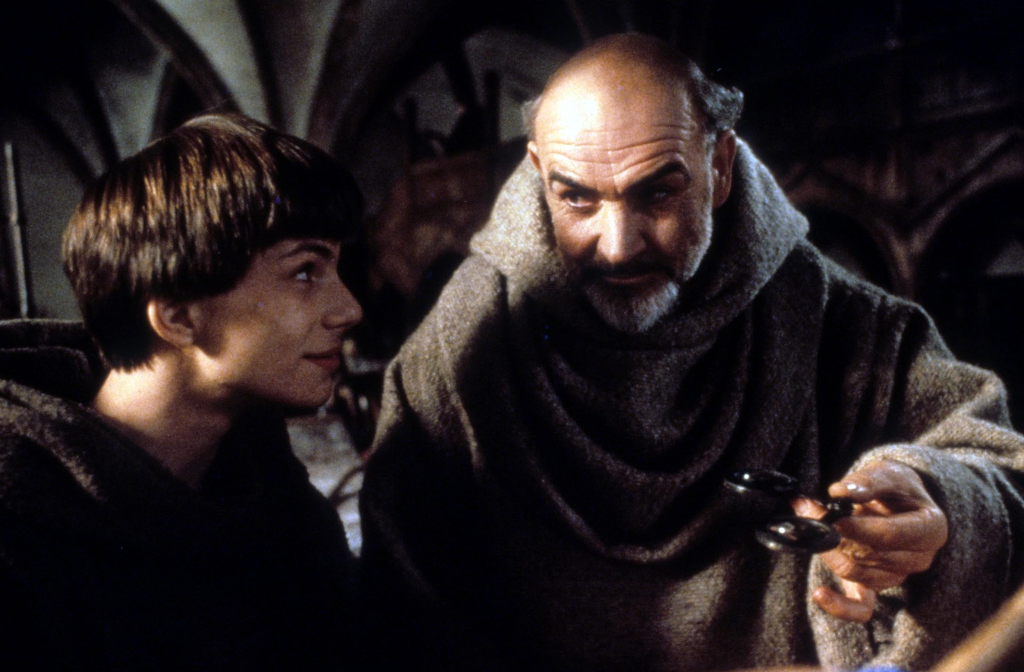
When Jean‑Jacques Annaus released his two‑hour version of Umberto Eco's "The Name of the Rose" in 1986, he turned a dense medieval mystery into a mainstream movie starring Sean Connery and Christian Slater. The film's portrayal of a powerful abbey that guards a labyrinthine library and debates the ownership of Christ's clothing has resurfaced in congressional hearings and provincial legislative sessions as a reference point for discussions about the political influence of religious institutions.
Eco, a semiotics professor at the University of Bologna, wrote the novel in 1980. It sold millions of copies worldwide after the English translation by William Weaver appeared in 1983. The book's epigraph, "Naturally, a manuscript," signals that its primary audience is readers, not viewers. Annaus responded with his own epigraph, "A palimpsest of Umberto Eco's novel," a term that describes a manuscript overwritten but still showing earlier text. By calling the film a palimpsest, Annaus highlighted the difficulty of translating a text that is itself a commentary on other texts.
The movie's narrative follows Brother William of Baskerville, a Franciscan monk played by Connery, and his novice Adso, portrayed by Slater. Their investigation of a series of murders inside a remote Italian abbey doubles as a critique of the medieval church's control over knowledge and property. In the novel, the dispute over whether Jesus owned the clothes he wore becomes a proxy for broader arguments about poverty, wealth, and the political power of the papacy.
That theological dispute has contemporary relevance. In the United States, churches enjoy tax‑exempt status under section 501(c)(3) of the Internal Revenue Code, a privilege that has drawn scrutiny from lawmakers who argue that wealthier denominations may wield disproportionate political influence. In Canada, the Canada Revenue Agency grants charitable status to religious bodies but has faced criticism for allowing large endowments to escape full public accountability. Both countries have seen recent bills aimed at increasing financial transparency for religious charities, and legislators have cited cultural works that expose the historical entanglement of faith and power.
During a hearing on the House Committee on Ways and Means in March, Representative Maria Torres referenced "The Name of the Rose" as an illustration of how religious institutions have historically guarded knowledge to maintain authority. "When a medieval abbey hides its library behind a maze, it is a metaphor for the modern practice of limiting public insight into church finances," Torres said, citing the film's climactic fire that destroys the forbidden texts.
In the Canadian Parliament, Member of Parliament James Whitaker raised a similar point in a debate on Bill C‑45, which proposes stricter reporting requirements for charities with assets over $10 million. Whitaker noted that "the story of the abbey's library reminds us that secrecy can be a tool of power, whether in the thirteenth century or today." The reference sparked a brief media surge, with op‑eds in the Toronto Star and the Washington Post drawing parallels between Eco's fictional dispute and current policy proposals.
Beyond the political arena, the film's reception highlighted the tension between artistic expression and religious sensibility. Catholic groups in France and Italy protested the movie's "anti‑papal bias," arguing that the depiction of the abbey's leadership as corrupt misrepresented the church's historical role. The protests led to a limited number of screenings being withdrawn in certain European cities, a move that was later cited by free‑speech advocates as an example of censorship motivated by religious pressure.
In the United States, the American Civil Liberties Union filed an amicus brief in a 1992 case concerning the removal of "The Name of the Rose" from a public library's collection after a local religious group demanded its ban. The court ultimately ruled that the removal violated the First Amendment, citing the film's status as a work of artistic expression that engages with historical critique.
Annaus's adaptation, while praised for its visual fidelity, was also critiqued for simplifying Eco's complex theological debates. Eco himself described the film in a 2011 interview with The Guardian as "a club sandwich, with turkey, salami, tomato, cheese, lettuce. And the movie is obliged to choose only the lettuce or the cheese, eliminating everything else." The director's decision to focus on the murder mystery and the dramatic library fire left the nuanced discussions of orthodoxy versus progress largely on the page.
Nevertheless, the film's impact on public discourse cannot be dismissed. The library's labyrinthine design, inspired by the floor plan of Reims Cathedral, serves as a visual metaphor for the opaque structures that can shield institutional wealth. In contemporary policy debates, that metaphor is being used to argue for greater transparency in how religious organizations manage their assets and influence political campaigns.
Recent polling by the Pew Research Center shows that 58 percent of Americans believe that churches should be subject to the same financial reporting standards as for‑profit corporations. In Canada, a 2023 Ipsos poll found that 62 percent of respondents support stricter oversight of charitable donations to religious groups. Both surveys indicate a growing public appetite for reforms that echo the themes explored in Eco's narrative.
Industry analysts note that the film's modest box‑office success, grossing approximately $30 million worldwide, did not match the novel's multi‑million‑copy sales. Yet the cultural footprint of the story endures, as evidenced by its inclusion on Bishop Robert Barron's recommended reading list and its frequent citation in academic courses on medieval history, theology, and media studies.
For scholars of film and politics, the adaptation offers a case study in how cultural products can influence legislative agendas. The interplay between a medieval setting and modern policy concerns illustrates the timeless nature of debates over authority, knowledge, and wealth. As lawmakers continue to grapple with the appropriate balance between religious liberty and fiscal accountability, "The Name of the Rose" remains a touchstone that bridges literature, cinema, and public policy.
Whether the film succeeds in conveying Eco's intricate arguments is less important than the fact that it has reentered the political conversation. As the United States and Canada consider new measures to increase transparency for religious charities, the image of monks guarding a secret library may serve as a reminder that the control of information has always been a source of power.