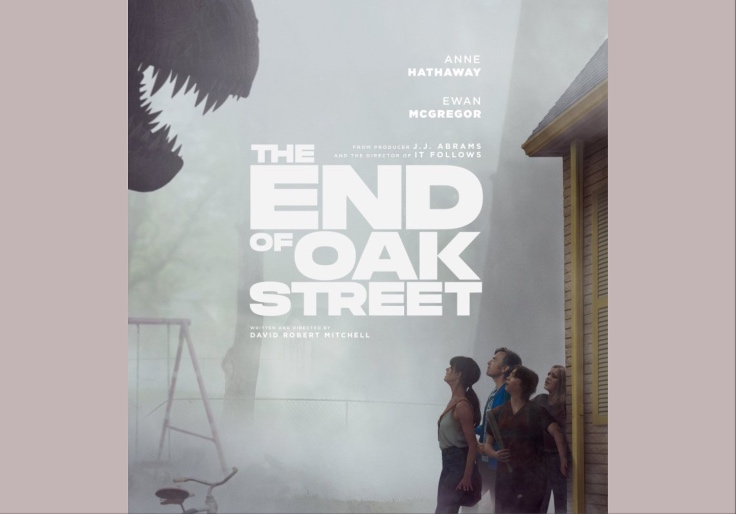
Anne Hathaway and husband Ewan McGregor headline "The End of Oak Street," a new movie that leans heavily on the visual and narrative language of early‑1980s Steven Spielberg. Directed by David Robert Mitchell, the film stitches together elements from E.T., Poltergeist, Jurassic Park and the twist ending of Back to the Future, creating a pastiche that feels both familiar and unsettling.
Mitchell's approach has drawn a comparison to the fictional advertising executive Larry Tate from the sitcom Bewitched. In the show, Tate would dismiss a slogan as "ridiculous" until a client called it "intriguing," at which point he would proclaim, "Exactly! A ridiculously intriguing slogan!" The reviewer argues that audiences experience the same flip‑flop: the film is at once absurd and irresistibly entertaining.
Beyond its stylistic choices, "The End of Oak Street" arrives at a moment when Hollywood's reliance on nostalgia is under political scrutiny. State and provincial governments across the United States and Canada continue to offer tax incentives to lure productions that promise local jobs and economic activity. In 2023, the U.S. state of Georgia reported that its film tax credit generated more than $10 billion in economic output, while Canada's federal and provincial credits have helped sustain a $20 billion domestic industry.
Critics argue that these subsidies often favor big‑budget projects that recycle proven formulas, leaving less room for original, lower‑cost storytelling. "The End of Oak Street" exemplifies this tension: it banks on the cultural cachet of Spielberg's 1982 double‑hit year, when E.T. became the highest‑grossing film of all time and Poltergeist dominated the box office a week earlier, to attract audiences. By invoking those successes, the film hopes to tap into a built‑in fan base, a strategy that many policymakers view as a safe bet for return on investment.
Spielberg's 1982 achievements are well documented. E.T. opened on June 11, 1982, and eventually earned $792 million worldwide, a record that stood for decades. Poltergeist, released just seven days earlier, grossed $121 million in the United States alone. Mitchell's cinematographer Michael Gioulakis mirrors Allen Daviau's work on E.T., while composer Michael Giacchino crafts a score that echoes John Williams's iconic themes and Jerry Goldsmith's eerie motifs from Poltergeist.
For American and Canadian voters, the political relevance lies in how public funds are allocated to such projects. In the United States, the federal government does not provide a direct film tax credit, but individual states compete fiercely for productions. The competition has sparked debates in state legislatures about the transparency of incentive programs and whether they truly benefit local economies. In Canada, the federal Canadian Film or Video Production Tax Credit (CPTC) and provincial programs like Ontario's Film and Television Tax Credit have been defended as essential tools for preserving a national cultural identity while also attracting foreign investment.
Anne Hathaway's involvement adds another layer to the conversation. The Oscar‑winning actress has been vocal on issues ranging from gender equality to refugee rights, often using her platform to advocate for policy change. While her political activism does not directly influence the film's financing, it does shape public perception of the project. In recent years, Hathaway has spoken before the United Nations on women's empowerment, and her presence in a high‑profile, nostalgia‑driven film may prompt discussions about the role of celebrity advocacy in Hollywood productions that receive public subsidies.
"The End of Oak Street" also illustrates how contemporary filmmakers blend multiple intellectual properties while navigating copyright law. Mitchell's homage to Spielberg's oeuvre does not rely on direct use of copyrighted material; instead, it recreates visual styles and narrative beats. This practice has been the subject of recent congressional hearings in the United States, where lawmakers examined whether current copyright extensions stifle creative reinterpretation or protect original creators. The film's reliance on recognizable tropes without infringing on specific assets demonstrates a legal pathway that many studios now follow.
From a market perspective, the film's release strategy will likely test the effectiveness of tax‑incentive‑driven production. If "The End of Oak Street" performs strongly at the box office, it could reinforce arguments that nostalgia films are a prudent use of public funds. Conversely, a weak showing might fuel calls for reallocating incentives toward more diverse or innovative projects. Industry analysts note that the average return on investment for films financed with state tax credits varies widely, with success often hinging on star power and brand recognition, both of which "The End of Oak Street" possesses.
Mitchell's decision to incorporate dinosaurs from Jurassic Park and a twist reminiscent of Back to the Future (1985) further underscores the film's collage‑like structure. The dinosaurs serve as modern equivalents of the ghosts in Poltergeist, haunting a suburban street that mirrors the settings of both 1982 classics. The family at the center, a divorced mother reminiscent of the one in E.T. and a resilient matriarch echoing the mother in Poltergeist, offers a familiar emotional anchor for audiences, while also allowing the film to explore contemporary themes of family fragmentation and resilience.
Beyond the screen, the production's location choices may have political implications. Many recent Hollywood films have been shot in Canadian provinces such as British Columbia and Ontario, attracted by a 28 percent refundable tax credit on labor costs. While the specific shooting locations for "The End of Oak Street" have not been disclosed, the pattern suggests that the film could benefit from such incentives, reinforcing the cross‑border nature of North American film economics.
In the broader cultural debate, the film raises questions about the purpose of homage versus originality. Mitchell's own words, as reported in the review, suggest a willingness to "plagiarize" in the service of tribute, a stance that resonates with a segment of the industry that views past successes as a template for future profit. Critics argue that this mindset may marginalize emerging voices that lack the brand recognition to secure public funding.
As the release date approaches, industry watchers will monitor box‑office receipts, streaming performance, and any statements from state or provincial film offices regarding the film's economic impact. The outcome could inform upcoming legislative sessions in both Washington and Ottawa, where budget committees regularly assess the efficacy of film‑industry incentives.
Regardless of its political ramifications, "The End of Oak Street" delivers what the reviewer calls a "ridiculously entertaining" experience. The blend of Spielberg‑era visuals, a family under siege by dinosaurs, and a twist that nods to a beloved 1980s time‑travel comedy creates a viewing experience that is both nostalgic and fresh. Whether audiences laugh at its absurdity or feel a genuine thrill, the film stands as a case study in how Hollywood's love of the past intersects with contemporary policy debates over public support for the arts.