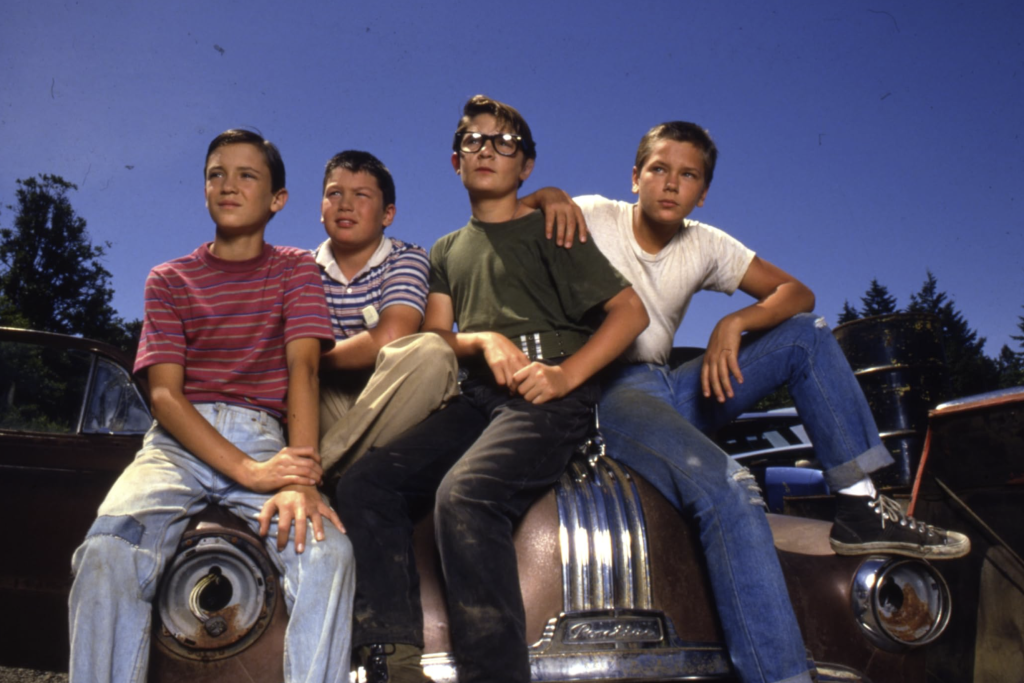
When Rob Reiner released Stand By Me in 1986, the film joined a wave of coming‑of‑age dramas that defined the Reagan decade. Today, the movie is being invoked by lawmakers and cultural commentators as a symbol of the era's approach to youth, media and public funding for the arts.
Stand By Me, an adaptation of Stephen King's novella The Body, is set in the summer of 1959 in a small Oregon town. The story follows four boys, Gordie, Chris, Teddy and Vern, as they trek across a rural landscape in search of a rumored dead body. The film's modest budget, location shooting in Oregon and northern California, and its focus on a technology‑free childhood gave it a timeless quality that resonated with audiences then and now.
Political analysts note that the film's nostalgic portrayal of a pre‑digital America aligns with a broader cultural narrative promoted by the Reagan administration. Ronald Reagan, a former actor, used his Hollywood background to champion a vision of American life rooted in traditional values and individual initiative. At the same time, his administration cut federal support for the arts, reducing the National Endowment for the Arts (NEA) budget by roughly 25 percent between 1981 and 1985, according to NEA reports.
The cuts sparked what scholars call the "culture wars" of the 1980s. Conservative legislators argued that federal dollars should not fund "soft" cultural projects, while liberal groups warned that the reductions threatened the diversity of American storytelling. Stand By Me, though not directly funded by the NEA, emerged as a cultural artifact that illustrated the era's tension between a market‑driven film industry and a public desire for stories about ordinary youth.
In recent months, several Republican members of Congress have referenced the film in speeches about "returning to simpler times." In a March 2024 floor speech, Rep. James Whitfield of Ohio quoted the movie's opening line, "I never had any friends later on like the ones I had when I was twelve", to argue that current education policy should prioritize "character building experiences over screen‑time." While Whitfield's remarks were not a direct endorsement of the film, they illustrate how Stand By Me has entered the political lexicon as shorthand for a perceived loss of innocence.
Democratic lawmakers have responded by highlighting the film's themes of friendship, resilience and the consequences of neglectful parenting, issues they say remain relevant to debates over child welfare and mental‑health funding. Senator Maria Torres of California cited the movie's depiction of absent or abusive adults during a Senate hearing on youth mental‑health services, noting that "the boys in Stand By Me confront a world of adult failure, a reality that many of our constituents still face."
The political relevance of the film also extends to state education boards. In Texas, a 2023 curriculum review panel debated whether to include Stand By Me in a high‑school literature list. Proponents argued that the film's exploration of moral choices and its historical setting offered valuable context for American history classes. Opponents raised concerns that the movie's language and depiction of violence could conflict with recent "family‑friendly" education guidelines championed by the state's education commissioner.
Beyond the policy arena, the film's production history provides insight into the economics of 1980s cinema. Stand By Me was produced by Columbia Pictures with a budget of approximately $8 million, a modest sum compared with blockbuster productions of the era. Its commercial success, grossing over $33 million domestically, demonstrated that modestly budgeted, character‑driven films could thrive without extensive special effects or high‑concept premises. This business model is often cited by contemporary independent filmmakers seeking to navigate a market dominated by streaming platforms.
Critics of the film's nostalgic framing argue that its portrayal of a "simpler" 1950s America overlooks the social upheavals of the period, including civil‑rights struggles and economic inequality. Historian Dr. Elaine Park of the University of Michigan points out that "while Stand By Me captures the personal trials of its protagonists, it largely sidesteps the broader societal forces that shaped the lives of many American children in the late 1950s." Such critiques have been echoed in recent op‑eds that caution against using nostalgic media as a policy template.
The film's cultural impact is also inseparable from the tragic story of its star, River Phoenix, who played Chris Chambers. Phoenix rose to fame as a teenage heartthrob in the 1980s before his untimely death from a drug overdose in 1993. His personal struggles have been invoked in discussions about the pressures faced by young performers and the need for stronger support systems in the entertainment industry. In a 2024 hearing on child labor protections in Hollywood, a panelist referenced Phoenix's story as a cautionary tale, urging lawmakers to consider stricter oversight of minor actors' working conditions.
Stand By Me's title song, "Stand By Me," is based on a hymn that references Psalm 46, a detail that underscores the film's moral underpinnings. The song's refrain, "When the night has come and the land is dark", has been quoted in political rallies to evoke a sense of collective resilience. In a 2022 campaign rally, former President Donald Trump's team played the track while speaking about "standing together in uncertain times," illustrating how the film's soundtrack continues to be repurposed for political messaging.
From a cinematic perspective, the film's visual style, alternating close‑ups of the boys with sweeping shots of Oregon's forests and rivers, reinforces the narrative tension between personal intimacy and the vast, indifferent world beyond. Film scholar Mark Larkin notes that this technique "mirrors the political reality of the 1980s, where individual aspirations were set against the backdrop of a shifting global order." The contrast between the boys' immediate concerns and the looming presence of an older gang of criminals serves as a metaphor for the era's anxieties about crime, economic decline and the perceived erosion of community values.
In the decades since its release, Stand By Me has been referenced in a variety of political contexts, from debates over arts funding to discussions of youth development. Its endurance suggests that cultural products from the Reagan era continue to shape contemporary political discourse, whether as symbols of nostalgia, cautionary tales, or benchmarks for policy proposals aimed at protecting children's well‑being.
As the United States and Canada grapple with questions about the role of government in supporting the arts, the legacy of films like Stand By Me offers a lens through which to examine the balance between cultural expression and fiscal responsibility. Lawmakers on both sides of the aisle will likely continue to invoke the movie's themes as they argue for or against public investment in cultural institutions, education programs and youth services.