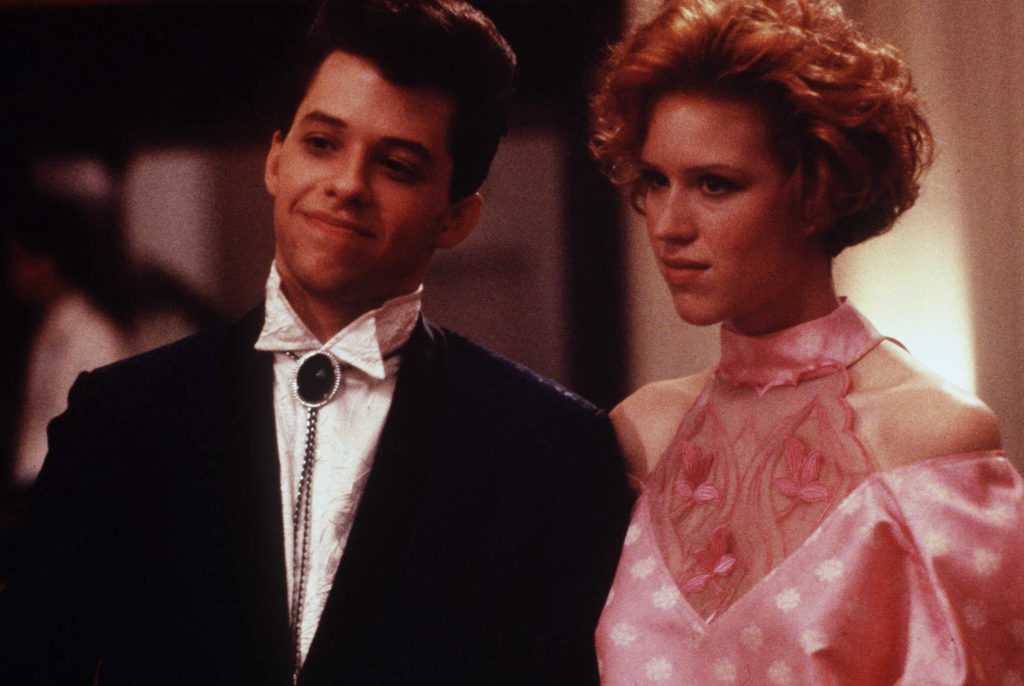
When Pretty in Pink opened in 1986, it presented a suburban Chicago high school where a poor senior named Andie Walsh, played by Molly Ringwald, navigates a prom night dominated by wealth and status. The film's central romance, Andie's eventual pairing with the affluent Blane McDonough, portrayed by Andrew McCarthy, has become a reference point for discussions about class mobility and cultural messaging.
John Hughes, the screenwriter, built the story around a stark divide between "the Richies" and the working‑class protagonists. Andie's mother is absent, her father is a boozy figure, and her wardrobe is a patchwork of vintage pieces stitched together by herself. The iconic pink dress, designed by Marilyn Vance, required Ringwald to try on "puffy sleeves and inverted‑triangle, sacklike silhouette" that made the actress cry on set. The dress, now celebrated as a 1980s fashion artifact, symbolises the film's tension between aspiration and reality.
Howard Deutch, the director, arrived from a career directing music videos for Billy Joel and Billy Idol. His experience with MTV's rapid editing style gave the film a visual rhythm that contrasted with Hughes's more sentimental script. The soundtrack, anchored by a Psychedelic Furs track that supplied the title, reinforced the era's pop culture vibe.
At the time of its release, the United States was in the midst of the Reagan administration's supply‑side policies, which emphasized tax cuts for the wealthy and reduced social spending. Canada, under Prime Minister Brian Mulroney, pursued similar free‑market reforms. Both countries saw a widening gap between rich and poor, a backdrop that made the film's class conflict resonate with teenage audiences who sensed the growing disparity in their own neighborhoods.
Critics have long compared Pretty in Pink to Hughes's earlier Brat Pack hit The Breakfast Club, which featured Ringwald as the affluent Claire Standish. While The Breakfast Club explored the stereotypes that bind students, Pretty in Pink foregrounds economic status as the primary obstacle to personal fulfillment. The film's original ending, in which Andie rejects Blane and leaves the prom with her friend Duckie (Jon Cryer), was replaced after test screenings. Audiences wanted a conventional happy ending, prompting Deutch to reshoot the finale so that Andie embraces Blane's BMW and his social circle.
The decision to alter the ending illustrates how market forces can shape narrative outcomes. In a period when Hollywood relied heavily on box‑office returns, studios were quick to adjust stories to meet perceived audience expectations. This practice mirrors contemporary concerns about how commercial pressures influence media portrayals of socioeconomic issues.
Beyond its plot, the film offers a snapshot of 1980s consumer culture. Characters own driver's licenses, personal computers, and a range of electronics that signal a level of affluence even among the "poor" protagonists. The contrast between a brand‑new BMW and an old Karmann Ghia serves as a visual shorthand for the larger economic divide that defined the era.
Modern scholars note that the film's depiction of class aligns with policy debates that continue to shape American and Canadian politics. In the United States, discussions about student debt, public school funding, and affordable housing echo the obstacles faced by Andie and her friends. In Canada, debates over tuition fees and provincial support for low‑income families reflect similar themes.
Media analysts point out that the film's legacy persists in later teen movies. The 2004 comedy Mean Girls, for example, borrows the "on Wednesdays we wear pink" line, linking the social hierarchies of the 1980s to a new generation. James Spader's role as Steff McKee in Pretty in Pink prefigured his later portrayals of morally ambiguous characters, reinforcing the film's influence on the archetype of the privileged but conflicted youth.
When the movie premiered in the United Kingdom on April 25, 1986, two months after the U.S. launch, British teenagers noted the same class markers despite cultural differences. The film's universal appeal lies in its portrayal of adolescent yearning for acceptance, a theme that transcends national borders.
In the decades since its release, Pretty in Pink has been examined by cultural historians as a text that both reflects and shapes public attitudes toward class. Its emphasis on personal style as a means of upward mobility anticipates later discussions about the "gig economy" and the role of branding in personal advancement.
Political commentators have used the film as a case study in classrooms to illustrate how popular culture can reinforce or challenge prevailing economic narratives. The scene where Andie's friend Duckie, a self‑styled "irritant" who wears ironic hats, offers her a ride to the prom, is often cited as an example of solidarity among marginalized youth.
In 1987, Deutch returned to the high school setting with Some Kind of Wonderful, swapping gender roles while retaining the same class dynamics. Ringwald declined the lead role, citing concerns about repeating a similar character arc. Her decision underscores how actors can influence the political subtext of a film by choosing which stories to tell.
Today, streaming platforms have re‑introduced Pretty in Pink to a new audience. As viewers compare the film's depiction of wealth with current data on income inequality, the conversation has shifted from nostalgia to policy relevance. Analysts note that the film's portrayal of a single mother's struggle to support her daughter aligns with modern debates about child‑care subsidies and single‑parent assistance programs.
While the movie's ending offers a tidy romantic resolution, the underlying message about the barriers that economic status imposes on personal relationships remains unsettled. The lyric from the theme song, "The one who insists he was first in the line / Is the last to remember her name", suggests that the triumph of wealth may be fleeting, a sentiment that resonates with contemporary critiques of the "American Dream."
As the 40th anniversary of Pretty in Pink approaches, scholars and policymakers alike are revisiting the film to assess its impact on cultural understandings of class. The dialogue it sparks about representation, media influence, and socioeconomic mobility adds a layer of political relevance to a story that began as a teenage romance.
Dominic Green, a columnist for The Wall Street Journal and fellow of the Royal Historical Society, contributed the original review that sparked this renewed analysis. His reflections on the film's place in 1986, a year he calls "arguably the greatest year in movies", highlight how cultural products can serve as lenses through which we examine the political climate of their time.