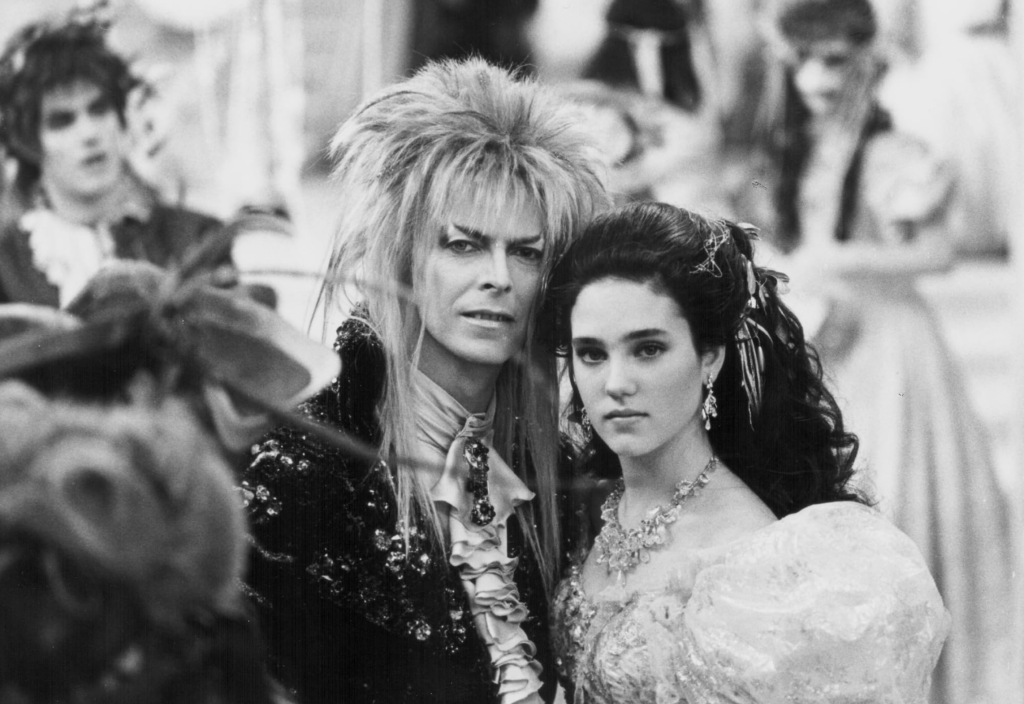
At a hearing of the House Committee on Education and the Workforce, several members invoked Jim Henson's 1986 fantasy film Labyrinth as a touchstone for the value of public investment in the arts. The discussion centered on whether the National Endowment for the Arts (NEA) should retain its $170 million budget amid competing fiscal priorities.
Labyrinth, produced by The Jim Henson Company and distributed by TriStar Pictures, combined live‑action performance with an unprecedented level of puppetry. The film's visual world was built by a crew that assembled a shaft lined with hands operated by 75 performers, a forest constructed from 120 truckloads of tree branches, and a three‑dimensional staircase inspired by M C Escher. The Creature Shop spent roughly a year and a half crafting the puppets before filming began.
Committee members highlighted those production details to illustrate how complex, labor‑intensive projects can thrive when artists have access to stable funding sources. "When a film like Labyrinth can mobilize hundreds of skilled workers and create a lasting cultural artifact, it demonstrates the ripple effect of supporting creative industries," one representative said.
The hearing also examined the broader context of 1980s cultural policy. Under the Reagan administration, federal arts funding faced cuts that prompted many creators to rely on private studio backing. Henson's work, while ultimately financed by a major studio, benefited from earlier grants that helped develop the Creature Shop's capabilities. Analysts note that the NEA's support for experimental theater and visual arts in the late 1970s laid groundwork for projects that later attracted commercial partners.
In Canada, a parallel conversation is unfolding. The Canada Media Fund, which allocates roughly $1.5 billion annually to Canadian audiovisual content, has cited the need for "high‑quality, innovative storytelling" as a justification for its budget. While Labyrinth is not a Canadian production, its legacy informs Canadian policymakers who seek to nurture homegrown fantasy and science‑fiction projects that could compete on the global stage.
Beyond the budget numbers, the hearing participants debated the cultural impact of Labyrinth. The film's narrative follows a teenage girl, Sarah, played by Jennifer Connelly, who is thrust into a labyrinthine realm after wishing her infant stepbrother away. There she confronts the goblin king Jareth, portrayed by David Bowie, who declares, "Just fear me. Love me. Do as I say, and I will be your slave." The line has become emblematic of the film's blend of empowerment and menace, resonating with audiences who later formed a cult following around the movie.
Lawmakers argued that such iconic moments are not merely entertainment; they shape cultural memory and inspire future creators. "When a generation cites a film's dialogue as a touchstone, it signals that the work has entered the public consciousness," a committee staffer observed. The staffer added that the film's enduring popularity, evident in streaming metrics and merchandise sales, underscores the long‑term economic benefits of artistic investment.
Critics of increased arts spending countered that Labyrinth's success was largely driven by private studio resources and star power, noting David Bowie's involvement as a draw for audiences. They warned that allocating additional federal dollars to projects with uncertain commercial returns could strain the budget. "We must be prudent in how we allocate limited resources," a dissenting member cautioned.
To address those concerns, the committee reviewed data from the NEA's annual reports, which show that every dollar of federal arts funding generates multiple dollars in economic activity through tourism, ticket sales, and related industries. The reports also highlight that public arts programs often serve underserved communities, providing access to cultural experiences that might otherwise be unavailable.
In Canada, the debate mirrors the United States' discussion. The Canada Media Fund's recent budget proposal includes a clause to increase support for projects that incorporate traditional craftsmanship, such as puppetry, echoing the techniques used in Labyrinth. A senior official from the fund explained that preserving specialized skills aligns with national cultural objectives and can create jobs in regions beyond the major production hubs.
Industry observers note that the resurgence of practical effects, driven in part by audience fatigue with overreliance on computer‑generated imagery, has renewed interest in the kind of hands‑on artistry exemplified by Labyrinth. Recent blockbuster releases have incorporated animatronics and puppetry, citing the tactile realism that digital methods sometimes lack.
The hearing concluded with a bipartisan agreement to commission a study on the long‑term economic impact of films that blend live action with practical effects. The study will examine case examples ranging from Labyrinth to contemporary productions that employ similar techniques.
For viewers, the film remains a touchstone of 1980s fantasy, celebrated for its intricate set design, memorable performances, and the way it captured the anxieties of adolescence. Its legacy, now part of a policy conversation, illustrates how cultural artifacts can inform public debate about the role of government in supporting the arts.
As the committee prepares its report, the discussion around Labyrinth underscores a broader question: how should democratic societies balance fiscal restraint with the desire to foster creative expression that enriches public life?