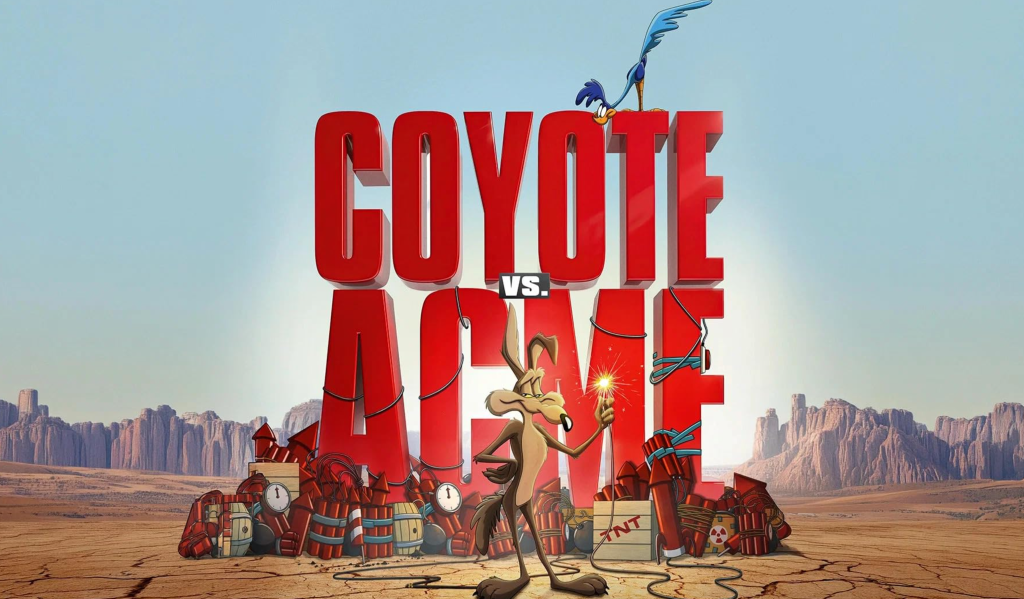
Warner Discovery announced in early 2023 that the comedy "Coyote vs. Acme," directed by Dave Green and written by Samy Burch from a James Gunn storyline, would not be released. The company said the move was part of a broader effort to reduce its tax liability after a string of costly streaming investments.
The film, which blends live‑action and animation in a world where cartoon characters share offices with humans, was finished in 2022 and its animation completed by mid‑2023. Its premise follows a hapless Albuquerque lawyer, played by Will Forte, who files a tort claim on behalf of Wile E. Coyote against the fictional Acme Corporation for injuries sustained while using Acme products to chase the Road Runner.
Warner Discovery's chief executive, David Zaslav, ordered the film to be pulled from the release schedule and placed on the company's balance sheet as an unreleased asset. By classifying the movie as a loss, the studio could claim a tax write‑off under Section 181 of the Internal Revenue Code, which allows production expenses to be deducted in the year they are incurred. Industry analysts note that such write‑offs have become a common tool for studios facing pressure from shareholders to improve profitability.
"The decision was driven by a need to shore up the company's financial position," said a source familiar with Warner Discovery's accounting strategy. "The tax benefit of writing off a midbudget film can be significant, especially when the studio is already dealing with high debt levels and the cost of streaming content."
Warner Discovery's move mirrored a similar decision earlier in the year when the studio shelved the Batgirl film, effectively erasing it from its catalog. Both actions sparked outrage among filmmakers, actors and crew members who feared that unreleased projects could disappear without compensation. Labor unions in the United States and Canada have called for stronger protections for workers on projects that are abandoned for tax purposes.
After sitting on the shelf for two years, "Coyote vs. Acme" found a buyer in Ketchup, an independent distributor that specializes in titles larger studios have abandoned. Ketchup paid $50 million for the worldwide rights and announced a theatrical rollout beginning this weekend. The company's business model relies on acquiring completed films at a discount and exploiting niche audiences, a strategy that has proven profitable with titles such as the Michael Mann biopic "Ferrari."
Critics who have seen advance screenings describe the film as a rare comedic success in a decade of forgettable releases. The New Yorker humor piece by Ian Frazier that inspired the screenplay was published 36 years ago, and the film's creators have blended references to "Who Framed Roger Rabbit?" and "The Verdict" into a fast‑paced satire. John Cena appears as a hotshot litigator for Acme, while the voice work for Wile E. Coyote, performed by a puppeteer and voice actor, has drawn calls for awards consideration.
Beyond its entertainment value, the film's journey highlights the intersection of creative output and corporate finance. The United States offers tax incentives for film production, but the same incentives can be used to write off projects that never reach audiences. Canadian provinces also provide tax credits for productions that meet local content criteria, a factor that could have influenced the film's original financing. However, the decision to shelve the movie eliminated any potential benefit to Canadian tax programs, prompting questions from policymakers about the effectiveness of current incentive structures.
"When a studio decides a film is more valuable as a tax deduction than as a cultural product, it undermines the purpose of our film‑support policies," said a spokesperson for the Canadian Media Fund. "We need to ensure that public incentives encourage completed works, not just accounting maneuvers."
Warner Discovery's shareholders have expressed mixed reactions. Some investors welcomed the tax strategy as a way to improve short‑term earnings, while others warned that repeatedly shelving projects could damage the studio's reputation and its relationships with talent. The company's stock has experienced volatility since the announcements, reflecting broader uncertainty in the media sector as streaming services compete with traditional theatrical releases.
Labor groups in both countries have renewed calls for legislation that would require studios to provide severance or compensation to crew members when a film is permanently shelved. In the United States, the Screen Actors Guild‑American Federation of Television and Radio Artists (SAG‑AFTRA) has filed a petition with the Department of Labor seeking clearer guidelines. In Canada, the Alliance of Canadian Cinema, Television and Radio Artists (ACTRA) has urged the federal government to tie tax credits to a minimum release commitment.
The release of "Coyote vs. Acme" also raises questions about the future of midbudget comedies in a market dominated by franchise blockbusters and streaming originals. With a production budget that likely fell below $100 million, the film occupies a niche that many major studios have abandoned. Independent distributors like Ketchup may become the primary avenue for such projects, but they lack the marketing muscle of the big studios, potentially limiting box‑office returns.
John Podhoretz, editor of Commentary and host of its daily podcast, is listed as the film's critic for the Washington Free Beacon. His involvement underscores the growing crossover between political commentary and cultural criticism, a trend that reflects the increasingly politicized environment surrounding entertainment decisions.
As "Coyote vs. Acme" heads to theaters, industry watchers will monitor its performance to gauge whether the $50 million price tag was justified. The outcome could influence how studios approach unreleased assets, how tax policy is shaped, and whether lawmakers in Washington and Ottawa will act to protect creative workers from the financial calculus that can leave completed films on the shelf.