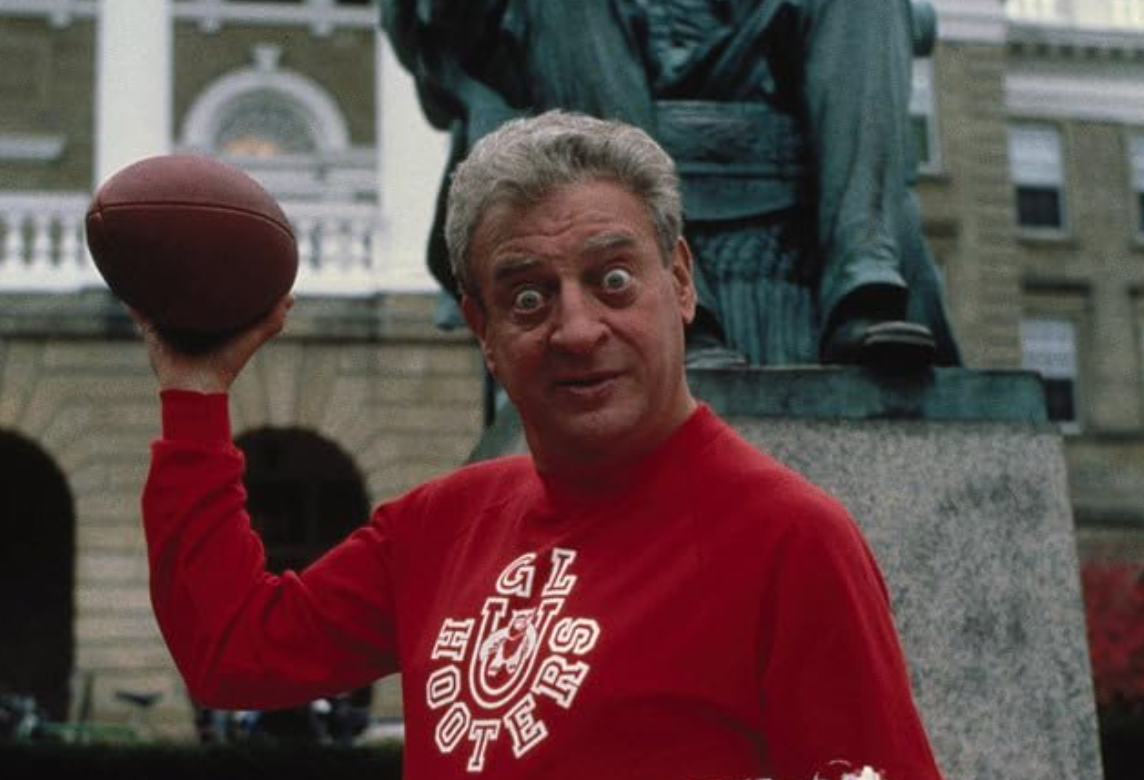
When Orion Pictures released Rodney Dangerfield's "Back to School" in 1986, the film earned $91 million at the box office, making it the sixth‑highest‑grossing movie of the year and out‑earning James Cameron's "Aliens." The comedy follows a 60‑year‑old clothing magnate, Thornton Melon, who enrolls in college to spend time with his son Jason, played by Keith Gordon. The premise may seem purely nostalgic, but the film's jokes about tuition, parental wealth and cheating have resurfaced in policy discussions about the cost of higher education and the rise of academic fraud.
Dangerfield, who was 64 when he filmed the role, brings his trademark self‑deprecating humor to a character who runs a chain of department stores called Tall & Fat. In one scene, a female student tells Thornton her favorite subject is poetry, and he replies, "Maybe you can straighten out my Longfellow." The line, while crass, underscores a larger point: the character treats college as a playground for the rich, a notion that mirrors today's concerns about the growing gap between affluent students who can afford tuition and those who rely on loans.
The film's plot also touches on academic misconduct. Thornton hires staff to write his papers, even bringing in a writer to pen an essay on Kurt Vonnegut. The resulting charges of academic fraud force him to retake his exams orally. This storyline anticipates recent scandals at several U.S. universities where wealthy students have been caught using ghostwriters or paying for completed assignments. In 2022, the U.S. Department of Education announced a crackdown on contract cheating, citing a rise in "paper mills" that sell custom essays to students. Canadian universities have launched similar investigations, with the University of Toronto reporting a 30 percent increase in plagiarism cases over the past three years.
Policy makers on both sides of the border are grappling with the same underlying issue: how to keep college accessible without compromising academic standards. In the United States, the bipartisan "College Affordability Act" introduced in the House this year proposes tuition‑free community college for families earning under $125,000 and a streamlined loan forgiveness program for borrowers who work in public service. Critics argue the plan could strain federal budgets, while supporters point to the rising student‑debt burden, which the Federal Reserve estimates now exceeds $1.7 trillion. In Canada, the Liberal government's recent budget allocated $2 billion to expand the Canada Student Loans Program and to fund a national strategy on academic integrity, including funding for plagiarism detection tools.
"Back to School" also reflects generational attitudes toward financial dependence. During his commencement speech, Thornton tells graduates, "Move back with your parents, let them worry about it!" The line, delivered for laughs, echoes a reality that many young adults face today. A 2023 Pew Research Center survey found that 56 percent of U.S. adults aged 25‑34 still live with their parents, a figure that has risen steadily since the pandemic. In Canada, Statistics Canada reported that 42 percent of 20‑ to 29‑year‑olds lived at home in 2022, up from 35 percent a decade earlier. Both surveys link the trend to high housing costs and student‑loan debt, issues that have become central to recent election campaigns.
The film's humor about body size and gender also invites scrutiny. Thornton's jokes target his own obesity and the physical appearance of female students, with lines such as "When you go to the zoo, do the elephants throw you peanuts?" While such jokes were commonplace in the 1980s, today's political climate includes stronger calls for inclusive language on college campuses. The U.S. Department of Education's Office for Civil Rights has issued guidance on harassment policies that address weight‑based discrimination, and several Canadian universities have adopted "respectful campus" charters that specifically mention body‑shaming.
"Back to School" was not the first film to explore an older man returning to university. Disney's made‑for‑TV movie "The Undergrads" aired in 1985, starring Art Carney, and Bing Crosby headlined Blake Edwards's "High Time" in 1960, which also featured a subplot of falling in love with a professor. The 1986 comedy, however, stands out for its commercial success and for featuring a comedian whose career had been built on stand‑up rather than traditional leading‑man roles. Dangerfield's rise to fame began with a 1975 appearance on "The Ed Sullivan Show," followed by frequent spots on "The Tonight Show" and a supporting role in "Caddyshack." His earlier film "Easy Money" (1983) flopped, but "Back to School" restored his box‑office credibility.
The supporting cast added to the film's cultural resonance. Sally Kellerman played Thornton's love interest, a woman who rails against men being "too sensitive." Burt Young appeared as the bodyguard, while a 20‑year‑old Robert Downey Jr. portrayed Jason's roommate Derek, a role that foreshadowed Downey's later rise to stardom. Comedian Sam Kinison delivered a memorable turn as the unhinged Professor Turguson, and William Zabka, known for playing bullies in "The Karate Kid," took on the role of a swim team jock named Chas Osborn.
Beyond its comedic moments, the movie offers a snapshot of college life in the mid‑1980s. The fictional Grand Lakes campus was filmed at the University of Wisconsin‑Madison, and the school's sports teams were nicknamed the "Hooters," a reference that would be considered inappropriate by today's standards. The film's depiction of a wealthy student buying his way into the swimming team, Thornton convinces the coach to give his son a second chance, parallels modern concerns about "pay‑to‑play" athletics, where donors influence recruitment and scholarships.
Legislators are now debating whether such practices undermine the merit‑based ideals of higher education. In the United States, a bipartisan group of senators introduced the "Fair Play in College Sports" bill, which would require public universities to disclose any financial contributions that influence athletic scholarships. Canada's Parliament is considering amendments to the Canada Student Loans Act that would tighten eligibility criteria for students who receive significant private funding for extracurricular activities.
The film's final scene, where Thornton attempts to cheat on a final exam by having a famous author write a paper for him, underscores a timeless tension between wealth and merit. Today's academic institutions rely on honor codes and plagiarism detection software, but the underlying incentive structure, high stakes, high tuition, and the pressure to succeed, remains. As universities adopt more sophisticated tools, policymakers argue that prevention must be paired with affordability measures to reduce the temptation to cheat.
"Back to School" may be a comedy, but its themes echo in current political debates. The film's portrayal of a father who can buy his way into college life, the jokes about tuition, and the depiction of academic fraud all serve as a cultural reference point for legislators grappling with rising costs and integrity challenges. As the 2024 U.S. presidential election approaches and Canada prepares for its next federal election, candidates on both sides are likely to cite student‑debt relief and campus integrity as key issues, drawing on the same cultural touchstones that made Rodney Dangerfield's 1986 hit memorable.
For voters, the relevance is clear: the jokes that once seemed harmless now highlight real policy choices about how much families should pay for a degree, how institutions should police cheating, and how wealth influences access to education. Whether a comedy from the 1980s can shape modern legislation is uncertain, but its resurgence in public conversation suggests that popular culture continues to inform political discourse on higher education.