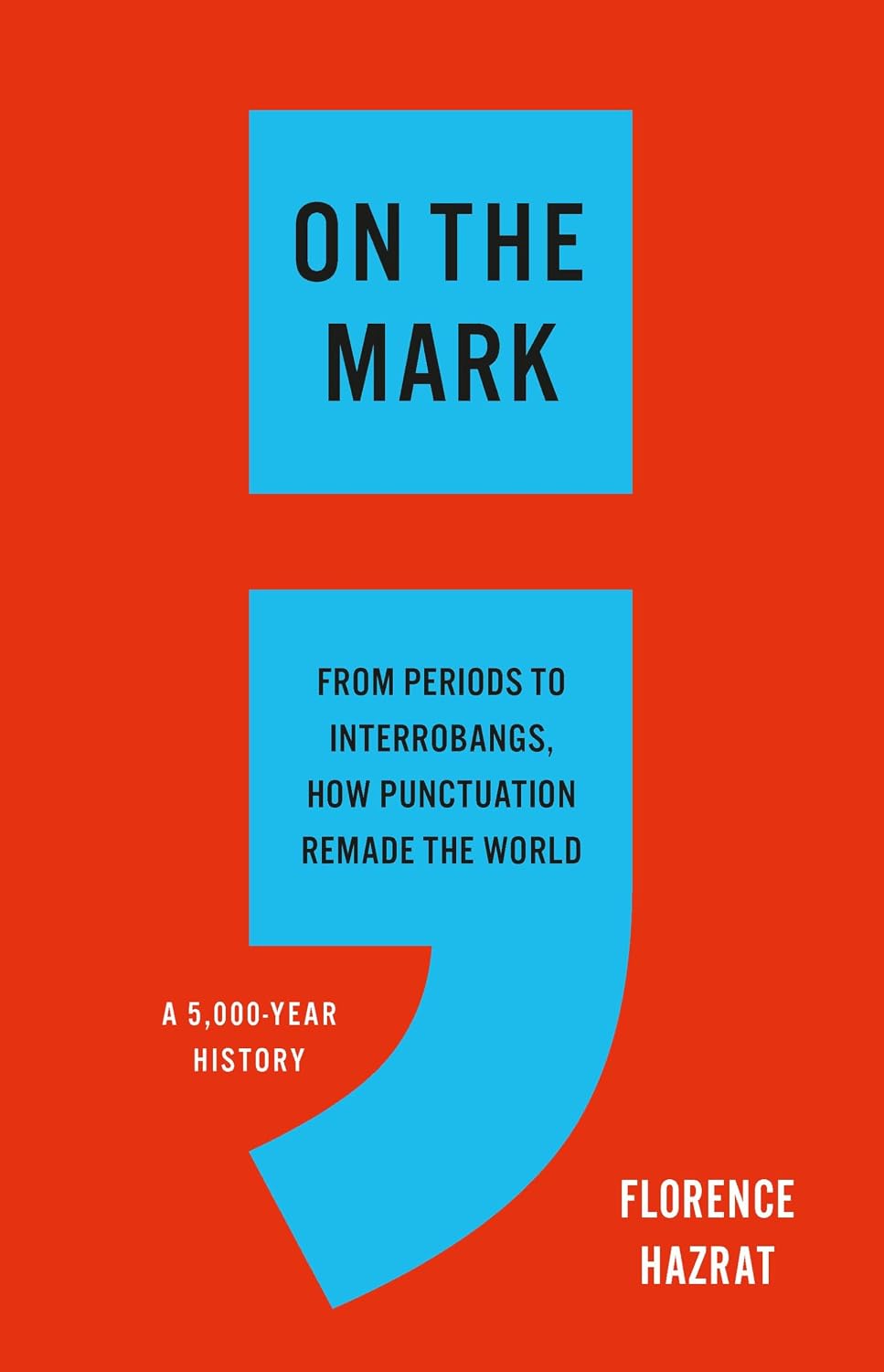
Florence Hazrat's latest work, On the Mark: From Periods to Interrobangs, How Punctuation Remade the World, was released this week by Basic Books. The 352‑page volume, priced at $32, traces the evolution of punctuation from ancient Greek scribes to the emojis of today and argues that the marks that guide reading are under assault from digital habits.
Hazrat, who previously authored A Brief History of the Exclamation Mark!, presents punctuation as "a way of organizing text for better readability." In her introduction she calls the marks "the invisible ushers of the sentence" and insists they deserve a central place in literary analysis. The book blends scholarly research with anecdotes about Shakespeare, Whitman, Faulkner and other literary giants, noting that Faulkner once wrote a single sentence of 1,288 words.
While the narrative is steeped in literary history, Hazrat does not shy away from contemporary politics. She critiques the hyphen in the phrase "Israel‑Palestine conflict," arguing that it obscures power dynamics, and she references Joseph Goebbels' obsession with exclamation marks as a cautionary tale about the persuasive force of punctuation. These observations have sparked conversation among educators who see punctuation as a neutral tool, yet recognize that style choices can reflect ideological positions.
The book's timing is notable. In the United States, the Common Core State Standards, adopted by most states between 2010 and 2013, include explicit benchmarks for punctuation at each grade level. Critics of the standards have argued that they place excessive emphasis on mechanical rules, while supporters claim they are essential for clear communication. In Canada, provincial curricula similarly outline expectations for punctuation, but recent budget cuts in several provinces have led to reduced instructional time for grammar and writing.
Hazrat's claim that "punctuation is under threat today" resonates with data from the National Assessment of Educational Progress, which shows a modest decline in writing scores over the past decade. Analysts attribute part of the drop to the rise of informal digital communication, where short messages often omit periods, commas or apostrophes. A 2022 study by the Pew Research Center found that 68 percent of American teens admit to rarely using punctuation in text messages, a habit that can spill over into academic writing.
Canadian researchers have reported similar trends. A 2021 report from the Ontario Ministry of Education noted that teachers observed "a growing reluctance among students to use proper punctuation in essays." The report recommended integrating explicit punctuation practice into digital literacy lessons, a suggestion that aligns with Hazrat's call for renewed focus on the marks that shape meaning.
Hazrat also explores the historical forces that gave punctuation its modern form. She credits Aristophanes of Byzantium, a third‑century BCE librarian, as the "father of punctuation" for introducing a system of points to indicate pauses in oral reading. Over the centuries, new symbols such as the colon, the dash, the apostrophe and the ampersand were added, each reflecting changes in printing technology and reading habits.
The invention of the printing press by Johannes Gutenberg around 1440 is highlighted as a watershed moment. By standardizing the layout of text, the press elevated the paragraph and gave punctuation a visual anchor on the page. Hazrat argues that the internet now poses a comparable challenge. She notes that early chatrooms of the 1990s experimented with "ironics," a pair of backward slashes meant to signal sarcasm, but the convention never spread beyond niche forums.
For policymakers, the book raises a question: how should public education adapt to a landscape where the "full might of modern technology" can erase punctuation with a single tap? In the United States, the Department of Education has funded initiatives that pair writing instruction with digital tools, encouraging students to edit their own texts using software that flags missing commas or misplaced apostrophes. In Canada, the federal government's Canada‑Wide Literacy Strategy includes a component on "digital punctuation," though the program is still in its pilot phase.
Critics of Hazrat's approach caution that an overemphasis on punctuation could divert resources from broader literacy goals, such as reading comprehension and critical thinking. Dr. Linda Martinez, a professor of education at the University of Michigan, told the Washington Post that "students need to understand why they are using a comma, not just how to place one." She added that "the political debate over curriculum funding often pits grammar drills against project‑based learning."
Supporters, however, point to the practical benefits of clear punctuation in civic discourse. A 2023 analysis by the Brookings Institution found that political ads with proper punctuation were perceived as more trustworthy by respondents in both the United States and Canada. The study suggested that "the visual cues of commas and periods help readers parse complex claims, reducing the likelihood of misinterpretation."
Hazrat's book also touches on the cultural dimension of punctuation. She asks, "Why is a penis like a comma?" and follows with a tongue‑in‑cheek assertion that punctuation can be "sexy." While the line has drawn laughter, it underscores her broader point that punctuation is not merely a set of rules but a reflection of how societies choose to convey nuance.
In the final chapters, Hazrat warns that "writing, which also means thinking, is being hijacked by machines." She cites the rise of predictive text and auto‑correct features that can insert or delete punctuation without user input. The implication for legislators is clear: as artificial intelligence becomes more embedded in communication platforms, standards for digital literacy may need to address how algorithms influence punctuation usage.
Overall, On the Mark offers a blend of historical scholarship, cultural commentary and a call to action for educators and policymakers. Whether readers agree with Hazrat's political asides or not, the book arrives at a moment when the United States and Canada are reevaluating how language skills are taught, funded and measured.
Hazrat concludes that "an intimate knowledge of punctuation enables one to truly inhabit a language," and she urges readers not to neglect the marks that give sentences shape. For teachers, legislators and parents, the challenge now is to decide how much emphasis to place on those marks in the classrooms of the digital age.