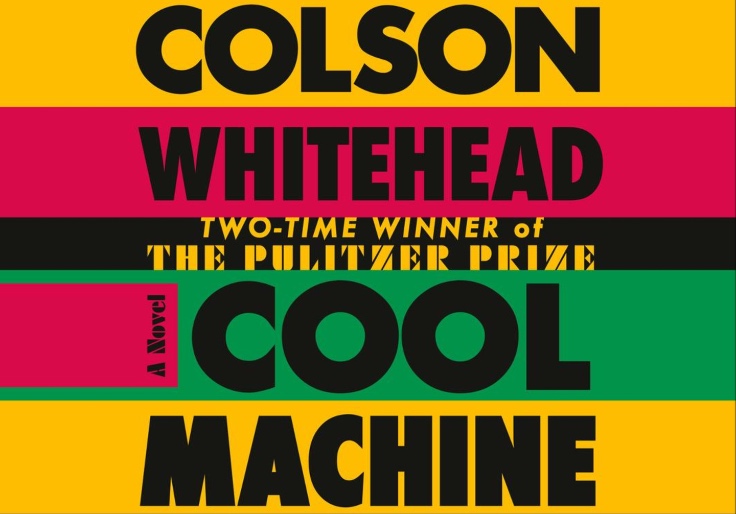
Colson Whitehead's latest novel, Cool Machine, arrives on shelves this week as the concluding volume of his Harlem Trilogy. The book follows the familiar antihero Ray Carney, a respectable furniture dealer who doubles as a fence, as he navigates the "decade of greed" that defined the early 1980s in New York City. By closing the three‑part series, Whitehead adds a third, crime‑laden perspective to the city's turbulent post‑civil‑rights era.
Like its predecessors, Cool Machine is built from three interlinked novellas. The first, "The City at Night," opens in 1981 with Carney being named Northeast Regional Dealer of the Month by Sterling Furniture. The accolade quickly turns sour when Carney is summoned to Martin Green's office to view "new samples." Inside, he discovers his friend gagged, handcuffed and bloodied, flanked by two armed men. One of the gunmen declares, "We're looking for Uncle Rich." When the name fails to register, the other points to a glistening sapphire, forcing Carney's memory to snap into place.
Whitehead then rewinds a few weeks to reveal a deal Carney struck for a Cartier diamond necklace with a small‑time thief and a larger figure named Dwayne. The necklace is authentic, but Dwayne is an alias for Harlem legend Uncle Rich, a "half crook, half crooked fantasy" whose legendary scams have entered the criminal pantheon. After faking his death, Uncle Rich resurfaces, seeking vengeance against the two gunmen who double‑crossed him. He also wants Carney to join a crew planning the ultimate heist at the Waldorf‑Astoria. Carney, whose wife Elizabeth has been denied a loan for her travel agency, signs on, hoping the score will secure their future.
The second novella jumps two years forward and relegates Carney to a cameo. The focus shifts to Pepper, Carney's long‑time partner in crime and a recurring figure in the series. In earlier books Pepper was a force of violence; now he is a shadow of his former self, plagued by joint aches and stomach cramps. He takes a job as a bodyguard for Elizabeth's biggest client, but a botched deal drags him into a partnership with a no‑nonsense young woman named LJ. Together they chase stolen money and a missing African mask through East Village nightclubs, while a sadistic contract killer hunts the artifact and anyone in his way. Pepper's struggle becomes less about retribution and more about restitution, as he battles both external threats and his own deteriorating health.
The final act, set in 1986, appears at first to be a low‑key resolution. Carney has gone straight, spending more time with Elizabeth, when both police and mob forces converge on his AWOL nephew. Carney risks his life to protect the wanted man and, in the process, seeks to atone for a mistake that has haunted him for years. The narrative ties together personal redemption with the broader moral calculus of a city that never stops grinding.
Whitehead's decision to end the trilogy with a 1980s setting is significant. The decade, often characterized by deregulation, financial excess and a surge in urban redevelopment, provides a stark backdrop for a story about a Black man navigating both legitimate business and illicit enterprise. The author's prose, described by reviewers as "verve and swagger, punch and panache," captures the era's contradictions. A line about a plumber who "comes back when you aren't home to strangle your parakeet if you stiff him on the bill" exemplifies the novel's dark humor.
Beyond the plot, Cool Machine continues Whitehead's tradition of weaving social commentary into genre fiction. He punctuates the action with observations on class divides, racial injustice and the relentless "churn" that powers the metropolis. When asked in an interview what moment tested his protagonist, Carney replies, "He was a black man in America. When was he not being tested?" Pepper, meanwhile, notes the duality of white presence in the Waldorf‑Astoria lobby: "they had both kinds of white people, the ones who flinch when they see you and the ones who look right through you." These lines echo the author's earlier work, where he examined the price of freedom in The Underground Railroad and the corrosive effects of institutional racism in The Nickel Boys.
For American readers, the novel's focus on New York's shifting neighborhoods offers a lens on contemporary debates about gentrification, policing and economic inequality. The city's transformation from a "monstrous entity powered by innate miseries, operated by brute will, and held together by pluck, fury, and rebar," as Whitehead writes, mirrors the ongoing tension between development projects and long‑standing communities in cities across the United States. Canadian readers may see parallels in Toronto's own battles over affordable housing and the legacy of 1970s and 1980s urban renewal policies.
Whitehead's literary pedigree adds weight to the release. He is a two‑time Pulitzer Prize winner, having earned the award for The Underground Railroad in 2017 and for The Nickel Boys in 2020. Both books tackled historical racial trauma through inventive narrative structures, earning him a reputation for blending literary ambition with popular appeal. The Harlem Trilogy, beginning with Harlem Shuffle in 2021 and followed by Crook Manifesto in 2023, marks a departure from his earlier historical fiction, moving into contemporary crime fiction while retaining his focus on systemic injustice.
From a publishing standpoint, Cool Machine is released by Doubleday, spans 368 pages and carries a list price of $30. Early sales data suggest a strong debut, bolstered by Whitehead's name recognition and the critical buzz surrounding the conclusion of a highly anticipated series. The novel's structure, three novellas bound together, reflects a growing trend among literary authors to experiment with form, offering readers a modular reading experience that still delivers a cohesive narrative arc.
The book also arrives at a moment when crime fiction is being reassessed for its cultural impact. Critics have long debated whether the genre glamorizes violence or provides a vehicle for exposing social ills. Whitehead's approach leans toward the latter, using the criminal underworld as a mirror for broader societal failures. By placing a Black protagonist at the center of a heist narrative, he challenges the genre's historical tendency to marginalize people of color or to cast them solely as antagonists.
In terms of political relevance, the novel's depiction of police corruption and mob influence resonates with current conversations about law enforcement reform in the United States. The 1980s saw the rise of the "War on Drugs," a policy era that disproportionately affected Black communities, a theme that subtly underpins the novel's tension between legitimate business and illicit activity. Canadian policymakers grappling with similar issues of drug policy and community policing may find Whitehead's fictional account a useful cultural reference point.
Whitehead's concluding line in the novel, that the biggest con is the belief "there were other places besides New York City," underscores his view of the metropolis as both a crucible of opportunity and a trap of relentless ambition. The statement invites readers to consider how urban mythmaking can obscure the lived realities of those who inhabit the city's shadows.
Overall, Cool Machine stands as a compelling finale to a trilogy that has chronicled three decades of New York's evolution. Its blend of tight plotting, vivid character work and incisive social critique ensures it will be discussed not only in literary circles but also in policy debates about race, class and urban development. Whether readers are drawn by the heist thrills or the deeper commentary, Whitehead delivers a novel that feels both timely and timeless.