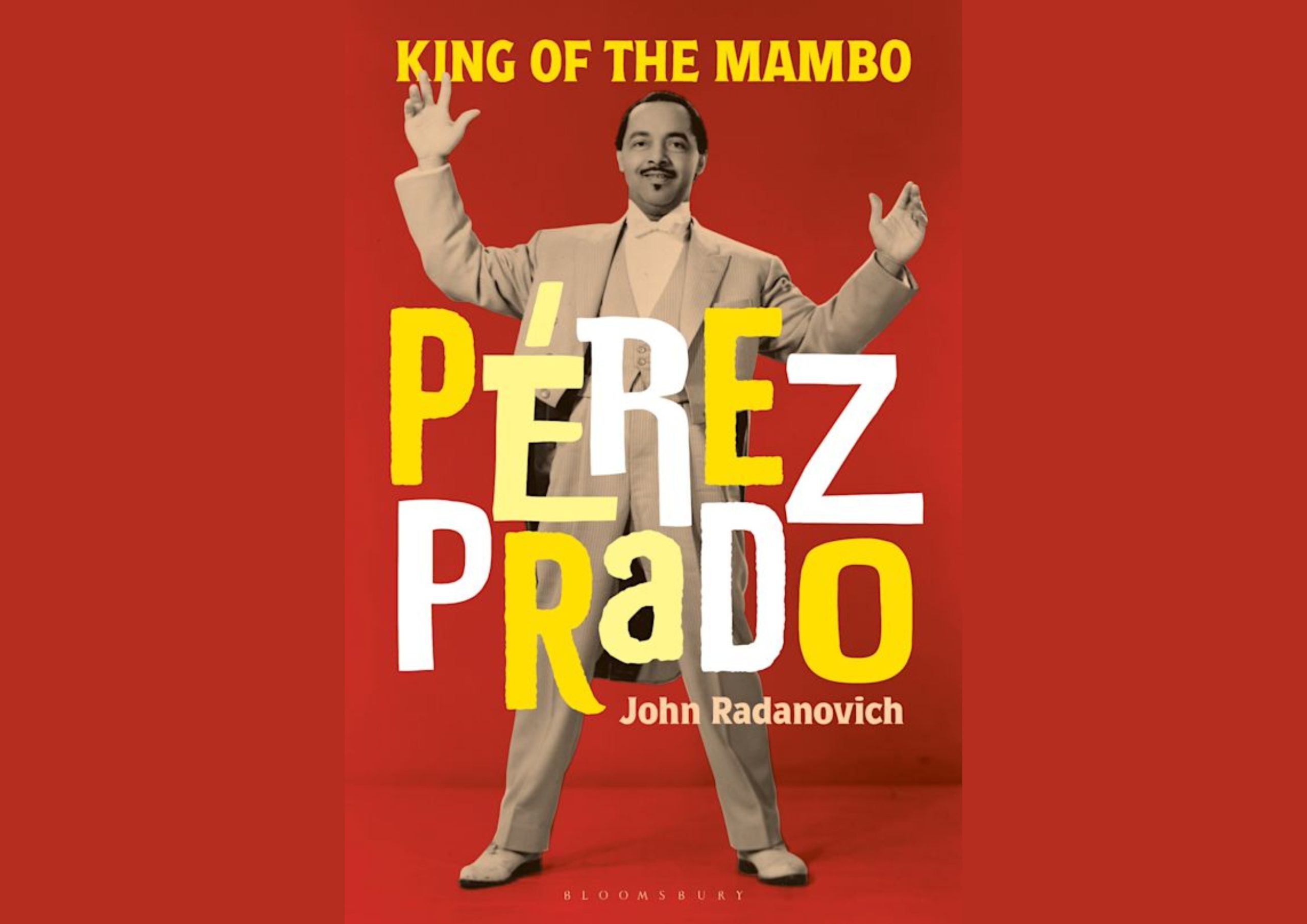
Bloomsbury Academic published John Radanovich's new biography King of the Mambo this week, a 288‑page study that positions Cuban bandleader Pérez Prado not only as a musical innovator but also as a figure whose art intersected with religious authority, Cold War anxieties and the evolving cultural marketplace of the United States and Canada.
Prado's rise in the early 1950s coincided with a wave of Latin rhythms that swept post‑war America. The book chronicles how his brass‑driven arrangements, punctuated by signature grunts of "¡Dilo!" and the soaring "ahhhh‑AH!," turned the mambo from a Caribbean nightclub specialty into a mainstream phenomenon that reached from Bangor to Buenos Aires. By 1955, Perry Como's "Papa Loves Mambo" sat in the Top Five of the Hit Parade, while department stores in Washington, D.C. sold women's blouses printed with step‑by‑step mambo instructions for $2.99.
Radanovich's narrative does not shy away from the controversy that accompanied the craze. In 1951 a Catholic archbishop in Peru warned that anyone who danced or even listened to the mambo faced excommunication. A similar outcry erupted in Venezuela, where church groups demanded the same penalty for Prado himself, accusing the Cuban‑born composer of moral corruption. These religious condemnations reflected a broader pattern of cultural policing that resonated in the United States, where local authorities sometimes linked Latin dance halls to juvenile delinquency and subversive activity during the Red Scare.
Prado's flamboyant public persona amplified the political stakes. He sported a sharp cholo goatee, drove a Cadillac upholstered in tiger‑stripe fabric and wore gold crosses alongside a custom sealskin suit that earned him the nickname "Cara de Foca" (Seal Face). His visual excess, coupled with a string of instrumental hits such as "Mambo No. 5," "Cherry Pink and Apple Blossom White," and "Patricia," challenged the clean‑cut image of 1950s American pop epitomized by Perry Como and other easy‑listening crooners.
"Your first exposure to his music is thrilling and yet shocking to hear how he grasps the saxophones by the back of the neck with his right hand and forces them to answer the call of his trumpets in his left," Radanovich writes, underscoring Prado's theatrical musicianship. The biographer argues that Prado's recordings represent "the most dynamic and aggressive recorded dance music possible," a claim that positions the mambo as a precursor to later rock and roll rebellion.
The book also traces the genre's diffusion into North American popular culture. In the United States, the mambo's syncopated rhythms filtered into the work of songwriting teams like Doc Pomus and Mort Shuman, who incorporated Latin syncopation into hits for The Drifters and Elvis Presley. In Canada, the same beats found a home in Toronto's vibrant club scene, where immigrant musicians used the style to negotiate identity and marketability in a bilingual nation grappling with its own multicultural policies.
Prado's influence extended beyond the 1950s. The 1999 Lou Bega version of "Mambo No. 5" sold seven million copies worldwide and remains a staple at weddings across the continent. Contemporary Latin artists such as Karol G have sampled Prado's work, most recently on the 2025 chart‑topping single "Tropicoqueta," demonstrating the genre's durability in a streaming‑driven market that shapes royalty structures and cross‑border licensing agreements.
Radanovich, who previously authored a biography of Cuban legend Benny Moré, situates Prado within a lineage that includes the danzón and the later cha‑cha, both of which contributed to what early jazz historian Jelly Roll Morton called "the Spanish tinge." By fusing Afro‑Cuban rhythms with the big‑band swing format, Prado created a sound that appealed to both elite concert halls and working‑class dance floors, a duality that policymakers in the United States and Canada have long debated when allocating arts funding.
The biography also revisits a famous episode of the 1950s sitcom The Honeymooners, in which Ralph Kramden returns home to find his wife Alice and other apartment‑complex wives taking mambo lessons from a suave new neighbor. Kramden's outraged exclamation, "I don't do it! [Norton] doesn't do it! My grandmother never did it!", captures the era's anxiety about cultural infiltration, a sentiment echoed in contemporary political discourse surrounding immigration and cultural preservation.
Prado's career was marked by exile and controversy. After a scandal in Mexico City, rumored to involve a wardrobe mishap, he relocated to the United States, where he recorded "Cherry Pink and Apple Blossom White" for the 1955 Jane Russell film Underwater! His success earned him a star on the Hollywood Walk of Fame, yet he remained a polarizing figure. One former timbalero recalled, "When God made Pérez Prado, he filled one half of his head with music and the other half with shit," a blunt assessment that highlights the tensions between artistic brilliance and personal temperament.
Beyond the music, Prado's story raises questions about how cultural icons are regulated and celebrated in North America. In the United States, the Federal Communications Commission's early guidelines on "obscene" content occasionally targeted Latin dance shows, while Canada's Canadian Radio‑television and Telecommunications Commission (CRTC) has historically required broadcasters to meet Canadian content quotas, a policy that has both protected and limited the exposure of foreign‑origin music.
Radanovich's work arrives at a moment when lawmakers in both countries are revisiting cultural funding formulas. In Washington, the Senate's Arts and Humanities Committee is debating a bill that would increase grants for programs that promote "heritage music" from under‑represented communities. In Ottawa, the federal government's recent budget earmarked additional resources for Indigenous and multicultural arts initiatives, a move that could benefit projects that trace the lineage of mambo and its descendants.
Critics of the proposed funding argue that allocating public money to niche genres risks diverting resources from mainstream Canadian talent. Supporters counter that the historical impact of figures like Prado demonstrates the economic and diplomatic value of cultural exchange, especially as U.S.‑Canada trade agreements increasingly incorporate provisions for artistic collaboration.
"As a pianist and bandleader, Pérez Prado exerted more outside influence on American jazz, R&B, and even rock and roll than probably any other single musician in American history," Radanovich writes. The biography's release may therefore influence curriculum decisions in university music departments, where scholars are already debating whether to integrate mambo studies into broader courses on American popular music.
Industry observers note that the book's timing could affect streaming platforms' algorithms. With the rise of curated "retro" playlists, a renewed scholarly focus on Prado may prompt services like Spotify and Apple Music to promote his catalog, potentially increasing royalty payouts for his estate and for contemporary artists who sample his work.
In the cultural sphere, Prado's legacy continues to surface in popular media. Episodes of The Simpsons have featured his tracks, reinforcing his status as a pop‑culture touchstone for younger audiences who may be unfamiliar with the original recordings. Such placements illustrate how legacy content can be leveraged for advertising revenue, a point of interest for policymakers monitoring the intersection of intellectual property law and digital distribution.
"King of the Mambo" is priced at $35 and is already generating discussion among music historians, cultural policymakers and fans alike. Whether the biography will reshape public perception of Latin music's role in mid‑century politics remains to be seen, but its detailed chronicle of Prado's life offers a compelling case study of how a single artist can influence cultural policy, challenge censorship, and leave an indelible mark on the political fabric of North America.