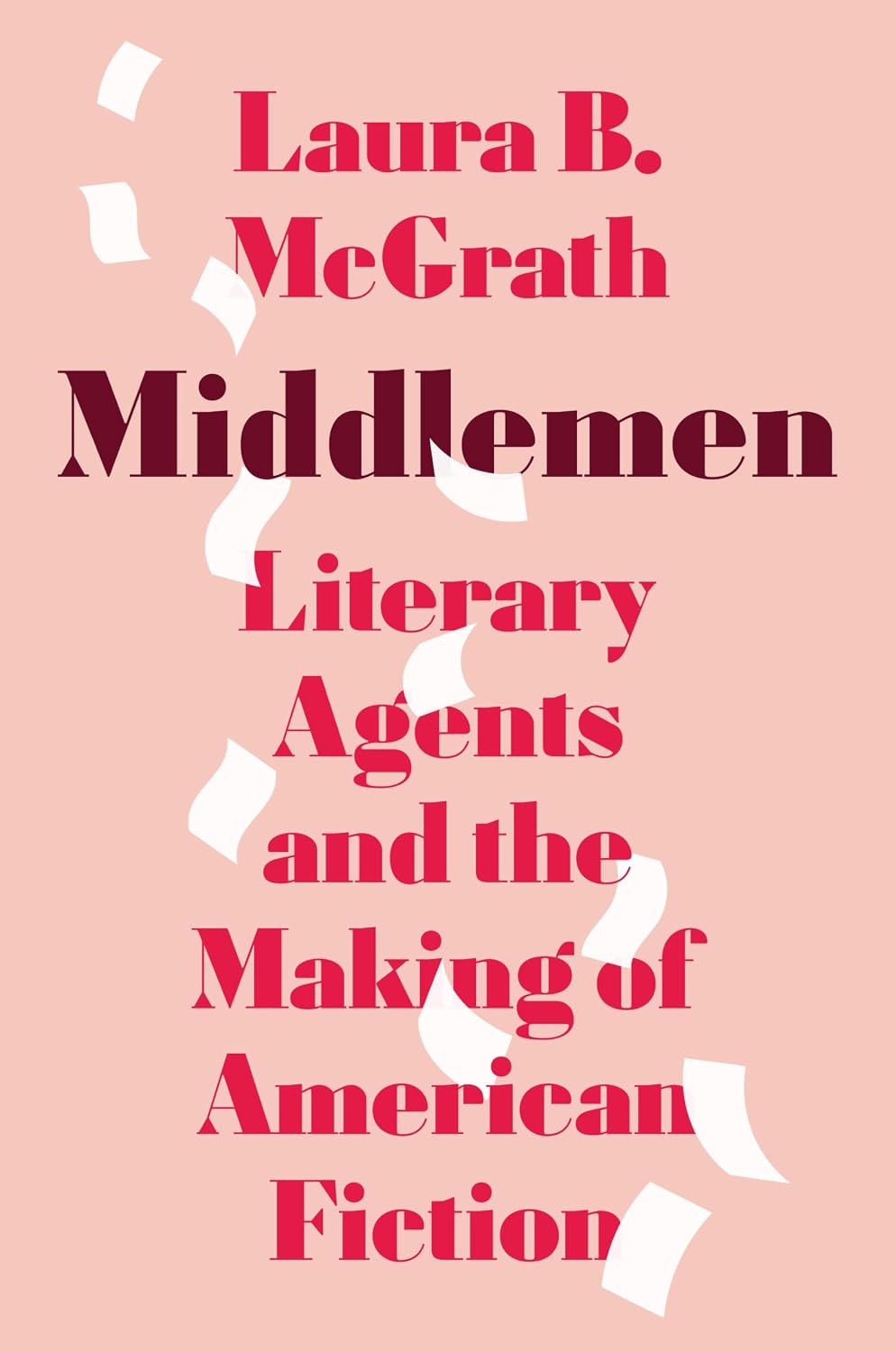
In a detailed new volume titled Middlemen: Literary Agents and the Making of American Fiction, Princeton University Press scholar Laura B. McGrath argues that literary agents function as gatekeepers who decide which manuscripts reach publishers, which books become best‑sellers, and which political narratives dominate the public sphere.
McGrath's research paints a portrait of an industry that, despite its outsized influence, remains tightly clustered in New York City. She estimates there are roughly 1,500 literary agents operating in the United States, with about 80 percent of them being women. The same data show that the overwhelming majority are white, a fact she links to the persistent under‑representation of Black authors on bestseller lists.
The book's subtitle, "Literary Agents and the Making of American Fiction," is not a rhetorical flourish. McGrath points to historic cases where agents turned modest manuscripts into cultural landmarks. Lynn Nesbit, for example, shepherded Jack Kerouac's road‑novel On the Road to publication, while Candida Donadio secured the rights to Joseph Heller's satirical classic Catch‑22. Both works have become fixtures of post‑war American literature, yet McGrath questions whether their lasting fame reflects literary merit or the promotional power of their representatives.
Beyond fiction, agents have become indispensable brokers of political memoirs. Robert B. Barnett, a Washington attorney who acted as an agent for presidents and senators, negotiated an $8 million advance for Hillary Clinton's Living History and a $10 million advance for Bill Clinton's My Life. Barnett's most lucrative deal, according to his University of Chicago Law School obituary, was a $65 million package for Barack and Michelle Obama's joint memoir with Penguin Random House. Those figures illustrate how agents can shape the political narrative by determining which leaders get a platform and how much resources they receive to craft their stories.
One of the most vivid personal accounts in McGrath's book comes from author Joseph Epstein, who recounts his first encounter with the legendary agent Georges Borchardt in 1970. Working for Quadrangle‑New York Times Books, Epstein offered a $2,500 advance for a collection of film criticism by Vernon Young. Borchardt's reply, "That's not a very elegant sum", prompted a negotiation that ultimately closed the deal. The anecdote illustrates the subtle ways agents assess not just monetary value but also the perceived prestige of a project.
Georges Borchardt's career spanned more than five decades. After that early negotiation, Epstein asked Borchardt to become his own agent, a request the veteran accepted. Over the years Borchardt handled foreign rights for Epstein's books, securing contracts in China, Italy, Germany and elsewhere. He also championed works that other publishers rejected; most notably he rescued Elie Wiesel's Holocaust memoir Night, a title that went on to sell roughly ten million copies worldwide. Borchardt's influence extended beyond the written page: his wife Anne managed film and television options for the agency, negotiating with Hollywood producers such as Stanley R. Jaffe, though none of those projects reached production.
Borchardt's death on January 18 2026 at the age of 97 marked the end of an era for many authors who relied on his steady hand. In their final conversation, he joked that the silent "s" at the end of his first name led some Americans to mispronounce him as "Gorgeous." The story underscores how personal relationships between agents and writers can become part of publishing lore, even as the business itself follows a largely apprenticeship‑based model. New agents typically learn the trade from senior colleagues, who in turn mentor assistants who eventually become partners.
McGrath outlines the financial mechanics that underpin the agent‑author relationship. Traditionally agents collect a ten‑percent commission on an author's royalties, a rate that has risen to fifteen percent in recent years. The commission applies to advances as well as to any subsequent earnings. Advances, which are paid before a book is sold, can range from modest six‑figure sums for debut novelists to multi‑million deals for high‑profile memoirs. Those advances are meant to support authors while they complete their manuscripts, though they are recouped from future sales.
The gender shift in the profession has not translated into broader racial diversity. McGrath highlights the career of Marie Dutton Brown, an African‑American editor at Doubleday/Anchor who championed Black writers during a period when most agents were white. Brown argues that the lack of Black agents reinforces a market perception that Black readers do not purchase books, a self‑fulfilling prophecy that limits opportunities for Black authors. McGrath estimates that the United States has a potential market of twenty million middle‑class Black readers, a segment that remains under‑served because agents tend to prioritize titles that appeal to the predominantly white, upper‑middle‑class demographic that dominates fiction sales.
For Canadian readers, the dynamics described in Middlemen have clear parallels. Canada's publishing hub in Toronto mirrors New York's concentration of agents, and the same apprenticeship system governs the training of Canadian agents. While Canada's market is smaller, the same gender and racial imbalances appear, and Canadian authors often rely on the same trans‑national agents to sell foreign rights to the United States. The cross‑border flow of rights means that decisions made in a New York office can affect the visibility of a Canadian novel in the United States, and vice versa.
McGrath's analysis also touches on the evolving role of agents in the digital age. The rise of self‑publishing platforms and direct‑to‑consumer marketing has given some authors the option to bypass traditional representation. Nevertheless, the data in Middlemen suggest that agents still command the most lucrative deals, especially for high‑profile political memoirs and large‑scale foreign rights sales. Authors who lack an agent often struggle to secure advances that cover living expenses, making the traditional model a de‑facto necessity for many writers.
In sum, Middlemen offers a comprehensive look at an industry that operates behind the scenes yet exerts a decisive influence on what Americans and Canadians read, what political stories are amplified, and how cultural narratives are constructed. By exposing the gender and racial composition of the profession, the book invites a broader conversation about how publishing can become more inclusive, and how the gatekeeping role of agents might evolve as the market continues to shift.