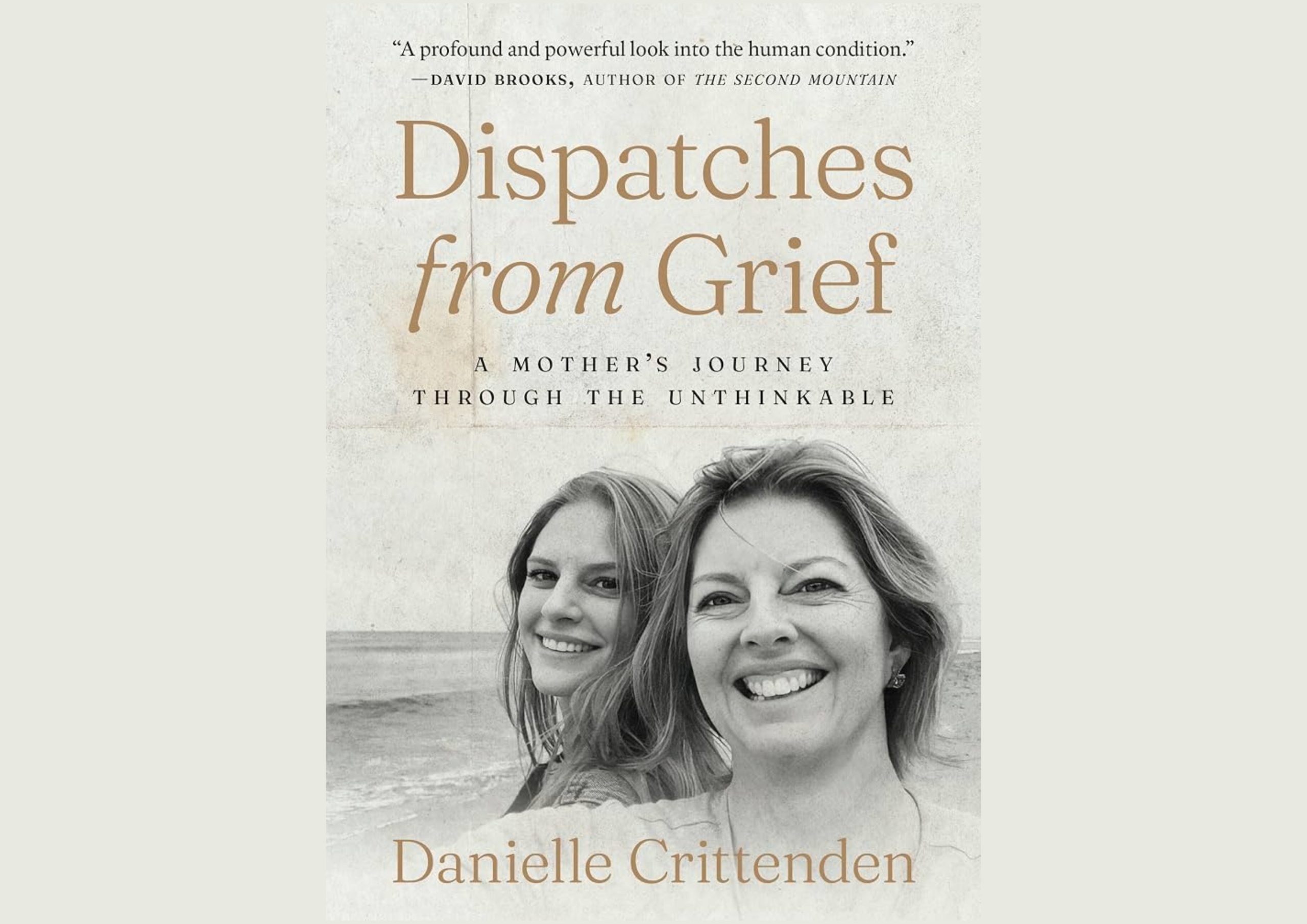
When journalist Danielle Crittenden released Dispatches from Grief: A Mother's Journey Through the Unthinkable, reviewers praised its raw honesty. The book, however, also arrives at a moment when lawmakers in Washington and Ottawa are debating how to better protect families after a death. Crittenden's account of her daughter Miranda's sudden passing in February 2024 adds a human face to policy discussions about paid bereavement leave, mental‑health coverage and the bureaucratic hurdles that follow a loss.
Miranda, a 32‑year‑old who had survived a brain tumor, died at home after taking the wrong dosage of medication. Crittenden's final text exchange with her daughter, "Stunning!" she replied, asking for another selfie, has become a painful illustration of how quickly life can change. In the memoir she writes, "The loss of a child upends the natural order, a meteor crashing into your personal galaxy." That metaphor now resonates beyond the personal sphere, prompting questions about whether the United States and Canada provide adequate safety nets for families in crisis.
In the United States, there is no federal requirement for paid bereavement leave. The Family and Medical Leave Act of 1993 offers up to 12 weeks of unpaid leave for serious health conditions, but it does not specifically address the need to grieve a loved one. A handful of states, California, Oregon, New Jersey and Washington, have enacted paid family‑leave programs that can be used for bereavement, yet the benefits are limited in duration and eligibility. Critics argue that the patchwork system leaves many workers, especially hourly and low‑wage employees, without time off or income after a death.
Canada's approach differs but still leaves gaps. Federally, the Employment Insurance Compassionate Care Benefit provides up to 28 weeks of financial assistance when a family member is gravely ill, but it does not extend to the period after a death. Provincial legislation varies: Ontario grants two days of paid bereavement leave, while British Columbia offers three days. Quebec provides five days for the death of a child, yet most provinces fall short of the longer periods many grieving parents need to manage affairs, attend funerals and seek counseling.
Crittenden's narrative details the "Bureaucracy of Death" she faced while arranging Miranda's burial and sorting through the daughter's apartment. She notes that probate proceedings can delay access to a loved one's assets, a reality that can exacerbate financial stress for families already coping with emotional trauma. "When people asked how I was feeling, I compared myself to a prisoner adjusting to life without parole," she writes, underscoring how legal processes can feel punitive rather than supportive.
These personal hurdles echo a broader policy conversation about mental‑health services. Crittenden turned to eye movement desensitization and reprocessing (EMDR) therapy, a treatment that has gained acceptance for trauma but remains unevenly covered by insurance in both countries. In the United States, private insurers often require prior authorization, and many public plans, including Medicaid, limit the number of sessions. Canada's provincial health plans cover some psychotherapy, yet EMDR is not universally funded, leaving patients to shoulder out‑of‑pocket costs.
Advocates cite Crittenden's experience as evidence that grief support must be integrated into health‑care and employment law. The American Legislative Exchange Council's recent "Bereavement Leave Act" proposal would mandate three days of paid leave for the death of an immediate family member, with an option for states to expand the benefit. In Canada, a bipartisan group of MPs introduced Bill C‑281, which seeks to standardize a minimum of five days of paid bereavement leave across all provinces and territories.
Both proposals face political hurdles. In the United States, opponents argue that mandating paid leave could burden small businesses already struggling with labor costs. They point to a 2022 Congressional Budget Office estimate that a national paid bereavement policy could cost roughly $2 billion annually, a figure they deem unnecessary given existing unpaid leave options. Proponents counter that the cost is modest compared with the economic impact of reduced productivity and increased health‑care utilization when grieving workers return to work prematurely.
Canadian legislators confront a similar debate. Critics of Bill C‑281 warn that a uniform national standard could strain provincial budgets, especially in Atlantic provinces where health‑care funding is already tight. Supporters highlight research from the Canadian Institute for Health Information showing that untreated grief can lead to higher rates of depression, substance abuse and chronic illness, ultimately increasing public‑health expenditures.
Beyond legislation, Crittenden's memoir raises the question of cultural attitudes toward grief. She rejects "happiness hucksters" and the platitudes often offered to mourners, instead finding solace in Jewish mourning traditions and the stark honesty of C. S. Lewis's A Grief Observed. Her critique of "you'll feel better with time" mirrors a growing sentiment among mental‑health professionals that grief is not a linear process and that policy should reflect that complexity.
For policymakers, the challenge is to translate that insight into concrete measures. Expanding paid bereavement leave would give families the breathing room to handle legal affairs, attend memorials and begin therapy without the pressure of immediate financial strain. Broadening insurance coverage for evidence‑based treatments like EMDR could reduce long‑term mental‑health costs. Moreover, public awareness campaigns that move beyond clichés could help destigmatize professional help, a point Crittenden emphasizes when she writes, "There is no 'healing.' No journey back to yourself, that map burned with everything else."
While Crittenden does not claim her book is a self‑help manual, its stark portrayal of loss has already entered the policy conversation. In a recent hearing before the U.S. House Committee on Education and Labor, a grieving mother cited the memoir while urging lawmakers to consider paid bereavement leave as a workplace safety issue. In Ottawa, a parliamentary committee on health referenced the same work while debating amendments to the Canada Labour Code.
As the United States and Canada grapple with how to support families after death, Crittenden's story serves as a reminder that legislation cannot replace the personal rituals of mourning, but it can at least remove the financial and bureaucratic obstacles that compound grief. Whether Congress adopts the Bereavement Leave Act or Canada passes Bill C‑281, the ultimate test will be whether grieving parents like Crittenden can focus on remembrance rather than paperwork.
In the meantime, Crittenden's final takeaway, "I need to embrace my own gift of life to move forward", offers a quiet challenge to legislators: to create policies that honor both the memory of the lost and the living who remain.