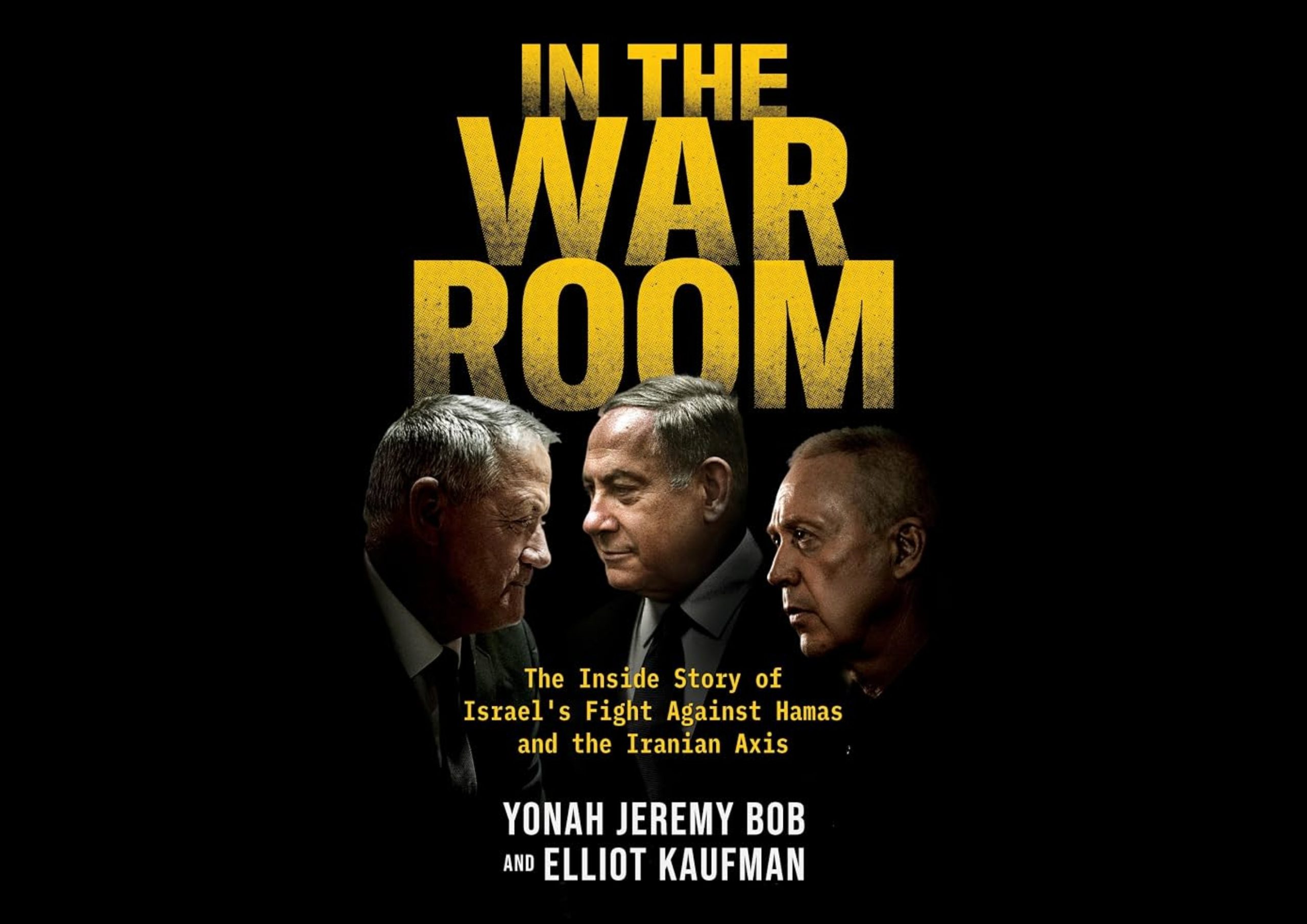
Authors Elliot Kaufman of the Wall Street Journal and Yonah Jeremy Bob of the Jerusalem Post have used unprecedented access to Israel's senior officials to produce a narrative of the war that began with Hamas's October 7 attack. Their account, titled In the War Room, follows the decisions of a war cabinet whose members were political enemies before the crisis erupted.
Israel's war cabinet was assembled in the weeks after the surprise assault. It brought together the prime minister, the defense minister, the chief of staff of the Israel Defense Forces and several former generals who had recently led rival parties. The arrangement was meant to signal national unity, but it also placed deep political fissures at the heart of strategic deliberations.
Benjamin Netanyahu, Israel's longest‑serving prime minister, entered the conflict with a reputation for a hard line on security. His standing was shaken by the scale of the October 7 attack, which many Israelis viewed as a failure of intelligence. Yoav Gallant, a former general who had recently broken with Netanyahu over a proposed overhaul of the judiciary, served as defense minister. Although a member of Netanyahu's Likud party, Gallant's public dissent made his relationship with the prime minister tense.
Benny Gantz, another former chief of staff, had led the centrist Blue and White party that once challenged Netanyahu's dominance. He joined the cabinet after the attacks, bringing with him Gadi Eisenkot, a former chief of staff who would later become Netanyahu's chief rival in the October election. The chief of staff of the Israel Defense Forces, Herzi Halevi, had been appointed by the short‑lived coalition of Naftali Bennett and Yair Lapid, not by Netanyahu, adding another layer of political complexity.
The authors describe the war room as a place of constant suspicion. There was little personal camaraderie, and many participants recalled the early weeks as a period of shock and disorientation. Yet the group managed to conduct a multi‑front war that involved Gaza, the Lebanese border and Iranian proxies. The book argues that this outcome was remarkable given the lack of trust among the leaders.
Strategic disagreements surfaced early. Gallant pushed for an immediate strike on Hezbollah in Lebanon, arguing that the group's missile stockpiles posed a longer term danger than Hamas's rockets. Netanyahu, by contrast, wanted to focus first on rescuing hostages and dismantling Hamas's infrastructure in Gaza. Later, the prime minister grew hesitant about a ground offensive in the southern Gaza city of Rafah, while many of his generals pressed for a swift assault. Gantz's position shifted over time; he grew more cautious about Rafah even as Netanyahu became more determined to move forward.
These debates were not static. The same leader could argue for caution in one battle and for aggression in another, depending on the intelligence and political pressures of the moment. The authors note that recollections of the meetings differ, with several participants remembering others as shaken while portraying themselves as steady.
One of the most consequential disagreements involved a proposal by Gantz and Eisenkot to end the war in early 2024 by allowing the Palestinian Authority to assume a limited role in Gaza. At the time, the United States and many European capitals were urging a ceasefire to reduce civilian casualties. The authors contend that Netanyahu's insistence on continuing the offensive ultimately led to the degradation of Hezbollah's capabilities, the weakening of Syrian President Bashar al‑Assad's influence, and the disruption of Iran's missile programs.
While the book credits the continuation of the war with several strategic gains, it also acknowledges the high human cost and the political fallout within Israel. The war cabinet's internal friction contributed to a volatile electoral environment, with Netanyahu's coalition facing a fragmented opposition in the October election.
Across the Atlantic, the United States played a decisive role in shaping the conflict's parameters. The Biden administration, from the outset, sought to limit Israel's use of force. Defense Secretary Lloyd Austin made more than one hundred calls to his Israeli counterpart, and national security adviser Jake Sullivan drafted a Foreign Affairs piece that initially claimed the administration had "de‑escalated crises in Gaza." The passage was later removed, but the effort to portray a calmer Middle East persisted.
U.S. officials repeatedly warned against a preemptive strike on Hezbollah, citing the potential for a broader regional war. In early 2024, Secretary of State Antony Blinken publicly warned that an invasion of Rafah could cause twenty‑thousand civilian deaths and would take months to evacuate the city. The United States announced a pause in the delivery of certain weapons to Israel, a move that Israel later overcame by accelerating civilian evacuations and defeating Hamas in the city.
The American stance created political reverberations at home. After the 2024 presidential election, some Democrats argued that President Biden's perceived softness on Israel contributed to their loss, while a segment of the nationalist right began to criticize what they called an unquestioning U.S. support for Israel. The book shows that, contrary to those narratives, the administration was actively trying to restrain Israeli operations throughout the war.
For readers in the United States, the episode highlights how congressional aid packages, which allocate billions of dollars to Israel each year, can be influenced by executive diplomacy and public opinion. The conflict also fed into debates over the United States' role in the Middle East, a topic that remains central to upcoming midterm races and to Canada's foreign policy discussions.
Canadian officials have taken a more measured approach, emphasizing humanitarian assistance while urging restraint. Canada's aid to Gaza and its diplomatic engagements with both Israel and the Palestinian Authority reflect a broader North American trend of balancing security concerns with human rights considerations. The book's insights into the Israeli decision‑making process provide Canadian policymakers with a clearer picture of the pressures that shape Israel's actions.
Overall, *In the War Room* offers a detailed chronicle of how a group of political rivals managed a complex war while navigating domestic and international pressures. The authors blend firsthand testimony with strategic analysis, delivering a narrative that feels both urgent and reflective.
The volume, published by Wicked Son, runs 352 pages and is priced at $32.50. It stands as a valuable resource for anyone seeking to understand the interplay of politics, military strategy and foreign influence in one of the most closely watched conflicts of the decade.