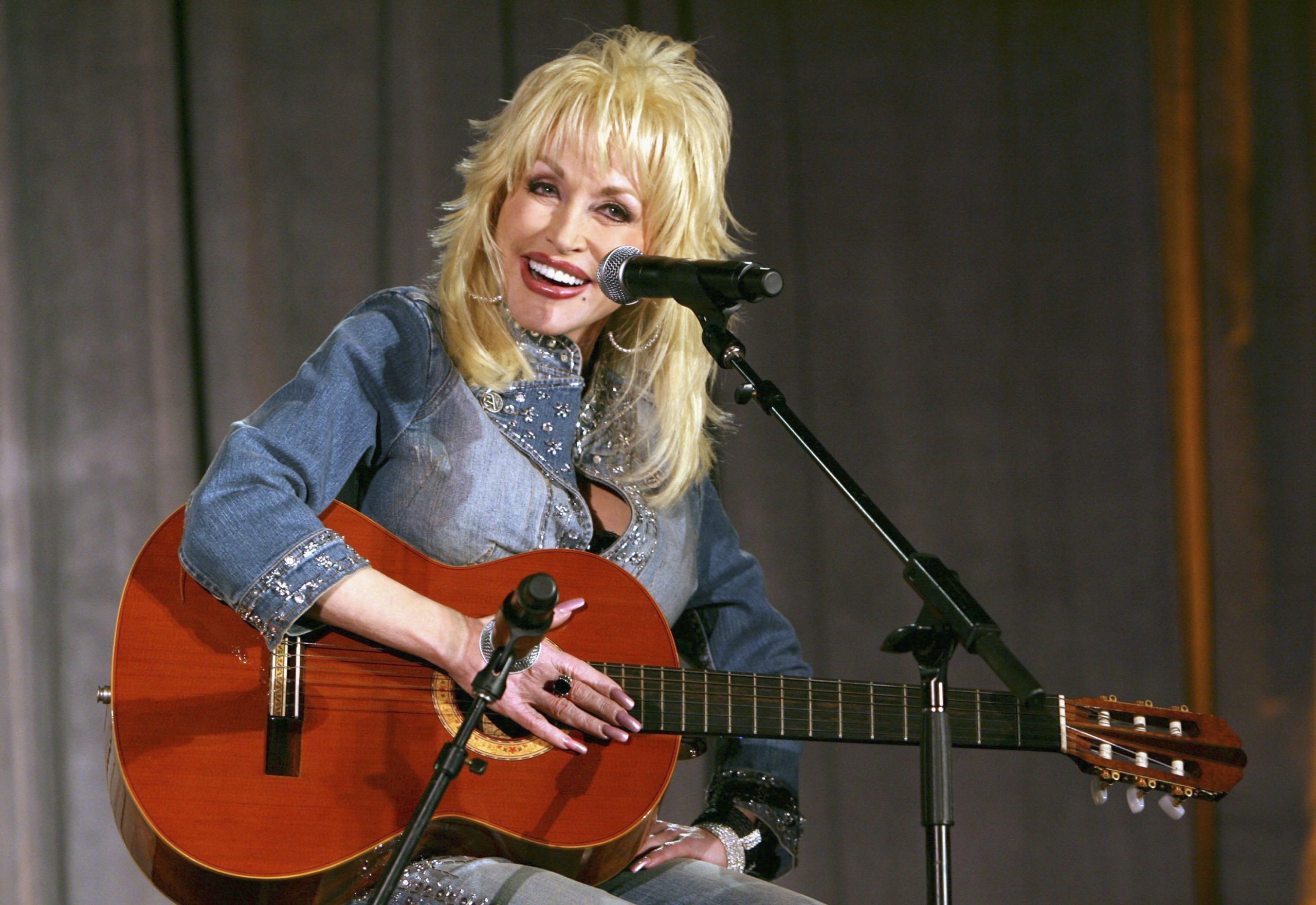
When a 1987 portrait shows Dolly Parton perched on the porch of her childhood cabin in the Smoky Mountains, the scene captures more than a nostalgic moment; it foreshadows a career that would intertwine entertainment, entrepreneurship and political influence.
Born to a family of twelve children in a one‑room log home without electricity or running water, Parton rose to global fame as a singer, actress and businesswoman. By the time the photograph was taken she had already starred alongside Hollywood legends and was preparing to open a theme park that would later be named Dollywood.
Dollywood, located in Sevier County, Tennessee, now contributes more than $1 billion in annual economic activity, according to a study by the Tennessee Department of Economic and Community Development. The park employs roughly 5,000 workers, many of whom are local residents, and generates significant sales‑tax revenue that funds public schools and infrastructure projects across the region.
State and local officials have repeatedly highlighted Dollywood's role in the state's tourism strategy. In 2023 the Tennessee governor's office cited the park as a model for public‑private partnerships that stimulate rural economies. The park's success has also drawn attention from Canadian tourism boards, which see the Dollywood model as a template for developing heritage‑based attractions in the Atlantic provinces.
Beyond the rides and shows, Parton's philanthropy has entered the policy arena through the Imagination Library, a nonprofit that mails free books to children from birth until they turn five. The program has distributed more than 300 million books worldwide, a figure confirmed by the organization's annual report.
In the United States the Imagination Library has partnered with the United States Postal Service to reach families in underserved areas, a collaboration that has been praised by both Democratic and Republican lawmakers for its low‑cost, high‑impact approach to early childhood literacy. In 2022 a bipartisan Senate subcommittee held a hearing on the program, with senators from Tennessee and New York highlighting its potential to close reading gaps that affect long‑term educational outcomes.
Canadian provinces have also embraced the model. Ontario's Ministry of Education announced a pilot that adapts the Imagination Library's distribution method for French‑language books, citing the program's proven track record in boosting literacy rates among low‑income families.
Parton's political involvement extends to public‑health advocacy. During the COVID‑19 pandemic she used her platform to encourage vaccination, appearing in a Tennessee Department of Health campaign that featured her singing a modified version of "Jolene" to promote vaccine confidence. The campaign was credited with increasing vaccination rates in rural counties that had previously lagged behind state averages.
Her outreach was noted by public‑health officials as an example of how cultural figures can bridge partisan divides. A senior advisor at the Centers for Disease Control and Prevention referenced the Dolly Parton campaign in a briefing to congressional leaders, arguing that trusted community voices are essential for overcoming vaccine hesitancy.
Parton's public statements on social issues have also sparked political dialogue. She has repeatedly expressed support for LGBTQ rights, describing herself as a "gay icon" and endorsing marriage equality. While her stance aligns with the Democratic Party's platform, it has drawn criticism from conservative groups in Tennessee, illustrating how a single cultural figure can become a flashpoint in state‑level cultural debates.
In addition to her advocacy, Parton's financial contributions to political campaigns are well documented. Federal election records show that she has donated to Democratic candidates, including a $25,000 contribution to President Joe Biden's 2020 re‑election committee. Her donations have been cited by political analysts as part of a broader trend of entertainment industry figures supporting candidates who favor arts funding and education initiatives.
The economic clout of Dollywood also gives Parton leverage in discussions about state tax policy. In 2021 the Tennessee legislature debated a proposal to increase the state sales tax on amusement attractions. Parton testified before the Senate Finance Committee, arguing that higher taxes would jeopardize jobs and tourism revenue. Her testimony, which emphasized the park's role in funding local schools, helped shape the final compromise that kept the tax rate unchanged.
Parton's influence reaches beyond the United States through cross‑border trade. Dollywood attracts more than 3 million visitors each year, a sizable portion of whom travel from Canada. The park's popularity has prompted the Tennessee Department of Revenue to work with Canadian customs officials to streamline entry procedures for Canadian tourists, a move that has been praised by the Canadian Chamber of Commerce as a boost to bilateral tourism.
Critics argue that the celebration of a single celebrity's economic impact can obscure broader structural challenges facing Appalachia, such as persistent poverty and limited access to healthcare. A report from the Appalachian Regional Commission notes that while Dollywood's success is notable, the region still lags behind national averages in median household income and broadband connectivity.
Supporters counter that Parton's model demonstrates how private investment, when paired with public incentives, can create jobs and improve community services. They point to the park's funding of a new performing arts center in nearby Pigeon Forge, which offers free music education programs for local youth.
The interplay between Parton's cultural brand and political discourse reflects a larger pattern in North American politics, where entertainers leverage fame to shape policy debates. Similar examples include the involvement of musicians in criminal‑justice reform and actors in climate‑change advocacy. Parton's case is distinct in that her initiatives span tourism, education and health, sectors that are traditionally the domain of elected officials.
Looking ahead, Parton's organizations are poised to influence upcoming policy discussions. The Imagination Library plans to expand its reach to additional Canadian provinces, a move that will require coordination with provincial ministries of education and could become a talking point in future budget negotiations. Meanwhile, Dollywood's continued growth may prompt renewed debates over state tax incentives for large entertainment complexes.
For voters in Tennessee and across the United States, Parton's activities illustrate how cultural capital can translate into tangible economic and social benefits, while also generating political controversy. As the 2024 election cycle intensifies, candidates are likely to reference her philanthropic record and business success as benchmarks for proposals on job creation, literacy funding and public‑health outreach.
In Canada, policymakers may look to the Imagination Library's partnership model as a template for scaling early‑learning programs, especially in provinces seeking to address disparities in school readiness among Indigenous and low‑income children.
Whether praised for her generosity or critiqued for her political leanings, Dolly Parton remains a figure whose personal story and business empire continue to shape policy conversations on both sides of the border.