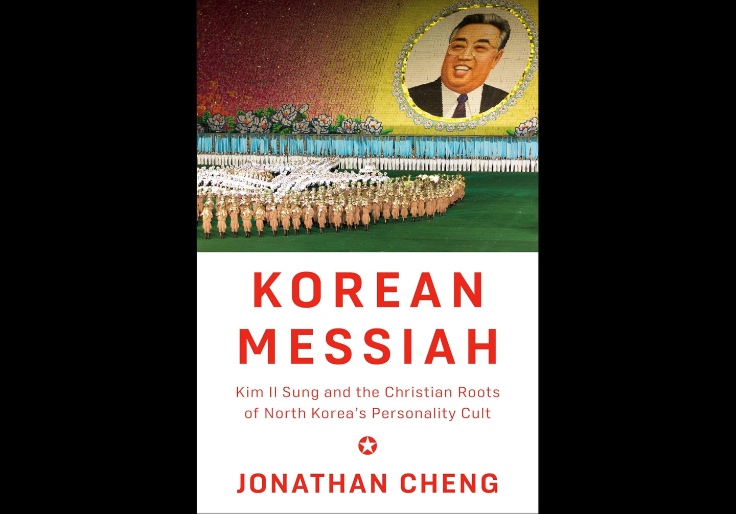
In Korean Messiah, former Wall Street Journal Korea bureau chief Jonathan Cheng contends that the fervent Christianity introduced to Pyongyang by American missionaries in the early 1900s created a social environment that later facilitated the emergence of Kimilsungism, the state ideology that now dominates North Korea.
Cheng opens the book with two contrasting maps. The first, dated 1912, shows Central Pyongyang dotted with twenty‑eight churches, seminaries, Bible schools and hospitals, most of them founded by Methodist and Presbyterian missionaries from the United States. The second map, from 1994, the year Kim Il Sung died, depicts the same city block now filled with schools, monuments and stadiums bearing his name, with no trace of the earlier Christian institutions.
The author draws on the testimony of Hwang Jang‑yop, a former chairman of the Standing Committee of North Korea's Supreme People's Assembly, who described Juche, the official doctrine of self‑reliance, as "idolizing the Great Leader, turning his ideology into a faith … and swearing unconditional loyalty to him." Cheng argues that this faith‑like devotion mirrors the reverence once directed toward Christian figures in the city.
Cheng's central thesis is that the "motivations and pathologies" of Kimilsungism are not solely inherited from Soviet Bolshevism but also from the structure of post‑Civil War American Presbyterianism. He points out that many of the early Korean converts, including Kim Il Sung's own parents, were educated in missionary schools and participated in Christian nationalist movements that resisted Japanese colonial rule.
Kim Il Sung's father, Kim Hyong‑jik, embraced Christianity and became involved in what Cheng calls "Christian nationalist education" during the 1920s. His mother, Kang Pan‑sok, served as a deaconess in a Presbyterian congregation. Their son grew up in a community where religious gatherings offered both spiritual solace and a platform for anti‑Japanese sentiment, a combination that later fed into the mythic narrative surrounding his own rise.
According to Cheng, the North Korean state has rewritten Kim Il Sung's birth story into a miraculous saga, describing celestial cranes and blooming trees on the night of his arrival in 1912. Such hagiography echoes the language used by early missionaries to portray biblical miracles, suggesting a cultural continuity in the way extraordinary events are framed.
Bruce Cumings, emeritus professor at the University of Chicago, praised the book in a New York Times review, noting that "I have been a scholar of Korea for decades, but I learned so much from this book." Cumings highlighted Cheng's illustration of how the Presbyterian emphasis on personal salvation and communal worship was transformed into a secular cult that venerates the Kim family.
The transformation from Christian institutions to a secular personality cult did not happen overnight. After World War II, the Soviet occupation of the north and the subsequent Korean War devastated many of the missionary‑run schools and churches. The new regime systematically dismantled remaining Christian structures, replacing them with state‑run facilities that promoted Juche and the glorification of Kim Il Sung.
For American readers, the book raises questions about the long‑term impact of 19th and early 20th century missionary activity. The United States sent thousands of missionaries to East Asia during the "missionary explosion" of the 1880s and 1890s, many of whom came from Midwestern states such as Indiana. Samuel Moffett, a young pastor from Madison, Indiana, is presented by Cheng as a representative of this wave. Moffett's letters describe Korea as a "god‑forsaken" region eager for the Gospel, a sentiment that resonated with Koreans who felt marginalized by the Korean elite centered in the south.
Cheng's narrative also touches on the Cold War context that shaped US policy toward the Korean peninsula. After the Korean War, the United States backed the South's anti‑communist government while largely ignoring the fate of North Korean Christians who were forced underground. The legacy of that policy is evident in the continued difficulty that defectors face when they attempt to practice Christianity after escaping the north.
North Korean defectors quoted in the book recall the shock of encountering Christianity for the first time. One former commando, captured in 1968, said that discussions of God reminded him of Kim Il Sung, because the regime had taught him to worship the leader as a divine figure. After his release, the man converted to Christianity and now serves as a pastor, illustrating the personal reversals that the book documents.
The book's extensive endnotes, totaling more than 150 pages, provide primary source material ranging from missionary correspondence to North Korean propaganda. Cheng's use of these sources allows him to trace a line from the early 20th century missionary presence to the present day cult of personality, a line that challenges the conventional view that North Korean ideology is purely a product of Soviet influence.
While the thesis is provocative, it also invites scrutiny. Critics may argue that the link between Presbyterian worship practices and the later state cult is more symbolic than causal. Nonetheless, Cheng's work adds a new dimension to the study of North Korean history, one that underscores how cultural imports can be repurposed by authoritarian regimes.
For policymakers in Washington and Ottawa, the book offers a reminder that historical cultural exchanges can have unintended political consequences. Understanding the religious roots of North Korean nationalism may inform future diplomatic strategies, especially as the United States and Canada consider how to support human rights advocates inside the hermit kingdom.
Korean Messiah, published by Knopf, runs 768 pages and is priced at $36. It joins a growing body of scholarship that seeks to explain why a nation that once earned the nickname "Jerusalem of the East" now presents a starkly different religious landscape, one where the state itself occupies the role once held by churches.