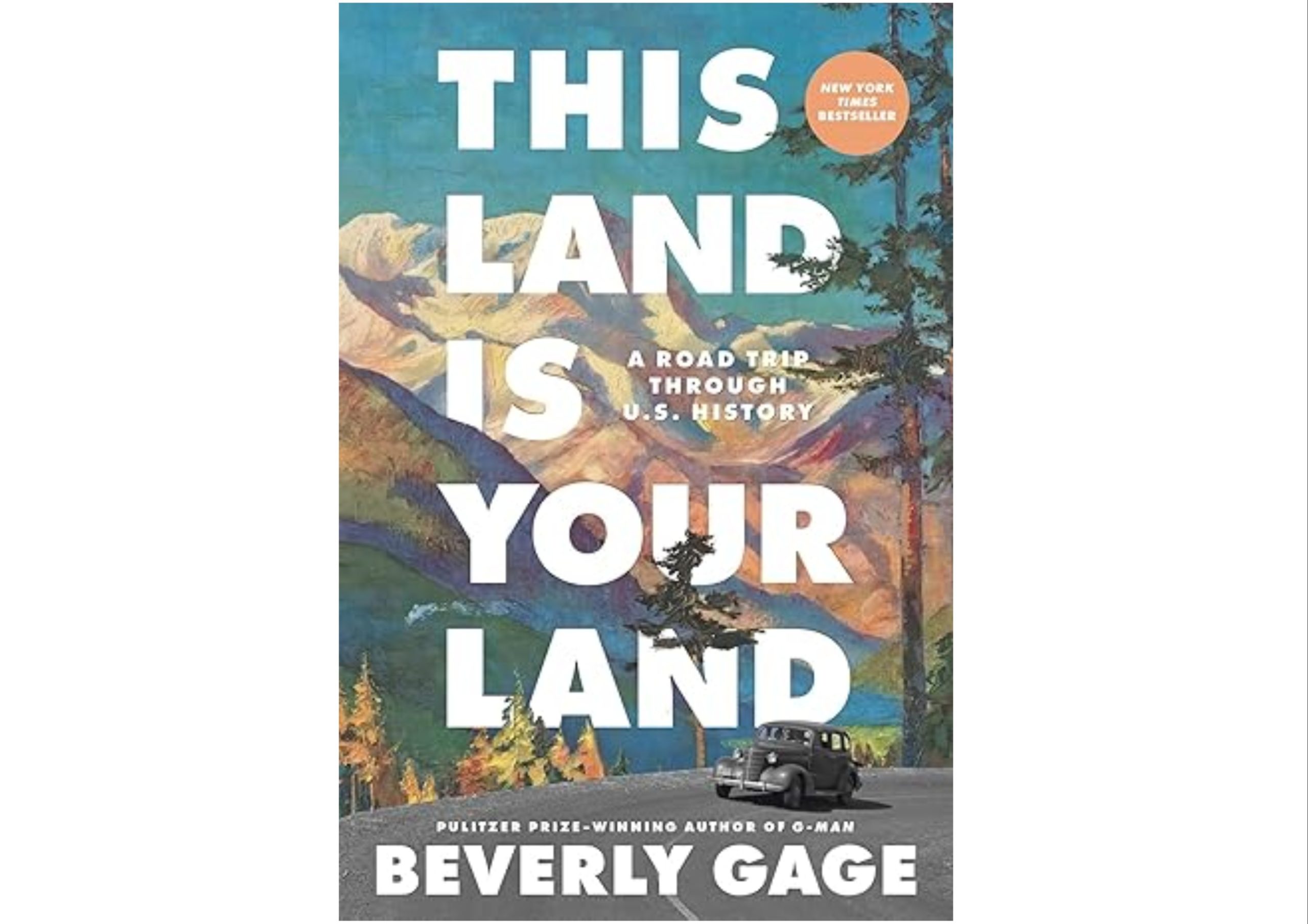
In her new book This Land is Your Land: A Road Trip Through U.S. History, Yale professor and Pulitzer Prize winner Beverly Gage sets out on a cross‑country journey to interrogate the stories that shape America’s collective memory. The work is part travelogue, part cultural critique, and it moves from the grand plantations of the South to the solemn walls of churches scarred by recent tragedy.
Tracing the routes of memory
Gage’s itinerary includes a stop at Mother Emanuel AME Church in Charleston, South Carolina – the site of Dylann Roof’s 2015 mass shooting. She notes that, before the attack, Roof had toured local museums and plantations, and that a search of his vehicle uncovered travel brochures. The detail underscores how the motives behind such violence can be entangled with the way history is presented to visitors.
The author does not confine herself to the darker chapters alone. She visits Mount Vernon and Monticello, the historic homes of George Washington and Thomas Jefferson, and points out how the narratives offered to tourists often gloss over the fact that both men owned slaves. Gage’s tone remains conversational and good‑natured; she peppers the account with humour and personal anecdotes rather than adopting a preachy stance.
Myths under the spotlight
At the Alamo in San Antonio, Texas, Gage observes how the site has been transformed into a mythic symbol, with little acknowledgement of the complexities surrounding the Texas War of Independence. A similar pattern emerges at the San Jacinto monument, where carvings commemorate Sam Houston’s victory that resulted in the deaths of 600 Mexicans, yet make no reference to racial slavery or indigenous land rights.
Throughout the book, Gage stresses that US history is a tapestry woven from the interactions of Native Americans, African Americans and European colonisers. She revisits pivotal events – the American Revolution, the Civil War and the Civil Rights Movement – and highlights how each has been re‑interpreted over time, often to the detriment of marginalized voices.
Contested claims about Jefferson
One of the more contentious passages concerns Jefferson’s relationship with Sally Hemings. Gage writes that DNA tests have proven Jefferson fathered at least six children with Hemings, who was the half‑sister of his deceased wife, Martha. In reality, the tests only demonstrated that a descendant of one of Hemings’s children shared Jefferson’s Y chromosome; they do not conclusively identify Thomas Jefferson as the father. Other male relatives, including his brother Randolph, lived nearby and could also be responsible.
Gaps in representation
While the narrative is expansive, it noticeably omits discussion of gay and trans people, raising questions about the inclusivity of the historical record presented. Gage’s focus remains on the broader contours of the American experience, but the absence of LGBTQ+ perspectives is a clear shortfall.
Why the book matters
For readers in the United States, the work serves as a timely reminder to engage with the nation’s past in a nuanced way, urging critical reflection on how history is packaged for public consumption. Canadian audiences, meanwhile, gain insight into the intertwined histories of the two neighbours, and are prompted to consider how similar distortions may operate in their own narratives.
The book ultimately argues for the preservation and interpretation of historic sites in a manner that is both accurate and inclusive, reflecting the full diversity of the American experience. While some factual inaccuracies and omissions are evident, Gage’s road‑trip narrative succeeds in provoking thought about the ways history continues to shape the present.
The following account draws on a report first published elsewhere.