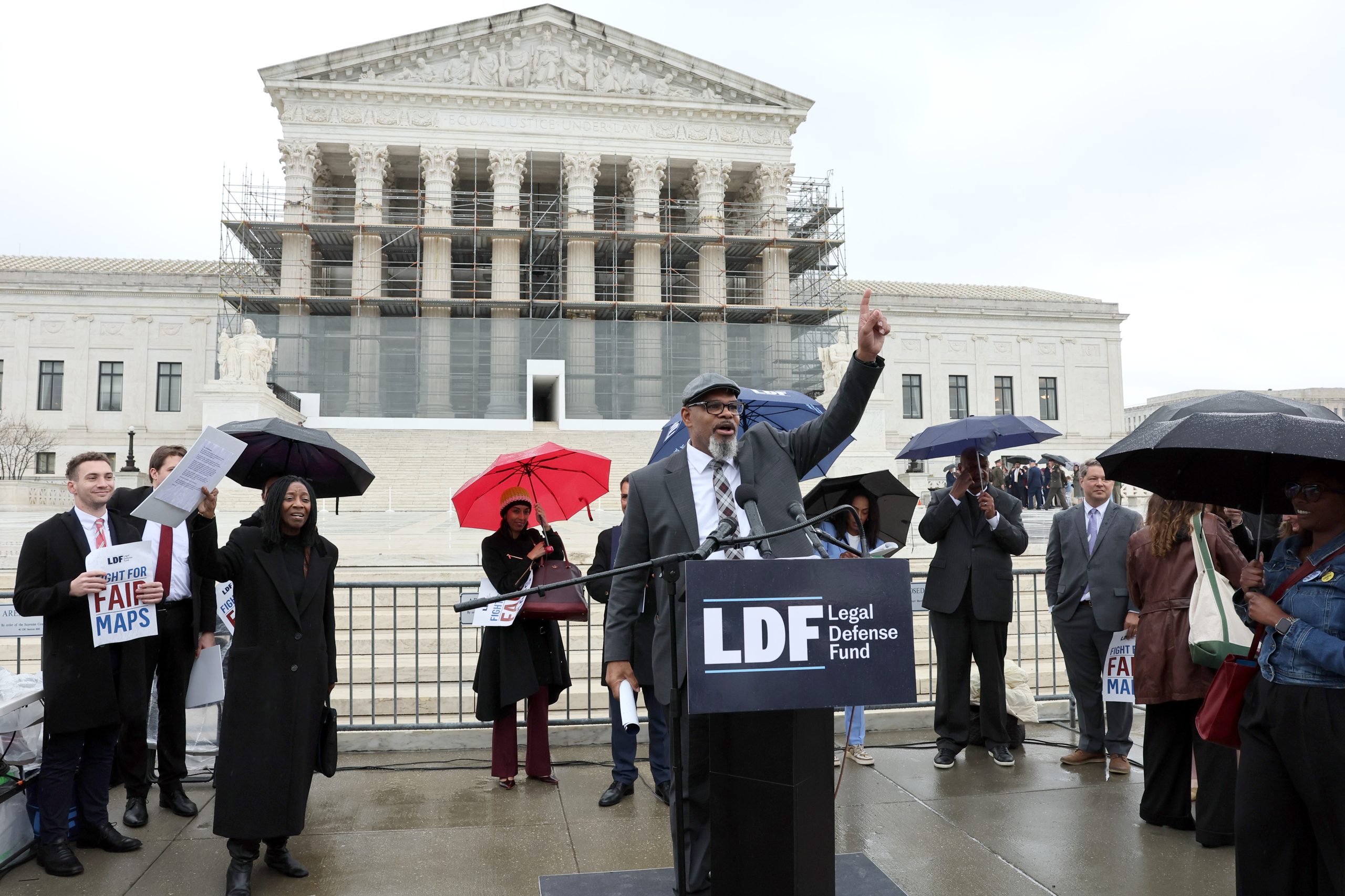
The Supreme Court’s upcoming hearing in Louisiana v. Callais could reshape the way the nation treats race in elections. The case follows the Court’s 2021 ruling that ended race‑based admissions at Harvard and the University of North Carolina, a decision that stressed the need to view individuals, not racial groups, as the unit of analysis. Lawyers now argue that the same principle should apply to the drawing of congressional districts.
What the Louisiana dispute concerns
The fight centres on the state’s Sixth Congressional District, a 250‑mile‑long seat drawn in 2022. The map was designed to guarantee two of Louisiana’s six districts a majority‑Black electorate, reflecting the state’s roughly 30 % Black population. After a three‑judge federal panel ordered the creation of a second majority‑Black district, a different panel later declared the entire map an unconstitutional racial classification. The back‑and‑forth left state officials in a position the filing described as “damned if they did, damned if they didn’t.”
Section 2 of the Voting Rights Act
Section 2 of the Voting Rights Act of 1965 was amended in 1982 to permit claims of vote dilution without the need to prove intentional discrimination. Critics say the amendment has turned the Act into a mechanism for enforcing racial proportionality in legislatures, even where minority voters encounter no voting barriers.
One recent illustration comes from Fayette County, Tennessee, where a court ordered the creation of three majority‑Black districts after no Black commissioner was elected despite a 25 % Black population, despite the absence of any evidence of voting restrictions.
Changing political realities
Supporters of the current framework argue it remains essential to guard against a rollback of voting rights. Yet data now show Black voter registration and turnout in the South matching or exceeding those of white voters, and people of colour occupy a wide range of offices, from the presidency to local commissions. Chief Justice John Roberts observed in Shelby County v. Holder (2013) that "things have changed dramatically in the South".
Constitutional stakes
Opponents of the Louisiana map, including plaintiffs described as “non‑African American” voters, contend that carving districts on the basis of race breaches the Constitution’s colour‑blind guarantee. They also warn that concentrating minority voters in a single district can diminish their influence in neighbouring areas and reinforce stereotypes about voting behaviour.
If the Court rejects the requirement for racial proportionality, the broader Voting Rights Act would remain intact; intentional discrimination could still be challenged under other provisions. Such a ruling would signal a shift toward treating voters as individuals rather than as members of racial groups – a shift already reflected in the Court’s decision in Students for Fair Admissions v. Harvard (2023) and now poised to extend to electoral maps.
Who is driving the challenge?
Edward Blum, president of the Project on Fair Representation, filed an amicus brief in the case. Blum has led a series of lawsuits against race‑based policies, including the Harvard admissions case, arguing that racial categorisation in governance “undermines the unity and equality the Civil Rights Movement sought to achieve.”
The outcome of Louisiana v. Callais will therefore determine whether the Supreme Court’s colour‑blind jurisprudence will be applied to the very mechanics of representation.
First reported by the source report.