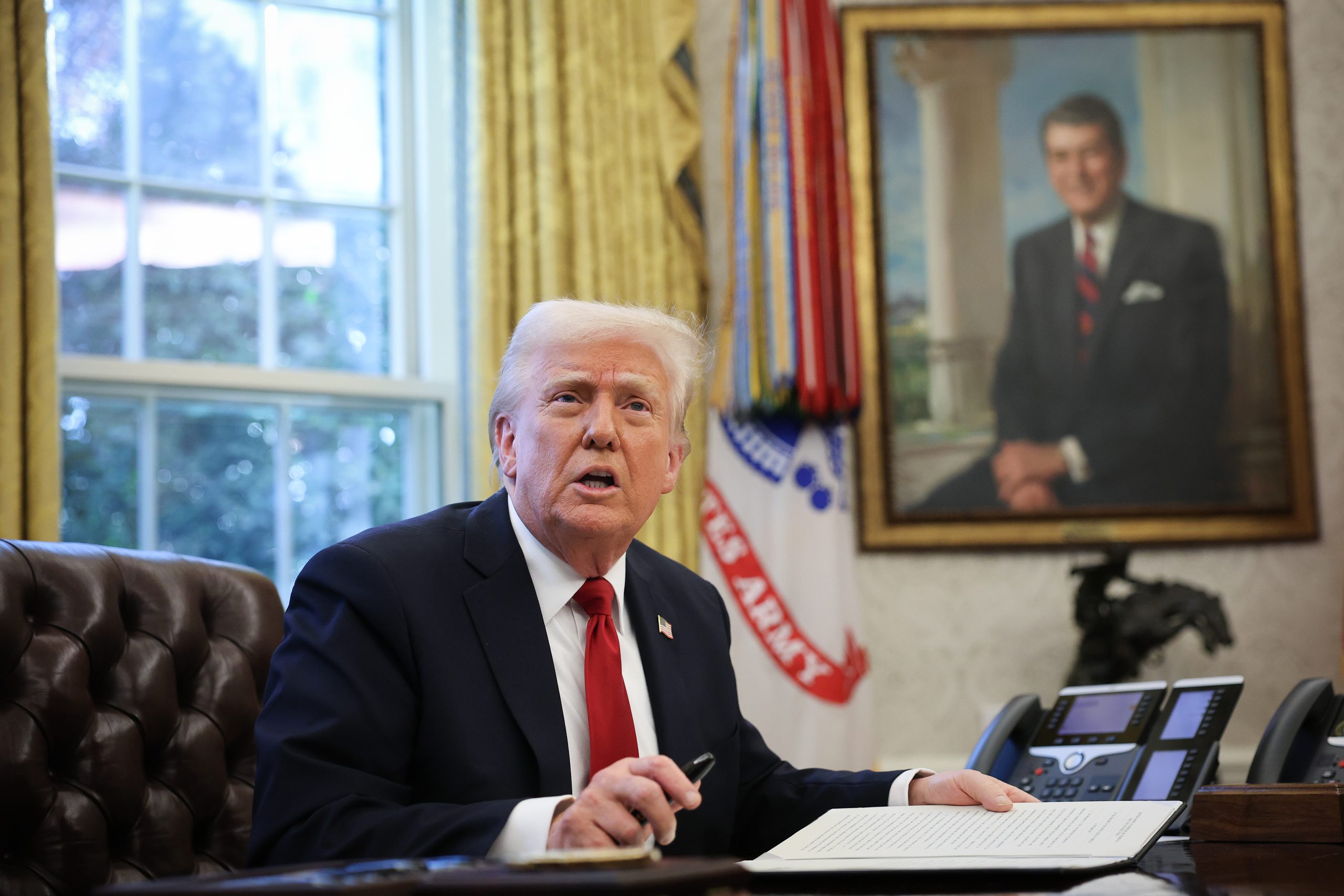
When a federal court blocked President Donald Trump's executive order targeting Susman Godfrey, the elite litigation firm celebrated the ruling as a defense of equal protection under the law. “This fight is bigger and more important than any one firm,” the firm stated in an April 15 press release. “Susman Godfrey is fighting this unconstitutional executive order because it infringes on the rights of all Americans and the rule of law.”
Racial Criteria in Scholarship Programs
One month later, the firm announced recipients of the Susman Godfrey Prize, which awards $4,000 and mentorship to 25 “students of color” at select law schools. President Trump's executive order had specifically cited the prize as an example of “blatant discrimination,” arguing it should disqualify the firm from government contracts. Susman Godfrey expanded the prize's reach in May but retained its racial eligibility requirements.
Harvard Law Review president G. Terrell Seabrooks, a prize recipient, now faces two federal investigations into the journal's race-based policies. The firm's decision to maintain the scholarship amid legal scrutiny reflects a broader tension between corporate diversity initiatives and anti-discrimination laws.
Legal Challenges and Workarounds
Trump's administration targeted Big Law through executive actions, directing the Equal Employment Opportunity Commission (EEOC) to investigate race-based practices in the legal profession. While several firms agreed to end racial hiring criteria in April deals with the White House, at least eight continued using Sponsors for Educational Opportunity, a staffing agency placing minority interns at elite firms. A recent EEOC complaint labeled the program “the largest racially discriminatory hiring pipeline in the legal field.”
Susman Godfrey altered its prize in 2023 to avoid legal exposure, removing job offers and retaining only cash awards and mentorship. The change followed threats of litigation from the American Alliance for Equal Rights, which argued the revised program still constituted “demeaning virtue-signaling” based on skin color. Firm spokeswoman Jessica Bughman deferred questions about the prize's legality to court transcripts from a May 8 hearing, where attorneys argued the award was a “grant, not a contract.”
Legal experts remain divided on the prize's compliance. Dan Morenoff of the American Civil Rights Project stated that mentorship could qualify as job training under Title VII, which prohibits employment discrimination. “It looks like Susman is an employer choosing training participants based on race,” he said. “That sounds like a straightforward violation.”