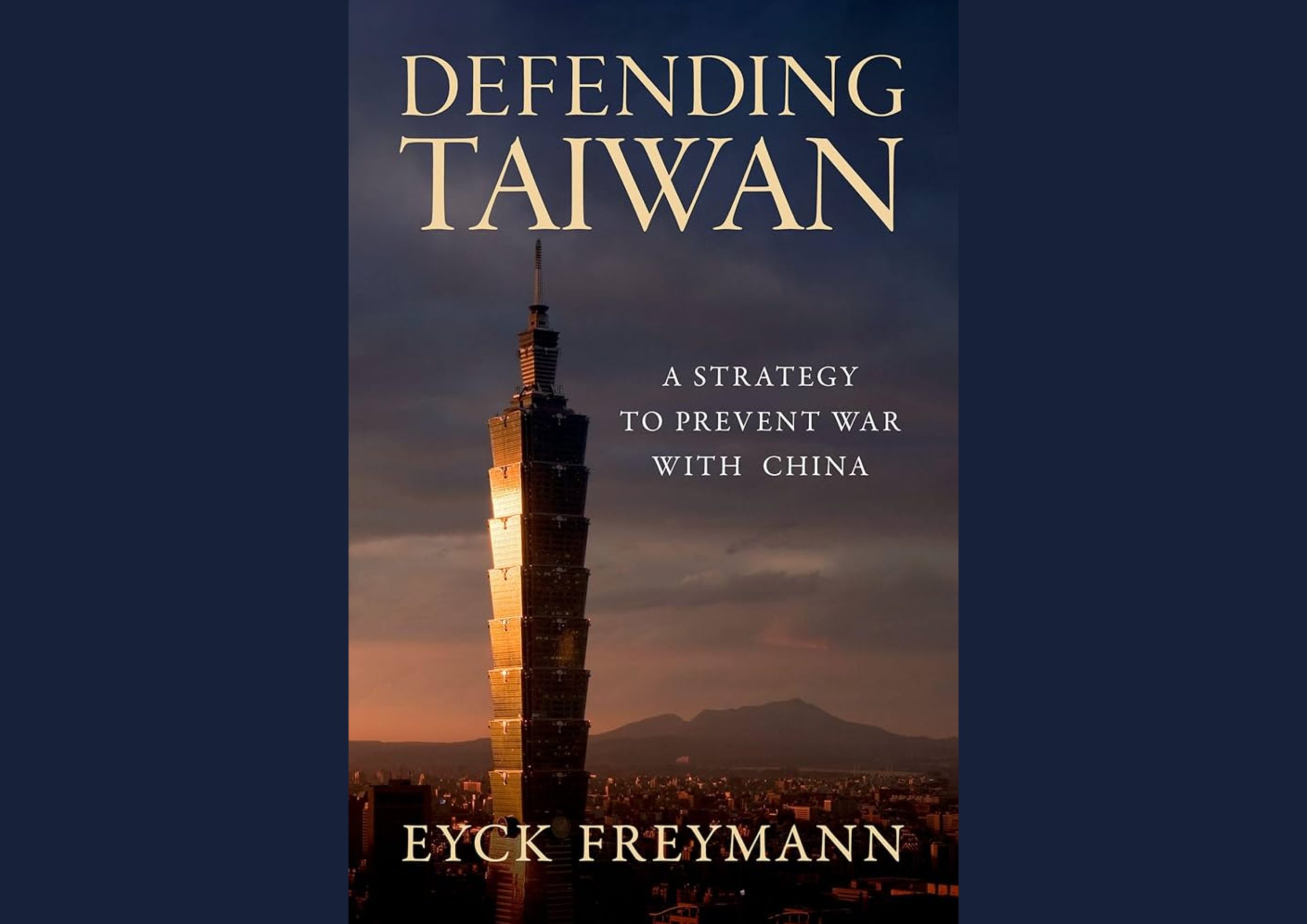
Taiwan has become the focal point of a looming great‑power confrontation between the United States and China, a clash that would have profound repercussions for the world economy and diplomatic order.
Eyck Freymann, a Hoover fellow at Stanford University and author of the newly released Defending Taiwan: A Strategy to Prevent War with China, contends that the conventional expectation of a conventional amphibious assault by the People’s Liberation Army may be misplaced. While President Xi Jinping has publicly urged the PLA to be ready to seize the island by 2027, Freymann suggests that Beijing is more likely to pursue a strategy that minimises its own risk.
Beyond a direct invasion
In his research, Freymann examines three broad possibilities: a full‑scale blockade, an extensive bombardment, and a more subtle approach that relies on economic and industrial leverage. He argues that the latter is the most probable, noting that Xi would prefer to take Taiwan "for free" and keep it "intact" through so‑called gray‑zone measures and coercive pressure.
China’s growing willingness to wield its commercial clout – compelling multinational corporations and, eventually, sovereign states to acquiesce to its claims – could make the choice of Chinese economic benefits over Taiwan’s prized semiconductor sector and infrastructure appear irresistible to many actors.
Implications for the United States and its partners
Should Beijing succeed in imposing its will, Washington and its allies would likely be forced to dramatically boost defence spending to counter an expanded Chinese sphere of influence. The strategic value of the island is underscored by General Douglas MacArthur’s description of Taiwan as an "unsinkable aircraft carrier" – a phrase that captures its pivotal role in regional security.
Freymann warns that the United States must develop comprehensive plans for every conceivable scenario and communicate unequivocally that any form of coercion will be met with severe consequences. The objective, he says, is not merely to deter a war but to avert a crisis altogether.
What the new book offers
The volume draws on historical case studies and counter‑examples to illustrate how Beijing’s tactics might unfold. While the analysis may provide a measure of reassurance to those fearing a massive PLA invasion, Freymann stresses that the outcomes would remain grave. Even without large‑scale combat, China would secure dominance over a region that generates the majority of global gross domestic product.
First reported by a wire service, the book serves as a timely reminder that understanding China’s strategic toolbox is essential for the United States and its partners as they navigate an intensifying great‑power rivalry.