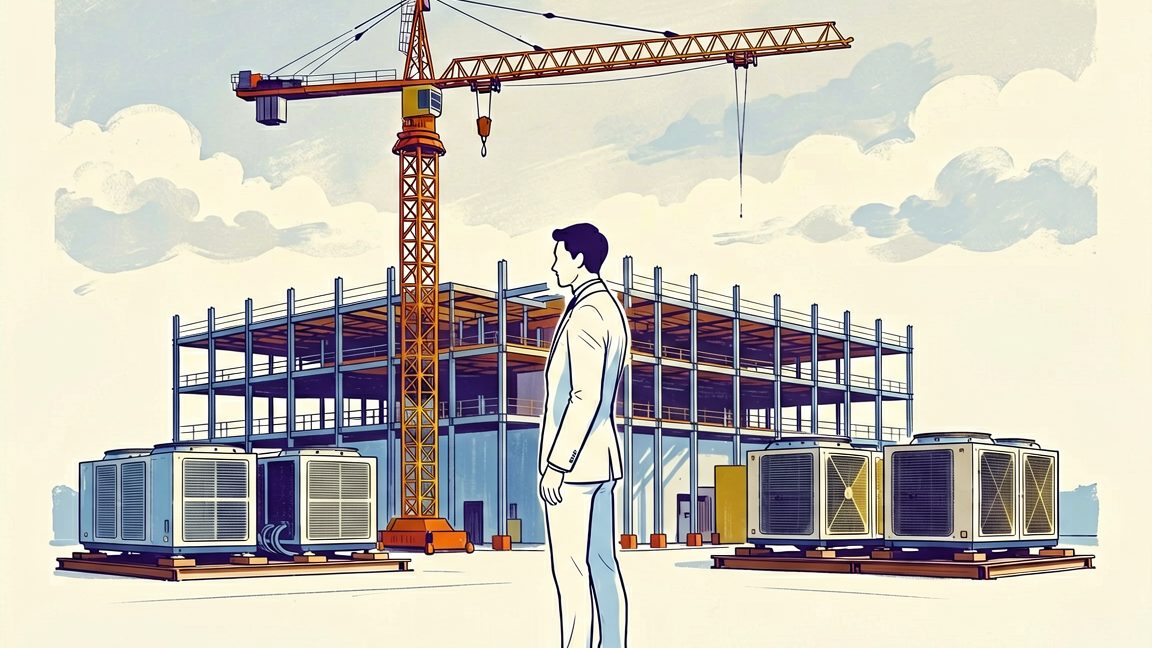
Senator Bernie Sanders (I‑VT), Representative Pramila Jayapal (D‑WA) and Representative Maxwell Frost (D‑FL) are leading a proposal for a United States‑wide moratorium on the construction of new data centres. The legislators argue that the rapid expansion of such facilities threatens both the power grid and the climate.
The push for restraint has attracted attention from the White House, which has warned that China is running "deliberate, industrial‑scale campaigns" to steal American AI systems while simultaneously encouraging domestic movements that would voluntarily curb U.S. tech innovation.
Chinese propaganda fuels the debate
State‑run outlets including China Daily and China Global Television Network (CGTN) have launched a campaign in the United States that frames data‑centre growth as an environmental crisis. The messaging appears to have found an audience among some U.S. politicians; Senator Sanders recently joined a discussion on the "existential threat of AI" with two Chinese academics.
According to officials, the campaign is part of a broader Chinese strategy to impede artificial‑intelligence development in the United States as the two powers vie for global dominance in the field.
Domestic critics and foreign allies
Critics of the moratorium warn that halting data‑centre construction would undermine the United States’ ability to compete with China in AI. Treasury Secretary Scott Bessent rebuked Senator Sanders for the Chinese‑academic discussion, stating, "Instead of harnessing American innovation, Senator Sanders is inviting foreign nationals to tell the United States how to regulate AI," and adding that the move was akin to seeking foreign advice on domestic regulation.
China’s own policy contrasts sharply with its external messaging. The Chinese government subsidises up to half the energy costs of data centres for its tech firms and actively promotes domestic companies as alternatives to U.S. providers.
State‑run propaganda outlets in Russia and Iran have echoed similar anti‑data‑centre narratives. A recent article in the Russian outlet RT called for bans on data centres in Maine, New York, South Carolina and Oklahoma, citing energy and environmental concerns.
Within the United States, organisations opposed to AI development have also funded coverage of the issue. The Tarbell Center for AI Journalism, financed by the anti‑AI Future of Life Institute, paid the salary of an NBC journalist who reported on legal threats made by OpenAI to nonprofit groups that oppose the company. Similar funding streams have supported reporting at Bloomberg, Time and the Los Angeles Times.
Strategic stakes for the United States
The White House has urged increased investment in AI research and development, alongside stronger protections for intellectual property and safeguards against the theft of sensitive technology. Officials stress that the debate over data‑centre expansion is not solely an environmental question but a matter of national security and economic competitiveness.
As the United States balances climate considerations with the imperative to maintain leadership in artificial intelligence, the issue is likely to remain highly politicised. The outcome will shape both the country’s energy policy and its position in the global AI race.