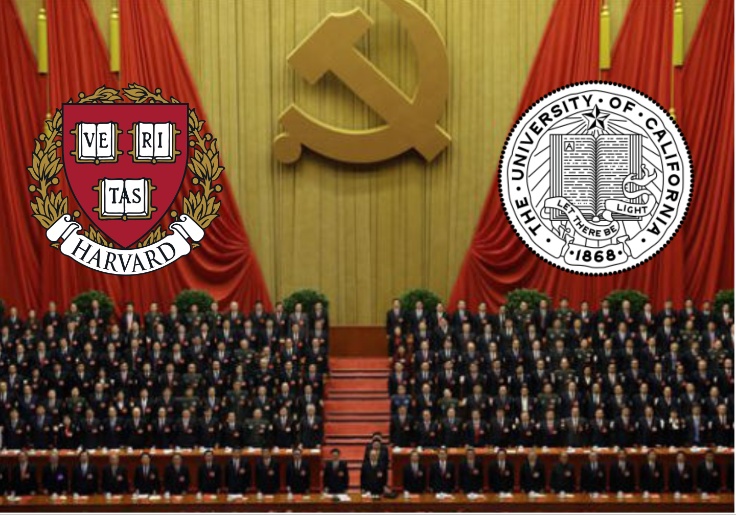
Energy Foundation China (EFC), a climate organisation with senior ties to Beijing, donated over $1.2 million to American universities in 2024 – almost twice the amount it gave the year before, according to its tax filings. The surge has drawn the attention of Republican legislators and ethics watchdogs who warn the funding could be part of a broader influence effort.
Where the money went
The bulk of the 2024 grants went to the University of California system and Harvard University. EFC allocated $678,750 to UC campuses, with the largest portions earmarked for emissions‑reduction research at UC Berkeley and UC Davis. UC Berkeley also administers the U.S. Department of Energy’s Lawrence Berkeley National Laboratory, a major federally funded research hub. Harvard received $492,477 for climate‑engagement activities, though it is unclear whether the money supports the long‑standing Harvard‑China Project. The smallest disclosed grant – $20,000 – went to Villanova University.
Leadership and Chinese connections
The foundation’s chief executive, Ji Zou, formerly served as a deputy director‑general at China’s National Center for Climate Change Strategy. Its board chairman, Hongjun Zhang, was a legislative director for the National People’s Congress. These links have been highlighted by critics as evidence of close alignment with Chinese state interests.
Scale of the programme
Since 2020, EFC has directed more than $15 million to U.S. universities and non‑profits, while spending $218 million on climate projects inside China during the same period.
Political and security concerns
Experts caution that growing U.S. reliance on Chinese‑manufactured green‑energy technology – such as solar panels and batteries – could erode American energy independence, given China’s near‑monopoly over critical supply chains.
In January 2024, chairmen of two House committees launched an investigation into EFC’s influence on U.S. energy policy. A few months later, the House Ways and Means Committee asked the IRS to review the foundation’s tax‑exempt status.
Americans for Public Trust, an ethics watchdog, described EFC as "an influence operation of the Chinese Communist Party". The foundation rejected the allegation, stating its work focuses on "climate-related efforts in China".
Funding of advocacy groups
EFC also supported U.S. climate‑policy organisations, including a $550,000 grant to the International Council on Clean Transportation, which lobbies for electric‑vehicle regulations.