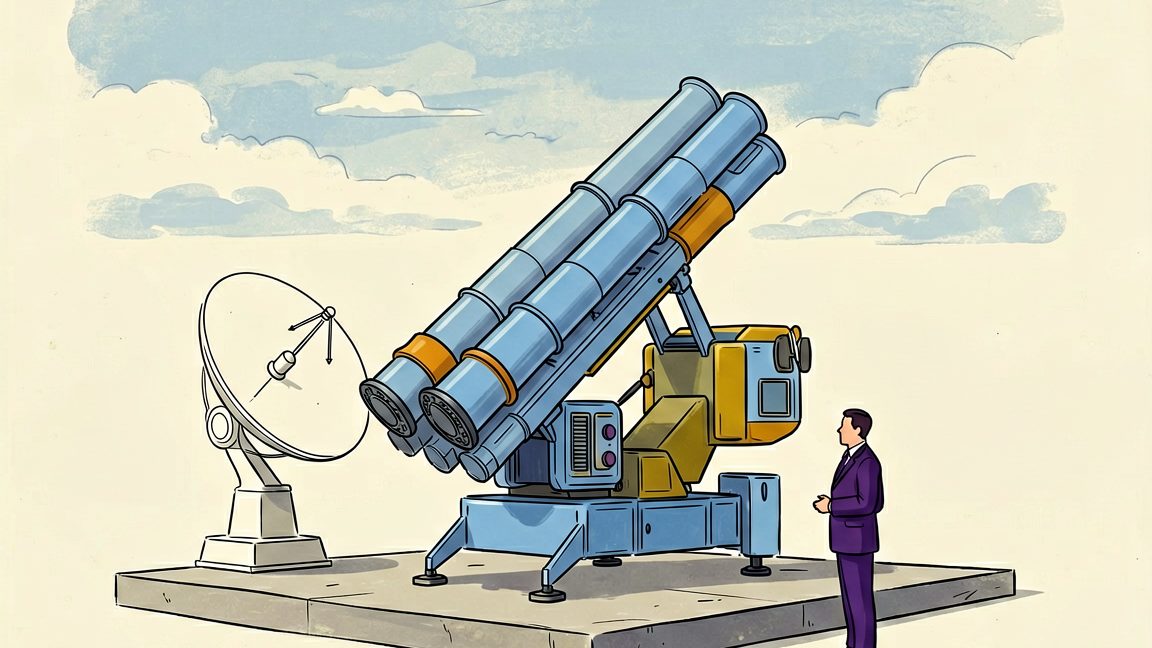
The United States successfully detained Venezuelan President Nicolás Maduro in a raid that took place only a few hours after he concluded a meeting with Chinese officials. The operation not only removed a long‑standing autocrat but also underscored the inability of Chinese‑supplied military equipment to resist a well‑coordinated US assault.
Chinese equipment and propaganda under scrutiny
Beijing had provided Venezuela with military hardware intended to bolster Maduro’s regime, yet the gear proved ineffective when confronted by US forces. In the aftermath, the state‑run Global Times attempted to counter the narrative with a propaganda video that featured a gun‑toting bald eagle and an American flag planted in an oil field. The clip, which sought to accuse the United States of a "crime spree" in extracting oil from communist nations, was widely criticised for its low production values and a soundtrack described as cringeworthy. Observers noted that the video inadvertently reinforced the perception of US military superiority.
An analysis published by the Washington Free Beacon highlighted that this episode is part of a broader pattern of ineffective Chinese propaganda. The report argued that similar attempts to shape opinion have repeatedly fallen flat, prompting speculation about Beijing’s capacity to craft compelling soft‑power messages.
Broader implications for Beijing’s soft‑power ambitions
China has traditionally relied on tightly controlled messaging and censorship to maintain domestic legitimacy and project influence abroad. Recent setbacks, from the Global Times video to other poorly received content, suggest a struggle to adapt to the digital age’s demand for polished, persuasive narratives. The criticism has extended beyond political messaging to cultural arenas, such as the Golden Globes, where attempts to showcase Chinese perspectives were met with scepticism and accusations of insincerity.
These developments arrive at a moment when the United States appears to be enjoying a series of foreign‑policy victories. Since Donald Trump’s election in 2024, Bashar al‑Assad has fled Syria, Maduro has been removed from power in Venezuela, and the Iranian regime is described as “teetering on the brink.” In contrast, the Chinese government has been reported to support the Iranian authorities against protesters, reflecting divergent priorities between the two powers.
Soft‑power competition and the battle for narrative control
The contrast between US and Chinese approaches to influencing global opinion is stark. The United States benefits from a long‑standing tradition of free speech and open discourse, which, according to the analysis, equips it to promote its values more effectively. China’s reliance on top‑down propaganda and censorship, by contrast, appears increasingly out of step with contemporary expectations for authenticity and credibility.Experts warn that the ability to produce persuasive messaging will become ever more crucial as the US‑China rivalry intensifies. For readers in North America, the ramifications are clear: a weakened Chinese propaganda apparatus could diminish Beijing’s capacity to shape international debates, while a confident US narrative may reinforce Washington’s strategic position.
In sum, the capture of Nicolás Maduro not only marks a decisive moment in Venezuelan politics but also serves as a litmus test for the efficacy of Chinese state‑driven messaging. As the United States continues to project military and economic strength, Beijing faces the challenge of recalibrating its soft‑power strategy to remain relevant on the world stage.