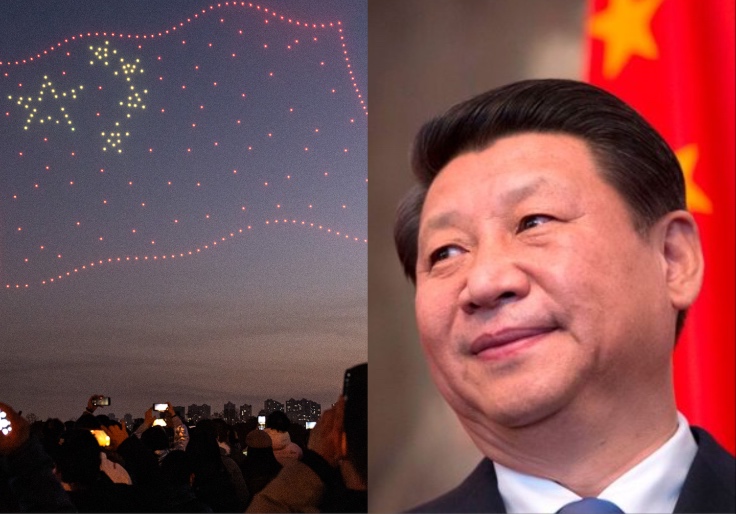
The American Council for Capital Formation released a study this week that documents a sharp rise in Chinese government spending on solar radiation management, a form of geoengineering that could alter precipitation and temperature patterns. According to the report, China's Ministry of Science and Technology allocated over five million dollars to two SRM projects in 2024, a figure more than twice the amount spent a decade earlier. The council warns that the accelerated funding could give Beijing a strategic edge in a technology that many analysts describe as a potential weapon.
Solar radiation management, often abbreviated SRM, refers to techniques that reflect a portion of incoming sunlight back into space. The most widely discussed method involves injecting sulfur‑based aerosols into the stratosphere, a process that would mimic the cooling effect of large volcanic eruptions. Proponents argue that SRM could buy time for societies to reduce greenhouse‑gas emissions, while critics point to the risk of unintended climate side effects such as altered monsoon cycles, ozone depletion, and a rapid temperature rebound if the program were stopped abruptly.
In the United States, research on SRM is largely confined to a handful of university labs and a few federal agencies, including the Department of Energy's Atmospheric Radiation Measurement program and the National Oceanic and Atmospheric Administration's climate modeling teams. Federal funding is modest, and several states have enacted bans on field experiments that could release aerosols into the atmosphere. The United Nations Convention on Biological Diversity has also called for a moratorium on large‑scale geoengineering until robust governance frameworks are in place.
Canada's approach mirrors its southern neighbor in many respects. The federal government funds climate‑science research through the Natural Sciences and Engineering Research Council, but it has not approved any field trials of SRM. Canadian officials have emphasized the need for international cooperation on climate mitigation, and the country participates in the UN's discussions on geoengineering governance. Nevertheless, Canada's northern climate is especially sensitive to changes in atmospheric circulation, meaning that any large‑scale SRM deployment could have pronounced effects on Arctic weather and ecosystems.
The ACCF report draws on Chinese‑language documents that were previously unavailable in English. Those materials show a shift from exploratory studies to a focused national‑security program that places SRM research under the direct oversight of senior Communist Party bodies and the central government. The report quotes George David Banks, ACCF president and CEO, saying that "SRM is no longer a fringe scientific idea; it is an emerging strategic domain." He adds that without U.S. leadership, "others will set the rules in ways that may not align with American interests."
China's investment in SRM is part of a broader pattern of targeting emerging technologies that could confer military or economic advantage. Over the past two decades, Beijing has poured resources into artificial intelligence, quantum computing, and hypersonic weapons, often integrating civilian research institutions with the People's Liberation Army. The ACCF notes that the same agencies overseeing SRM projects also coordinate with the Ministry of Defense, suggesting a dual‑use intent.
U.S. defense analysts have long warned that climate manipulation could become a tool of coercion. A 2022 Pentagon study outlined scenarios in which an adversary could disrupt agricultural output in a rival nation by altering rainfall patterns. While the study stopped short of naming any country, the timing of China's funding boost has revived those concerns. In a recent congressional hearing, a senior staffer on the House Armed Services Committee asked whether the United States should develop its own SRM capabilities to deter potential misuse.
Canadian security officials have also taken note. The Department of National Defence's strategic outlook, released earlier this year, identified "climate‑engineered weather events" as a low‑probability, high‑impact risk. The document calls for greater intelligence sharing with allies on emerging climate‑tech threats, underscoring the cross‑border nature of the issue.
Beyond the military dimension, the report highlights the governance vacuum surrounding SRM. Internationally, the 2010 United Nations Framework Convention on Climate Change established a "technology framework" for geoengineering, but progress has been slow. The lack of binding rules means that a state with sufficient technical capacity could unilaterally deploy aerosol injections, potentially affecting weather far beyond its borders.
American scientists have responded with a mix of caution and advocacy for transparent research. A coalition of climate researchers recently submitted a joint statement to the White House urging the creation of a federal oversight board that would evaluate SRM proposals for safety, ethics, and geopolitical impact. The coalition argues that a clear regulatory pathway would reduce the temptation for covert development.
In Canada, a similar call has emerged from the Canadian Climate Institute, which recommends that Ottawa work with the United Nations to develop a global licensing regime for any field‑scale SRM experiment. The institute notes that Canada's extensive coastlines and reliance on hydroelectric power make it particularly vulnerable to changes in precipitation and cloud cover.
The ACCF's findings also reveal that Chinese researchers have been active in U.S. academic circles. The report cites instances of Chinese scientists visiting American laboratories that study aerosol dynamics and cloud physics, then returning to China to continue related work. While such exchanges are common in the scientific community, the council argues that they raise security questions when the research has potential dual‑use applications.
Policy makers in Washington are now weighing how to balance open scientific collaboration with the need to protect national security. Some lawmakers have proposed tighter export‑control rules for equipment that could be used in SRM experiments, while others caution that overly restrictive measures could stifle legitimate climate research.
For Canadian policymakers, the challenge is similar. Canada must protect its research ecosystem while ensuring that any domestic SRM work complies with international norms. The federal government's recent budget allocated additional funding for climate‑science infrastructure, but it did not earmark resources specifically for geoengineering governance.
Looking ahead, the ACCF warns that the "window for democratic leadership" on SRM is narrowing as China continues to pour money into the field. The report suggests that the United States and its allies should increase their own research budgets, engage in multilateral rule‑making, and develop clear protocols for emergency response should an SRM deployment occur.
Whether the United States will choose to accelerate its own SRM program or focus solely on regulation remains an open question. What is clear, according to the ACCF, is that the technology is moving from theoretical speculation to practical engineering, and that the geopolitical stakes are rising alongside the scientific ones.