Independent reporting on American politics
STATE BEACON

Senators Aim to Ban Legacy Preference in College Admissions

A bipartisan group of senators is introducing new federal legislation to ban universities from giving admissions preferences to children of alumni or donors. The "Merit-based Educational Reforms and Institutional Transparency Act," or Merit Act, was announced Thursday by three Republicans—Todd Young of Indiana, Tim Scott of South Carolina, and John Kennedy of Louisiana—and three Democrats—Tim […]

By Ira Stoll·
Senators Aim to Ban Legacy Preference in College Admissions

A bipartisan group of senators is introducing new federal legislation to ban universities from giving admissions preferences to children of alumni or donors.

The "Merit-based Educational Reforms and Institutional Transparency Act," or Merit Act, was announced Thursday by three Republicans—Todd Young of Indiana, Tim Scott of South Carolina, and John Kennedy of Louisiana—and three Democrats—Tim Kaine of Virginia, Raphael Warnock of Georgia, and Andy Kim of New Jersey.

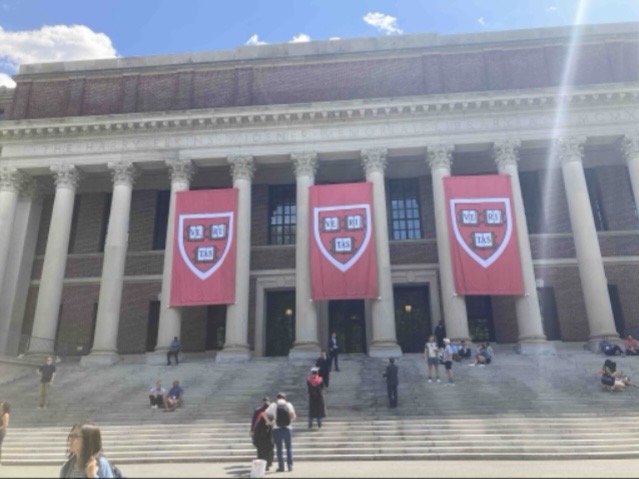
The presence of Democrats as original sponsors of the bill is a sign that, despite claims by university administrators, professors, and lawyers that President Trump’s pressure on Harvard and other selective-admission universities is a politically motivated authoritarian crackdown, the backlash against "elite" higher education includes Democrats, too.

Even some within higher education are urging self-examination in response to surveys indicating declining public trust. An April 2026 "Report of the Yale Committee on Trust in Higher Education" by ten Yale professors found, "The current system of preferences for certain groups of applicants (including varsity athletes, legacies, and children of faculty, staff, and donors) distorts the admissions process by reducing the number of slots available to high-achieving applicants who do not fit into one of the favored categories." The report recommended that Yale "reduce preferences" for those groups.

States are also moving against admission preferences for children of alumni. California passed a law in 2024 ending legacy and donor admissions preferences at private universities. Its sponsor, then-assemblymember Phil Ting, a Democrat, said, "Hard work, good grades and a well-rounded background should earn you a spot in the incoming class – not the size of the check your family can write or who you’re related to." Maryland also enacted a law in 2024 banning preferences for children of alumni, known as "legacies." The then-governor of Virginia, Glenn Youngkin, a Republican, signed legislation in 2024 banning admissions preferences at public universities for children of alumni and donors.

And some universities have already voluntarily renounced preferences for children of alumni. Amherst said in 2021 that it would stop. Wesleyan said in 2023 that it would stop. Johns Hopkins ended its legacy preference in 2014. Its president, Ron Daniels, wrote in 2023, "the practice of favoring children of alumni in the admissions process puts a thumb on the scale for young people who already enjoy so many advantages by virtue of being born to parents who benefited from a university education. Legacy admissions are an aristocratic policy, not a meritocratic one — and they are indefensible in a democratic society. … Since 2013, the percentage of students in our incoming classes who have a family connection has decreased from 8.5% to 1.7%. During the same period, the percentage of first-generation or limited-income students rose from 16.7% to 30.8%."

The issue got an additional push from the June 2023 Supreme Court decisions that found racial preferences in admissions at Harvard and the University of North Carolina violated the Constitution.

The new federal legislation would forbid accredited universities from giving preferential admissions treatment to children of alumni or donors.

"Every student deserves a fair shot at any college or university regardless of his or her family’s background and connections to the institution," Senator Scott said in a press release announcing the legislation.

"Preferential treatment for the rich and well-connected has no place in the college admissions process," Senator Warnock said.

"America is a land of opportunity, not a land of aristocracy," Senator Young said.

The legacy admissions preference does have some defenders. A professor at Harvard, Noah Feldman, wrote a Bloomberg article that stopped short of substantively defending the policies but did say the decisions should be up to the universities, not governments. "Banning legacy admissions has an instinctive appeal. But the underlying issue is the independence of universities from coercive state control. In a moment of intense political focus on university life, that independence could not be more important," he wrote.

Another Harvard professor, James Hankins, argued in the Wall Street Journal in favor of the preferences. "Loyalty should run both ways. As long as the children of alumni meet the standards of admission, it’s unclear why they shouldn’t be admitted preferentially," he wrote. "Institutional trust, it turns out, depends on personal relationships, institutional memory and the conviction that the institution will continue to fulfill its longstanding purposes and not be hijacked by novel agendas. Institutional trust, in other words, requires intergenerational continuity, the kind that comes from family traditions."

At least two former Harvard presidents, Derek Bok and Larry Summers, have called for getting rid of the alumni children preferences, though both did so only after leaving the Harvard presidency. Summers also called for significantly expanding the size of freshman classes: "If elite institutions are serious about social justice, they have to think about scale. What except exclusivity is the rationale for not significantly expanding freshman classes as applicant pools explode?" The University of Chicago and Dartmouth have both since announced plans to expand. UChicago will grow to 9,000 undergraduates from about 7,500 and Dartmouth to as many as 5,800 undergraduates from the current about 4,700.

Harvard officials didn’t immediately respond to a query about whether they would lobby against the legislation. A 2023 survey by the Crimson found 8.8 percent of the entering class had one Harvard parent and 3.2 percent had two Harvard parents.

I also checked in with Rick Taft, Yale College ’67 and Yale Law School ’71, who had an ad in Sunday’s print New York Times warning against a potential Yale settlement with the Trump administration. The ad cited what he called "the long-term danger in handing the government contractual license to police Yale’s choices." The ad said, "From Alphonso Taft (Yale College class of 1833) through my daughter, Amanda (1997), we have for six generations cast our lot with Yale."

Taft told the Washington Free Beacon, "It appears that many institutions are moving voluntarily to drop a legacy preference.  ...I am wary of turning to a legislative mandate in a situation where private sector evolution may be getting the job done over time."

There is a carveout in the federal legislation for "faith-based institutions," clarifying that nothing "shall be construed to inhibit the right of a religious institution to make admissions decisions consistent with the institution's faith-based values." Whether Harvard, Yale, or Princeton—all of which were founded as religious institutions—would be bold enough to attempt to claim that exemption is an interesting question. Harvard has been in federal court claiming that the First Amendment free speech right gives it permission to discriminate against Jews, and before that had been claiming the First Amendment rights of speech and association gave it the right to engage in racial discrimination in admissions, so anything is possible.