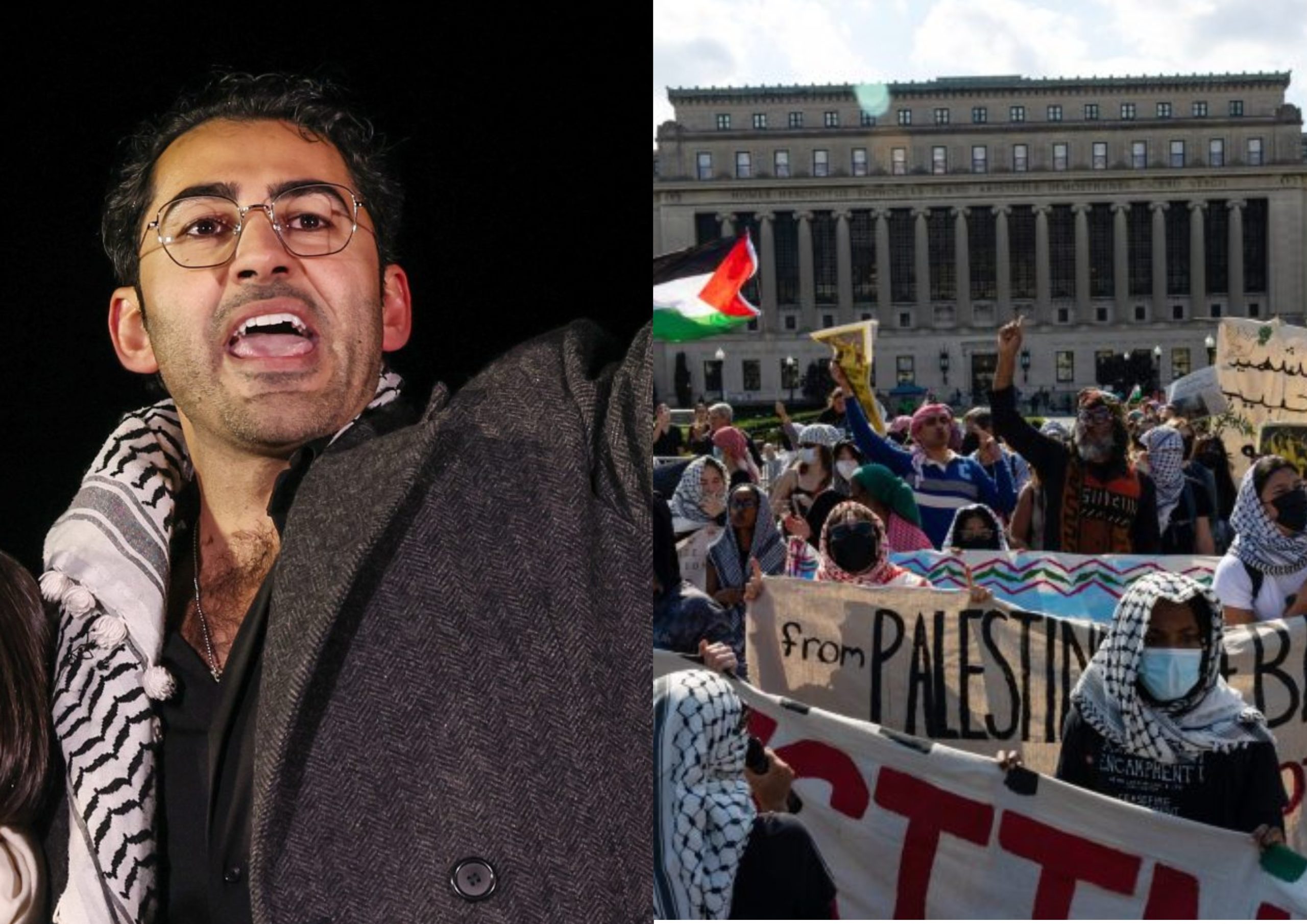
Columbia University's Knight First Amendment Institute announced a symposium for September 10 that will feature an interview with Mohsen Mahdawi, a graduate‑student activist who helped organize the campus protests after the October 7 Hamas attack. Mahdawi's inclusion has ignited a debate over whether the university's commitment to free speech outweighs concerns that the event could provide a platform for a man facing a deportation order and whose past remarks include praising Hamas and allegedly saying "I like to kill Jews."
The symposium, billed as a discussion of how the United States "forever war" has affected democratic rights, will be held on the eve of the 23rd anniversary of the September 11 attacks. The online invitation states the program will "mark 25 years since 9/11 and the dawn of a seemingly endless proliferation of open‑ended conflicts waged against poorly defined enemies in North Africa, the Middle East, South and Central Asia, and even here inside the United States." Organizers list Mahdawi as a "Palestinian human rights advocate and Columbia University graduate student." The biography does not mention the investigative report released this week that details his support for terrorist organizations and his alleged statements about killing Jews.
The Knight Institute, a research center housed within Columbia and funded in part by the university's endowment, has a long history of defending expansive interpretations of the First Amendment. Its director, Jameel Jaffer, a lawyer who has repeatedly criticized Israel's actions in Gaza, defended the campus protests that erupted in April 2024 and has condemned university administrators and the New York Police Department for intervening to restore order. Critics argue that Jaffer's stance blurs the line between protecting speech and endorsing extremist viewpoints.
Mahdawi's background has been the subject of a 100‑page investigation by journalists David Collier and Rachel Feldman. The report, published Wednesday, cites social‑media posts in which Mahdawi praised Hamas and the Palestinian Islamic Jihad, described himself as "trained to use machine guns to kill Jews while he was in Palestine," and wrote that Palestinians "have the capacity and conviction to resist, to kill and to wound." The investigation also uncovered a December 2024 Facebook video in which Mahdawi called the Jenin refugee camp "the heart of the resistance."
In addition to the investigative findings, Mahdawi was detained by Immigration and Customs Enforcement agents in 2023 while applying for U.S. citizenship. An immigration judge ordered his removal on June 3, 2024, but the decision is currently under appeal, allowing Mahdawi to remain on campus while his case proceeds. The Department of Justice's Office of Immigration Litigation has not disclosed the specific grounds for the removal order, but the judge cited Mahdawi's alleged support for "pro‑terrorist riots" at Columbia.
The symposium's timing has drawn condemnation from advocacy groups. StopAntisemitism, an organization that monitors campus hate, posted on X that "a new low for Columbia, the Knight First Amendment Institute will be hosting anti‑American, antisemitic bigot Mohsen Mahdawi on the eve of 9/11." Another user on the platform argued that "supporting free speech does not mean you need to invite someone who wants to annihilate the Jews."
Columbia's own response has been limited. The university's student newspaper, the Columbia Daily Spectator, declined to comment on whether its reporter, Daksha Pillai, who is slated to interview Mahdawi, will address the investigative report during the conversation. Neither the Knight Institute nor Columbia's communications office returned requests for comment.
The controversy arrives less than a year after Columbia reached a $220 million settlement with the federal government over allegations that the university failed to protect Jewish students from harassment. The settlement, which included a pledge to improve campus security and reporting mechanisms, was intended to address a spike in antisemitic incidents that began in 2021 and intensified after the Israel‑Hamas war.
Free speech on college campuses has become a flashpoint in national politics. Republican lawmakers have introduced legislation to penalize institutions that host speakers they deem to promote extremist ideology, while Democratic legislators argue that any curtailment of speech threatens academic freedom. In the United States, the First Amendment protects even hateful speech unless it incites imminent lawless action, a standard established by the Supreme Court in Brandenburg v. Ohio (1969). Universities, however, retain the ability to set their own policies regarding invited speakers, a discretion that has been tested repeatedly in recent years.
In Canada, a parallel debate is unfolding as universities grapple with the balance between protecting free expression and preventing hate speech under the Criminal Code's provisions against advocating genocide. Canadian courts have upheld the right to host controversial speakers, provided the events do not cross the line into direct incitement. The differing legal frameworks highlight how the same issue can generate distinct policy responses across the border.
Legal scholars note that Mahdawi's case also raises questions about the intersection of immigration law and campus activism. Under the Immigration and Nationality Act, individuals who have engaged in or supported terrorist activities can be barred from entry or removed from the United States. The Department of Homeland Security's Office of Immigration Litigation has the authority to issue removal orders, but those orders are subject to judicial review and appeal, a process that can extend for months or years.
Columbia's decision to proceed with the symposium despite the backlash reflects a broader institutional calculation. By framing the event as an academic examination of how the "forever war" impacts democratic rights, the university positions the invitation as a scholarly inquiry rather than an endorsement of Mahdawi's views. Critics argue that the optics of featuring a speaker with documented extremist statements on a day that commemorates a terrorist attack on American soil is tone‑deaf and could embolden antisemitic elements on campus.
Student groups on both sides of the issue have begun organizing. A coalition of Jewish student organizations plans to hold a counter‑event on September 10, focusing on the history of antisemitism and the need for stronger campus protections. Meanwhile, pro‑free‑speech clubs argue that silencing Mahdawi would set a precedent that undermines open debate, especially on topics related to the Israel‑Palestine conflict.
As the symposium approaches, the university's administration faces a decision that could influence its reputation for handling hate speech, its compliance with federal settlement obligations, and its standing in the national conversation about campus free speech. The outcome of Mahdawi's immigration appeal, expected later this year, will also determine whether he remains on campus for future events.
Regardless of the symposium's content, the episode underscores the challenges that higher‑education institutions face when navigating the thin line between protecting constitutional rights and safeguarding community members from hate‑filled rhetoric. The debate at Columbia is likely to reverberate across other campuses as they confront similar dilemmas in an increasingly polarized political climate.