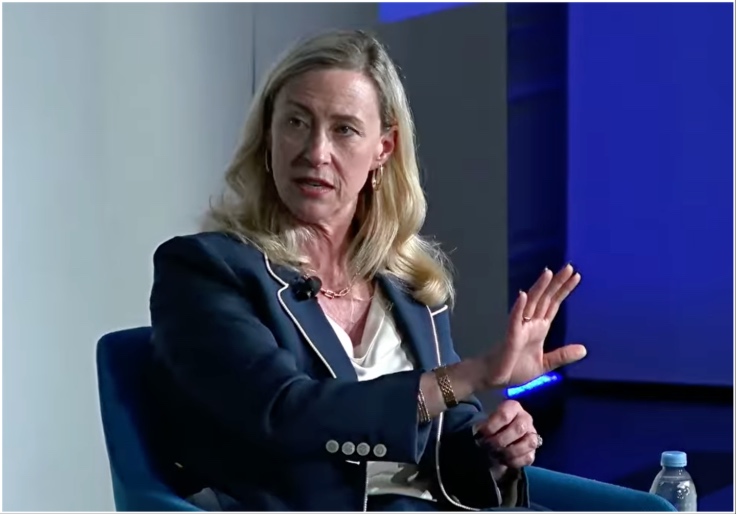
Yale University announced on Wednesday that President Maurie McInnis had appeared at the American Enterprise Institute (AEI) for a conversation with senior fellow Frederick Hess about a committee she convened earlier this year to examine public confidence in higher education.
The "trust in higher education" committee released its findings in late April after a six‑month review that included surveys of prospective students, alumni and the general public. Its report highlighted three factors that the authors said have eroded confidence in elite institutions: rising tuition, perceived grade inflation and high‑profile campus protests that have drawn national media attention.
In an editorial, the Wall Street Journal's editorial board praised Yale for undertaking the self‑assessment, calling the effort "a model of institutional introspection." The editorial noted that the Ivy League's brand has been challenged by cost‑of‑attendance figures that now exceed $80,000 per year at many schools, and by a series of incidents that have sparked debate over free speech on campuses.
During the AEI interview, McInnis reiterated the committee's conclusion that "trust comes from saying what you will do and then doing it." When pressed for specific actions, she said the university faces "contributors beyond Yale's control" and that "collective action" will be required. She added that other committees are already working on related issues, but did not name any concrete policy changes.
One of the most contentious topics discussed was Yale's admissions process. McInnis defended the school's "holistic" approach, arguing that a purely test‑based system could produce a class of students with similar academic interests, whereas a broader review allows the university to admit "physics majors and arts majors, athletes and musicians." The president said the goal is to maintain a diverse campus that reflects a range of talents and perspectives.
In the fall of 2023 Yale reinstated the requirement that applicants submit ACT or SAT scores, reversing a test‑optional policy that had been in place for several years. Critics argue that the shift signals a retreat from the inclusive intent of test‑optional admissions, while supporters claim it restores a common metric that can help evaluate academic readiness.
When asked about a recent campus climate survey indicating that roughly one‑third of Yale undergraduates feel unable to express themselves freely, McInnis linked the result to social‑media habits. She suggested that many students arrive on campus "without the skills to be ready to engage with people who completely disagree with them." The president emphasized the need for "dialogue and debate" as part of the university's educational mission.
The committee's report also addressed grade inflation, a long‑standing concern among faculty and graduate schools. McInnis described the issue as "complex" and said it involves "multiple institutions, as well as K‑12," because many students have only ever received top grades. She warned that a sudden shift to stricter grading could disadvantage students applying to professional programs, noting that "students have never seen anything other than an A their entire lives."
Yale's faculty senate has previously debated grading standards, and some departments have experimented with curve‑based assessments. National data from the National Center for Education Statistics show that the average GPA at selective private colleges has risen from 3.2 in the early 2000s to above 3.5 in recent years, fueling the perception that grades no longer differentiate academic performance.
Free‑speech controversies have also featured prominently in the public conversation about Yale. In 2015 a professor's suggestion that students discuss offensive Halloween costumes sparked a campus debate, and in 2022 law students interrupted a speaker on free‑speech grounds. A 2024 survey of undergraduates found that a majority supported a boycott of Israel, while fewer favored a boycott of China, highlighting the politicized environment on campus.
Higher‑education leaders across the United States have faced similar pressures. Public universities in several states have introduced tuition caps, while private institutions have expanded need‑based aid to counteract rising costs. The debate over test‑optional policies has also spread, with the College Board reporting that more than 2,000 colleges now require standardized test scores for at least some applicants.
For American and Canadian observers, Yale's experience offers a case study in how elite institutions balance financial sustainability, academic standards and campus climate. Tuition growth at top universities often exceeds inflation, influencing public opinion and shaping policy discussions in state legislatures and federal education committees. In Canada, similar concerns have arisen at universities such as the University of Toronto, where tuition hikes have prompted calls for greater transparency and accountability.
The AEI discussion did not produce a detailed roadmap, but McInnis indicated that the university will continue to monitor the issues identified by the trust committee. She said that "we will see what comes out of this committee" and that the administration remains committed to "engage and debate and dialogue and wrestle with ideas, both in and out of the classroom."
Analysts note that the next steps will likely involve a combination of policy reviews, faculty input and possibly new advisory panels. If Yale adopts stricter grading guidelines or modifies its admissions criteria, the changes could influence peer institutions that look to Ivy League practices as benchmarks.
Stakeholders such as alumni donors, prospective students and graduate‑school admissions committees will be watching closely. Alumni contributions accounted for roughly 30 percent of Yale's operating budget in the most recent fiscal year, and donor sentiment can shift quickly in response to perceived changes in academic rigor or campus culture.
As the debate continues, the university's ability to translate the committee's recommendations into actionable policies will be a key test of its leadership. Observers will assess whether Yale can restore public confidence while preserving the diversity and intellectual vibrancy that its holistic admissions model seeks to promote.