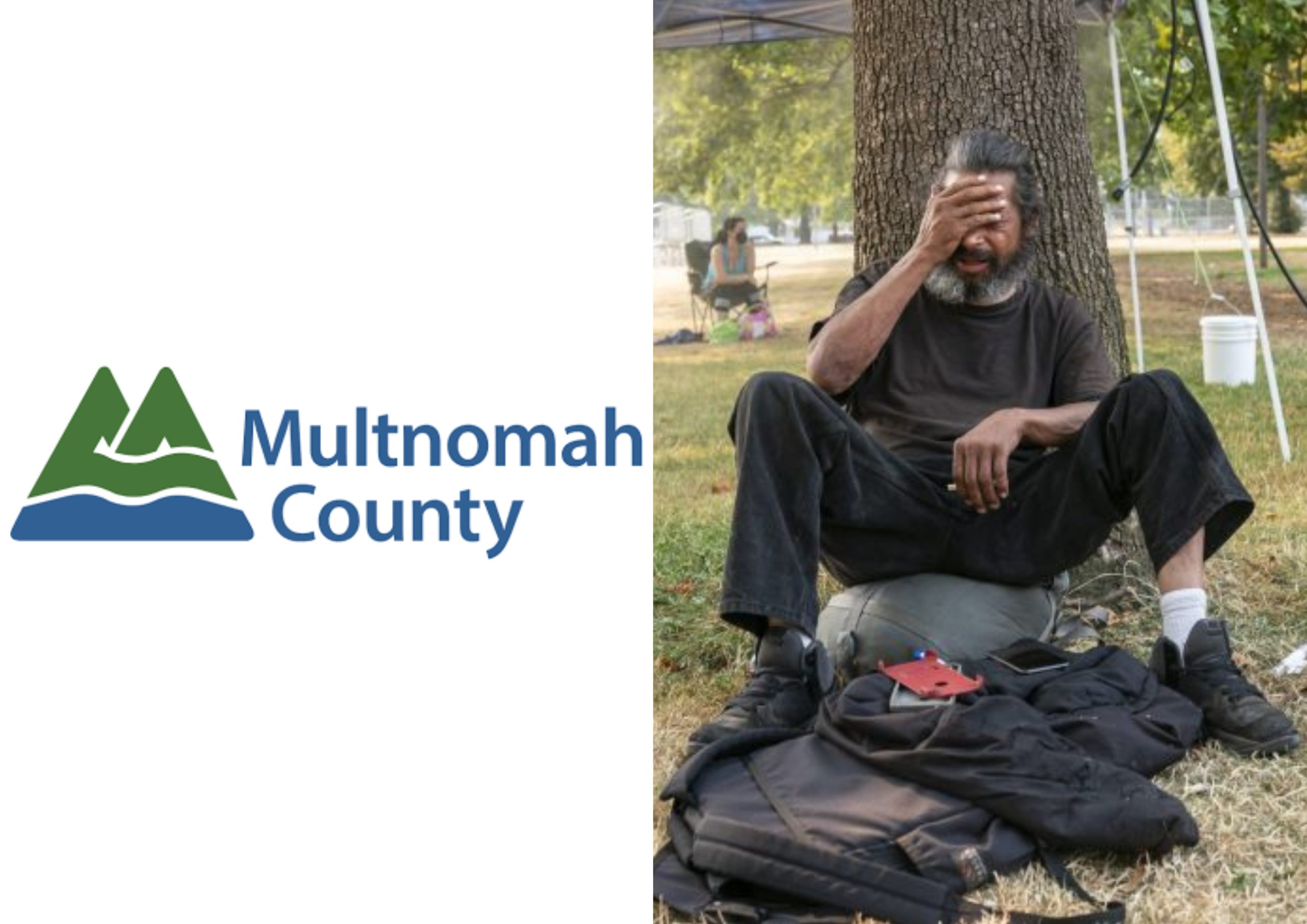
multnomah county officials told the public on tuesday that the county's coordinated access scoring system will no longer award points for an applicant's race or LGBTQIA2S+ status. the change comes after the department faced a class‑action lawsuit and scrutiny from the department of housing and urban development and the department of justice.
the county's homeless services program had used a rubric that gave extra points to people who indicated interest in "culturally specific services." under the previous formula, a straight white applicant needed roughly sixteen to nineteen points to qualify for supportive housing, while applicants who identified as a person of color or LGBTQ received additional points for "culturally specific" preferences. the scoring system was first reported by the washington free beacon and sparked criticism that it made it harder for white applicants to reach the cutoff.
"to ensure total compliance with shifting guidance and legal interpretation from the federal government, the homeless services department is changing the coordinated access scoring system it uses to prioritize households for certain services, namely supportive housing," county spokeswoman julia comnes said to the oregonian.
the lawsuit that prompted the revision was filed by michele mei, a disabled white woman who said she missed the rent‑relief cutoff because the county's points system favored applicants of color. mei's complaint also alleges that the county set aside "culturally specific" apartments for the "bipoc community" and pledged that "people of color will be served at higher rates." the filing describes a broader pattern of race‑based allocation beyond the points rubric.
multnomah county declined to comment on the pending litigation, a standard practice for ongoing cases. however, the county's decision to strip race and LGBTQ criteria from the scoring model signals a concession after it had previously asserted that its policies complied with federal law.
the federal response began in may, when hud secretary scott turner and the department of justice announced investigations into multnomah county's homeless program. turner noted that the county has one of the nation's highest homelessness rates and suggested that race‑based preferences were both unlawful and ineffective. "rather than address this crisis in a fair and clear‑eyed manner, the county scapegoats its most vulnerable residents and doles out housing support on the basis of race," turner said at the time.
hud's investigation focuses on whether the county's allocation methods violate the civil rights act and hud's own fair‑housing rules, which prohibit discrimination on the basis of race, color, national origin, religion, sex, familial status, or disability. the department of justice's civil rights division has a parallel mandate to enforce the same statutes. both agencies have increased scrutiny of local programs that use race as a factor in distributing public benefits, a trend that intensified after the trump administration issued guidance limiting the use of race in federal funding decisions.
multnomah county's coordinated access system is part of a broader effort to streamline how homeless individuals receive services. the system assigns points for factors such as chronic homelessness, disability, veteran status, and income level. points are then tallied to determine eligibility for supportive housing, rapid rehousing, or rent assistance. before the recent revision, the rubric also included a "culturally specific services" category that could add up to five points for applicants who identified as belonging to a racial or ethnic minority or who expressed interest in LGBTQ‑focused programs.
the points model was adopted in 2022 after the county received a grant from hud to expand its homeless outreach. the grant required the county to develop a "coordinated access" framework that would prioritize the most vulnerable households. county officials argued that the culturally specific component helped address the disproportionate impact of homelessness on people of color and LGBTQ individuals, groups that historically face higher barriers to stable housing.
critics, however, contend that the approach runs afoul of hud's anti‑discrimination rules. a 2021 hud notice clarified that while programs may target services to address disparities, they cannot use race as a direct eligibility criterion for housing assistance. the notice warned that any scoring system that awards points solely because of an applicant's race could be deemed discriminatory.
the multnomah decision aligns the county with a growing number of jurisdictions that have revised or abandoned race‑based preferences in response to federal guidance. in 2023, several california cities altered their affordable‑housing lotteries after hud issued similar warnings. the trend reflects a tension between local attempts to remedy historic inequities and federal rules that limit the use of race in public‑benefit programs.
for residents of portland and the surrounding area, the policy shift could change who receives a spot in the county's limited supply of supportive housing. advocates for people of color argue that removing the race factor may reduce the county's ability to address the disproportionate rates of homelessness among minority communities. they point to data from the national alliance to end homelessness, which shows that black and latino households are overrepresented in shelter populations nationwide.
supporters of the change, including the hud secretary, argue that aid should be allocated on neutral criteria such as disability, chronic homelessness, and income. they say that any race‑based weighting creates a perception of unfairness and could expose taxpayers to legal risk.
the class‑action lawsuit remains pending, and the court's ruling could set a precedent for other municipalities that use similar scoring systems. if the court finds that multnomah's former rubric violated civil‑rights law, it could compel other localities to revise their own policies or face similar litigation.
the revision also raises questions about how counties will meet hud's overall goal of reducing homelessness without race‑based tools. hud has pledged $2.5 billion in funding for "rapid rehousing" and "permanent supportive housing" over the next five years, but the agency expects localities to demonstrate compliance with anti‑discrimination rules to receive those funds.
political observers note that the multnomah case may become a flashpoint in the broader debate over how to balance equity goals with federal anti‑discrimination mandates. the issue could surface in upcoming elections, especially as voters in oregon's congressional districts weigh candidates' positions on homelessness, housing affordability, and civil‑rights enforcement.
for canadian readers, the case offers a glimpse of how U.S. federal guidance can influence local policy even in cities with progressive housing agendas. canadian provinces also grapple with how to address homelessness among indigenous and racialized communities, but they operate under a different legal framework that includes the canadian charter of rights and freedoms, which permits certain affirmative‑action measures that are more limited in the united states.
the next steps for multnomah county include finalizing the revised scoring rubric, notifying applicants of the changes, and continuing to cooperate with hud and the justice department's investigations. the county has pledged to monitor the impact of the new system on housing placements and to report findings to the public.
as the legal process unfolds, the outcome will likely influence how other municipalities across the united states design their homeless‑service allocation models, balancing the need for equitable outcomes with the requirement to avoid race‑based discrimination.