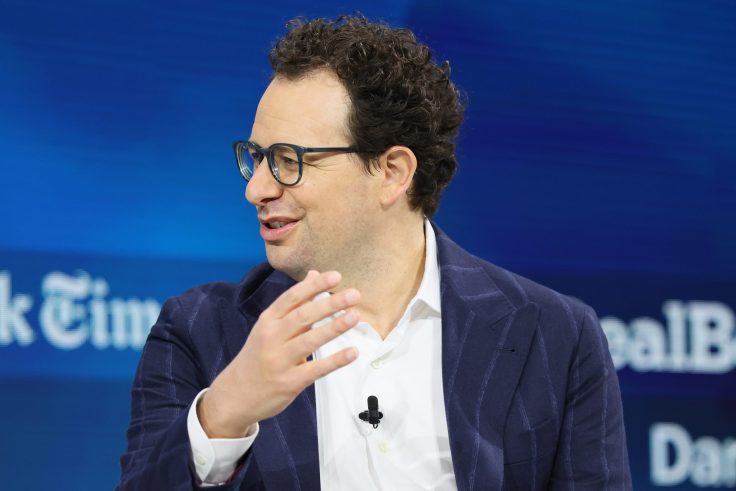
In a lengthy essay posted on Saturday, Dario Amodei, the chief executive of the artificial‑intelligence research firm Anthropic, argued that the United States should deliberately slow the rate at which large AI models are built. Amodei wrote that "fully addressing the risks requires even more prudence, not just investing in risk prevention, but pacing the rate of capabilities advancement so that risk prevention has time to keep up."
Anthropic, founded in 2020 by former OpenAI researchers, has positioned itself as a safety‑first AI lab. The company's flagship Claude series of language models competes directly with OpenAI's GPT‑4 and Google's Gemini. Anthropic receives a multi‑year contract from the Department of Defense to supply AI tools for analysis and decision support, a partnership that has placed the firm at the center of a broader debate over military use of generative AI.
Amodei's call for a temporary slowdown follows a public dispute earlier this year with the Defense Department over the scope of the contract. In early 2024, Anthropic and the Pentagon exchanged letters about the extent to which the agency could integrate cutting‑edge models into operational systems. The disagreement highlighted the tension between rapid innovation and the need for oversight in high‑stakes applications.
Amodei's essay was not an isolated opinion piece. He cited recent incidents in which AI systems produced disallowed content, generated misinformation, or behaved unpredictably in real‑world settings. He warned that "risk prevention has to keep pace with capability growth, otherwise we risk deploying systems that we cannot fully control." The essay concluded with a proposal for a coordinated "global pacing" framework that would involve governments, industry, and academia.
David Sacks, a technology entrepreneur who serves as chair of the President's Council of Advisors on Science and Technology (PCAST), responded on social media with a terse rebuttal. Sacks wrote that the market already penalizes models that behave erratically and that "the motivation to slow down is not purely altruistic." He argued that "product‑liability exposure" and customer demand for reliable AI are sufficient incentives for firms to prioritize safety without a mandated pause.
Sacks' remarks reflect a broader sentiment among many Silicon Valley leaders who view regulatory slow‑downs as a potential threat to U.S. competitiveness. OpenAI's chief executive Sam Altman, for example, has repeatedly emphasized the importance of "responsible scaling" rather than a hard halt. Google's DeepMind division has similarly advocated for "continuous safety research alongside capability work."
The debate is occurring against the backdrop of an intensifying technology rivalry with China. U.S. policymakers have repeatedly warned that maintaining a lead in AI is essential for national security and economic prosperity. In a recent congressional hearing, the chair of the Senate Armed Services Committee urged the administration to "ensure that American innovators stay ahead of adversaries." Critics of Amodei's proposal argue that a coordinated global pacing could erode that advantage.
Anthropic's contract with the Defense Department is part of a broader push to integrate generative AI into military workflows. The Pentagon's Joint Artificial Intelligence Center has allocated billions of dollars for AI research, with contracts awarded to firms such as OpenAI, Anthropic, and Microsoft. These investments aim to improve logistics, intelligence analysis, and autonomous systems, but they also raise questions about accountability and the potential for unintended escalation.
Legal scholars note that any formal slowdown would likely require legislative action or an executive order. The current regulatory framework places most AI oversight under the Federal Trade Commission's authority to address deceptive practices, while the National Institute of Standards and Technology is developing technical standards. A pause, however, would intersect with existing antitrust law and could be challenged as an unlawful restraint on competition.
Industry analysts point out that the market has already begun to self‑regulate through "red‑team" testing, third‑party audits, and the adoption of safety clauses in customer contracts. Anthropic itself has introduced a "Constitutional AI" approach that embeds ethical guidelines into model behavior. Yet Amodei argues that these measures are insufficient without a broader, coordinated tempo for development.
Public opinion on AI safety is shifting. A recent Pew Research Center poll found that 62 percent of Americans are concerned about the impact of AI on jobs, privacy, and security. The same survey showed that 48 percent support stronger government oversight of AI technologies. These numbers suggest that policymakers will face pressure from both voters and industry as they craft the next wave of AI legislation.
Congressional activity on AI has accelerated in the past year. The bipartisan "AI Innovation and Competition Act" passed the House in early 2024, authorizing $5 billion for research and establishing a new AI oversight board. The Senate is expected to consider amendments that would create a "risk‑assessment" requirement for large language models before they are deployed commercially. Amodei's essay could influence the language of those proposals, especially if lawmakers view his call as a signal from a leading AI firm.
For now, Anthropic has not indicated that it will alter its development schedule. The company's recent press release emphasized its commitment to "building safe and useful AI while delivering value to customers." Amodei's essay, however, has placed the firm at the center of a policy conversation that could shape the regulatory environment for years to come.
Observers note that the outcome of this debate will have tangible effects on American workers, businesses, and national security. A slowdown could delay the rollout of AI‑driven productivity tools, potentially slowing economic gains. Conversely, a more measured approach could reduce the risk of harmful deployments and mitigate public backlash that might otherwise prompt harsher regulation.
As the United States prepares its next AI strategy, the clash between Anthropic's cautionary stance and the market‑driven optimism of other tech leaders underscores a fundamental question: how to balance rapid innovation with the responsibility to prevent harm. The answer will likely emerge from a mix of industry best practices, legislative action, and ongoing dialogue between the public and private sectors.